
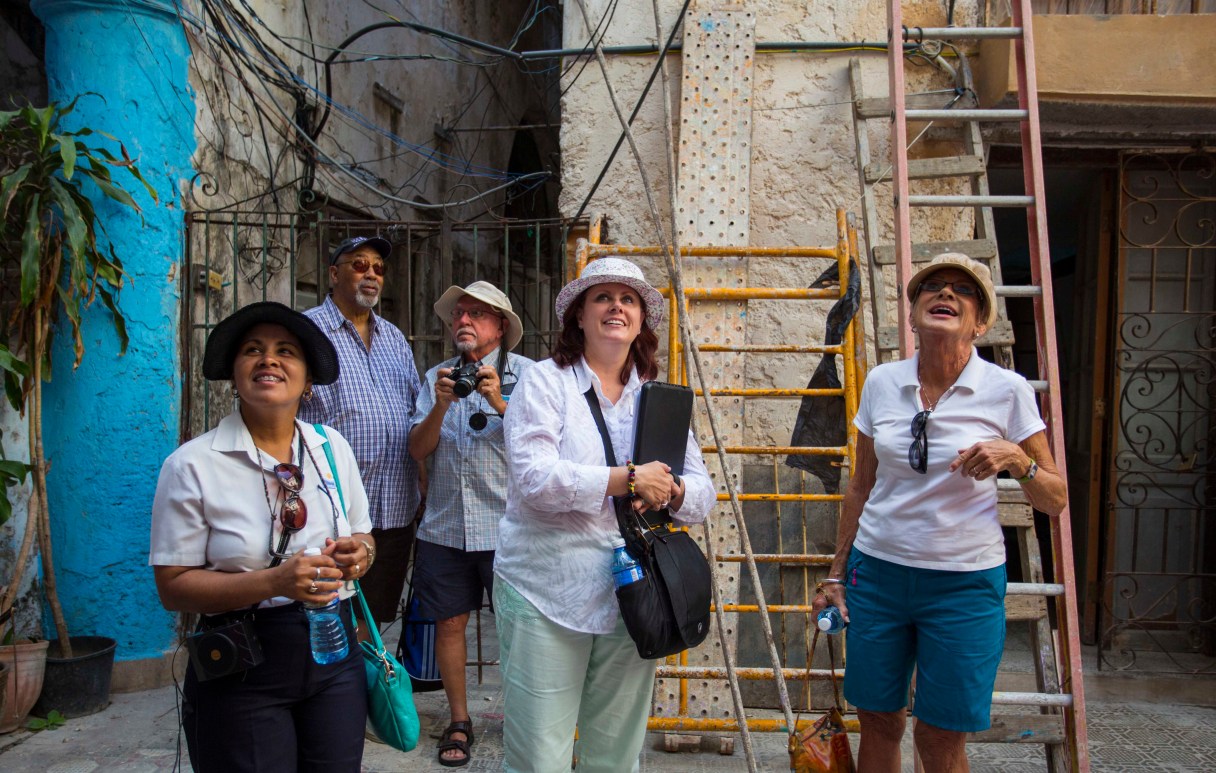
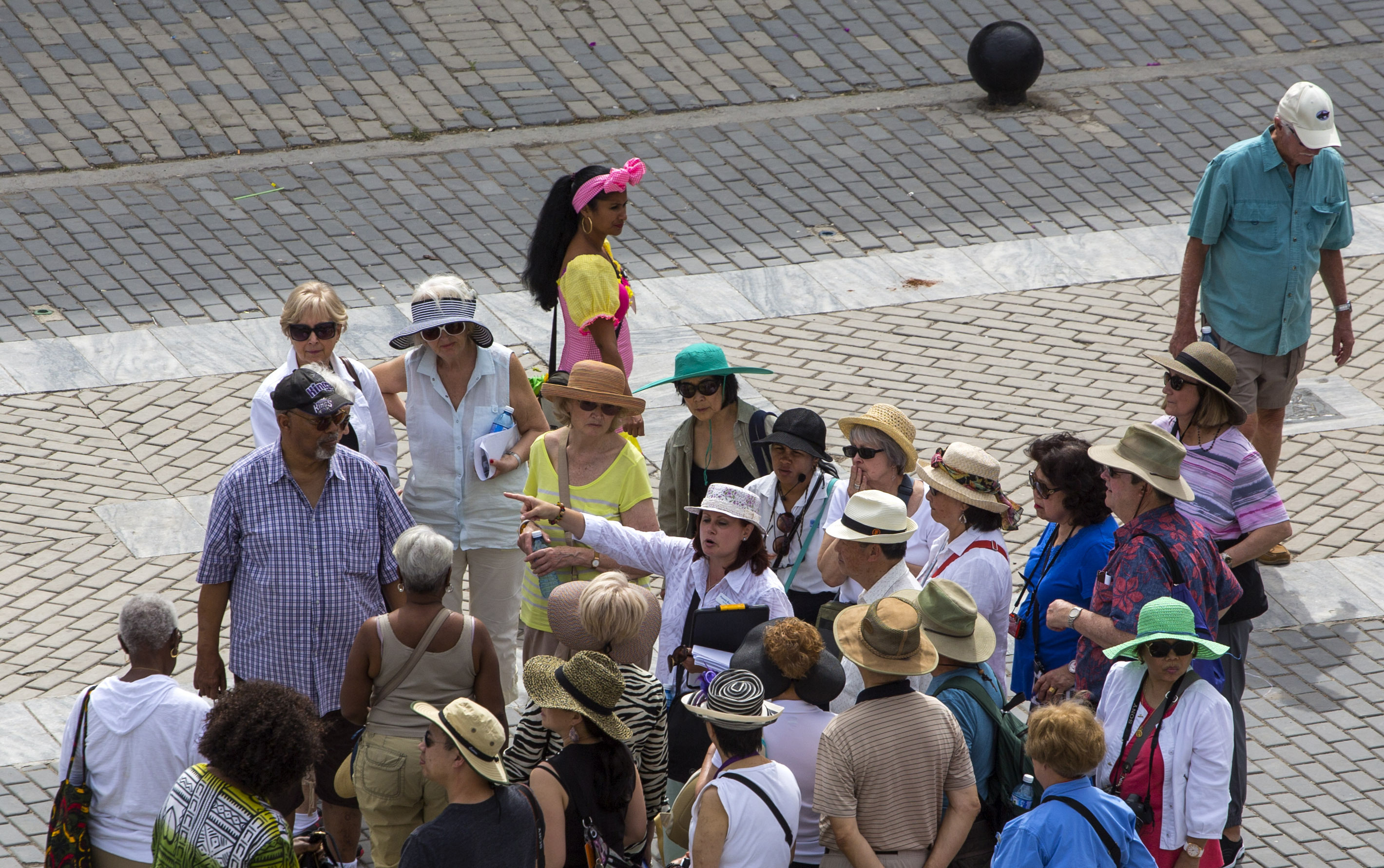
 In this Wednesday, April 20, 2016, photo, smarTours tour director Pamela Boudrot, center, gives an explanation to her group of tourists in Havana. The thaw in U.S.-Cuba relations has many small and medium-sized companies thinking about doing business with the nation that has largely been off-limits for more than half a century. Greg Geronemus, owner of smarTours, based in New York, began planning to increase his Cuba business two years ago, when he ran 15 tours. He expects to run 45 tours to Cuba this year, most of them leaving from Miami. (AP Photo/Desmond Boylan)
The thaw in U.S.-Cuba relations has many small and medium-sized companies thinking about doing business with the nation that has largely been off-limits for more than half a century. Most companies, however, will have to wait.
The Obama administration has taken steps that allow companies in the travel and telecommunications industries to work with Cuba, but most exports and other business contacts remain prohibited under an embargo Congress passed in 1960 in response to Communist rule in Cuba. Because of the embargo, the U.S. exported only $180 million in goods to Cuba last year, most of it agricultural products and medicine. By comparison, exports to nearby El Salvador totaled nearly $3.3 billion. Only Congress can lift the embargo, and it’s not known when that might happen – some lawmakers are against ending it because of charges of human rights violations by the Castro government.
Greg Geronemus’ travel company, smarTours, expects to run 45 tours to Cuba this year, most of them leaving from Miami. He began planning to increase his Cuba business two years ago, when he ran 15; Geronemus anticipated that the administration was moving toward a normalization of U.S.-Cuba relations.
“There is an unbelievable appetite for travel,” says Geronemus, whose company is based in New York.
Because of the embargo, Geronemus works with a Cuba-based company, HavanaTur, and an intermediary company in Europe to handle reservations, itineraries and payments. Trips to Cuba must be highly structured under U.S. government regulations, with itineraries that show substantial interactions with Cubans. For example: a visit with an artist or a tour of a community revitalization project.