
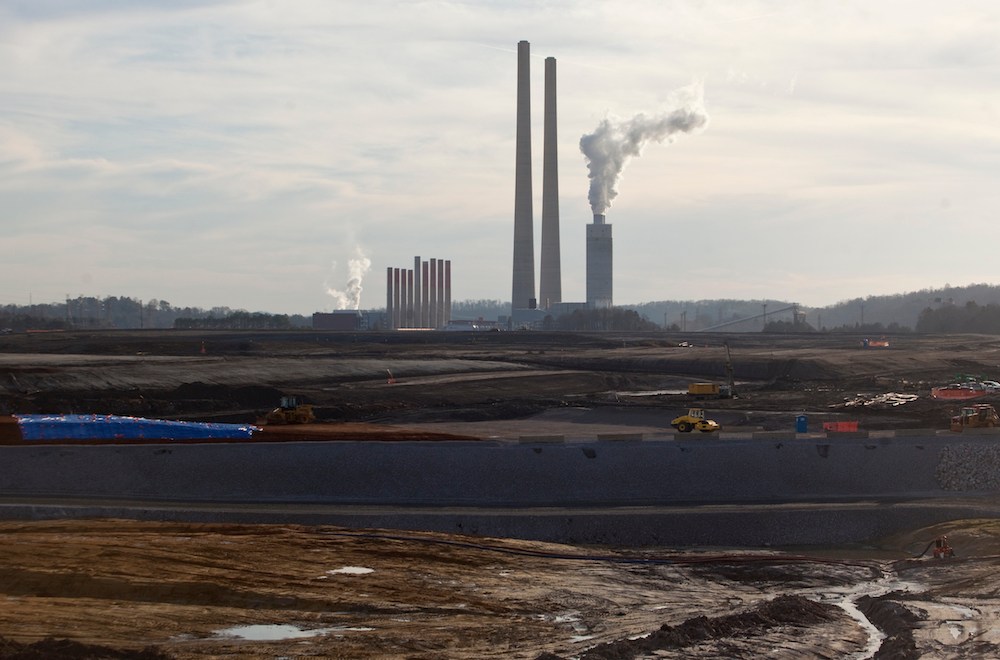
Twelve years after the worst coal ash spill ever from a U.S. coal power plant, the Tennessee Valley Authority is considering shutting down the plant where the spill occurred and replacing its coal-fired generation with a cleaner source of power.
TVA will conduct a public hearing next week to begin an environmental assessment on a plan to shut down its Kingston Fossil Plant in the next decade. The nine-unit coal plant built in 1954 at the confluence of the Clinch and Emory rivers is capable of generating 1,398 megawatts of power, or roughly enough power to supply the electricity needs of all of Chattanooga.
TVA’s long-range power plan adopted in 2019 recommended the retirement of 2,200 megawatts of coal-fired generation by 2038 and since then TVA President Jeff Lyash has said the utility plans to phase out all of the remaining units in its coal fleet by 2035.
At its peak, TVA operated 59 coal-fired units that collectively supplied nearly two thirds of TVA’s power, but the federal utility has boosted its generation from nuclear, natural gas, solar and hydro over the past two decades to cut its carbon emissions by 63% below the 2005 levels and replace the aging coal fleet it phases out across TVA’s seven-state region.
On its website, TVA stated its coal plants generally are “among the oldest in the nation” and are having trouble with performance. It described the coal plants as “contributing to environmental, economic and reliability risks.”