

Tuesday, November 10, 2026Nov 10

Cooper: Supreme Court, even with presence of Barrett, may not necessarily be predictable

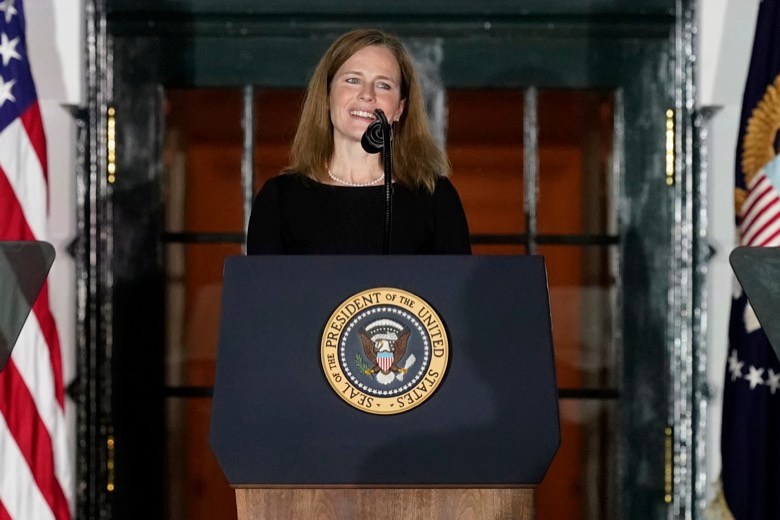
The Associated Press / Justice Amy Coney Barrett speaks after Supreme Court Justice Clarence Thomas administered the constitutional oath to her on the South Lawn of the White House in Washington, D.C., Monday.
The Associated Press / Justice Amy Coney Barrett speaks after Supreme Court Justice Clarence Thomas administered the constitutional oath to her on the South Lawn of the White House in Washington, D.C., Monday. The Associated Press / Justice Amy Coney Barrett speaks after Supreme Court Justice Clarence Thomas administered the constitutional oath to her on the South Lawn of the White House in Washington, D.C., Monday.

The United States Supreme Court had a 6-3 majority of justices appointed by Republican presidents when Roe v. Wade (abortion) was decided in 1973.

The court had a 5-4 majority of justices appointed by Republican presidents when Obergefell v. Hodges (gay marriage) was decided in 2015.

Now consider this:

The court had an 8-1 majority of justices appointed by Democratic presidents when the Dred Scott case was decided in 1857, ensuring that slaves were property and that slave owners could not be deprived of their property without due process.

Let those facts sink in for a moment.