
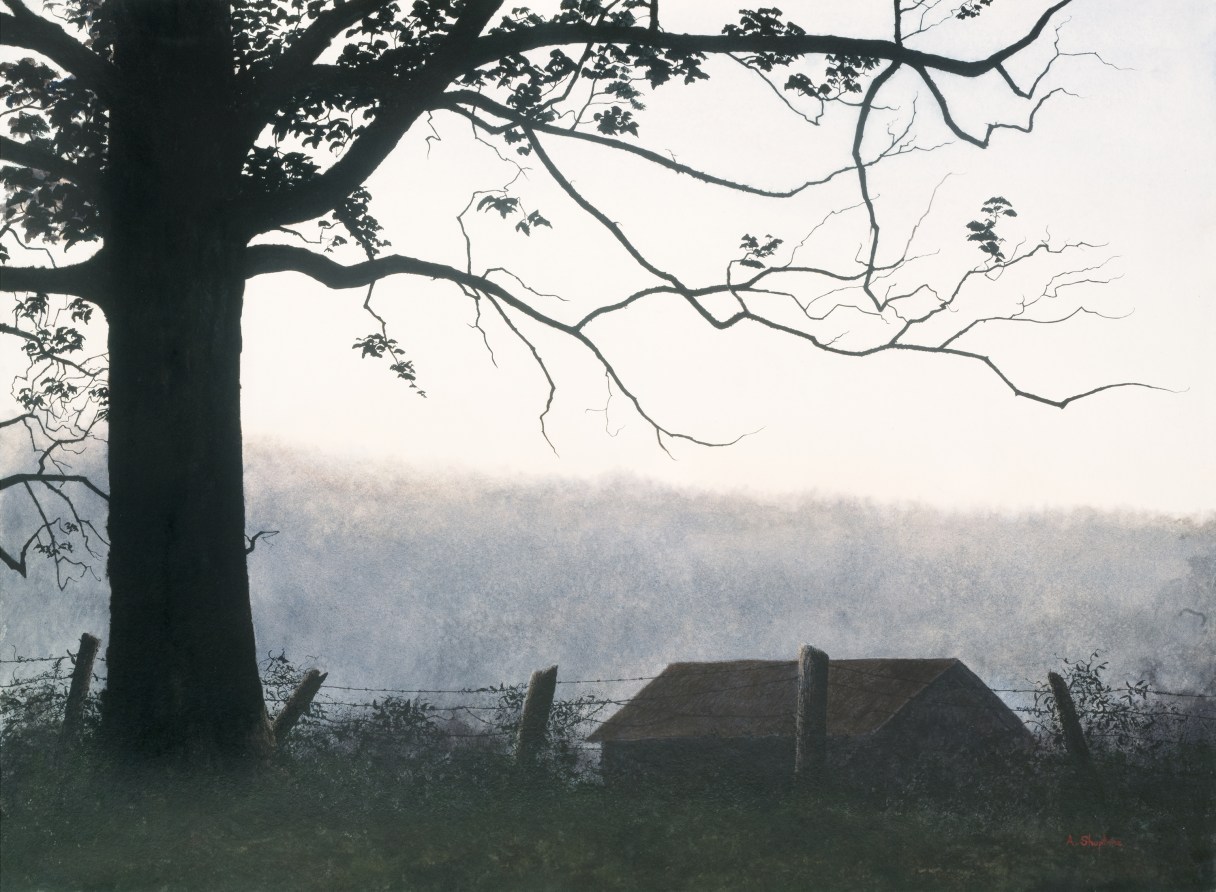

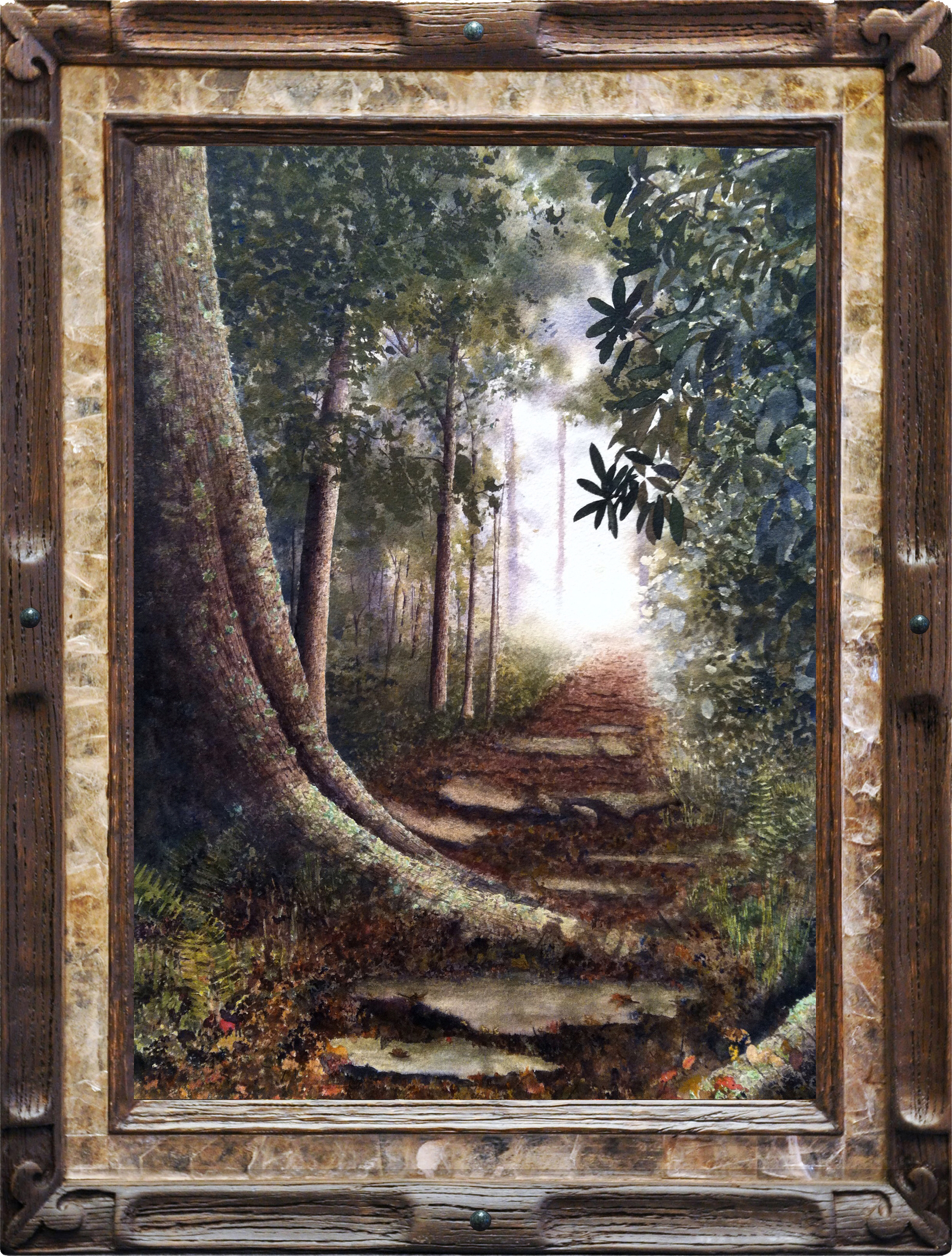
 Alan Shuptrine’s “Into the Clearing,” like all the paintings in his “Serpentine Chain” exhibition, is displayed in a frame he handcrafted and accented with stones of serpentine, a mineral found in the Appalachian Mountains and British Isles. His exhibit and book of the same name connect the two areas through presence of the mineral as well as through their cultural traditions.
For Lookout Mountain artist Alan Shuptrine, becoming a full-time artist like his father has always been a dream. Hubert Shuptrine was known as “the painter of the South,” Alan Shuptrine said.
Alan Shuptrine was 11 when his father collaborated with Georgia-native poet James Dickey to release “Jericho: The South Beheld.” The coffee table book featured text by Dickey accompanied by more than 100 sketches and watercolor paintings by Hubert Shuptrine.
Alan Shuptrine recently released his own book, a collaboration with New York Times best-selling author Sharyn McCrumb.
“I saw how rewarding it was in their lives,” he said of his decision to compile a book about the Appalachian Mountains. “I wanted to find someone with amazing imagery, with the same sort of passion I have in my work.”
In his search for an author passionate about the Appalachians, Shuptrine came across McCrumb’s website. He wrote her a three-page email telling her about his dream, and he was surprised when she actually responded several weeks later.
“She was just as thrilled as I was,” he said.
Their book connects the Appalachian Mountains with the British Isles through the serpentine mineral found in both areas.
“[The two areas] essentially shared the same mountain chain 200 million years ago,” said Shuptrine, explaining that continental drift was responsible for severing the two areas, which were once part of one large supercontinent.
The two areas also share similar cultural traditions, including fiddle tunes and quilt-making patterns, which he said British settlers brought to the Appalachian region more than 250 years ago.
Shuptrine believes the settlers were attracted to the serpentine vein in the Appalachians like a magnet, and he settled on “The Serpentine Chain” as the title of the book and “The Serpentine Chain Collection” as the name of a traveling exhibit focused on the same topic.
“The earliest settlers cherished serpentine for centuries,” he said of the dark green mineral, which gets its name from its almost snake-like, scaly appearance.
Accompanied by his German Shepherd, Captain, Shuptrine carried an easel and watercolors in an almost 60-pound pack as he set out on the Appalachian Trail, painting along the trail and in the little towns along the way.
While Birmingham, Ala.-based Oxmoor House, which also publishes Southern Living, footed the bill for Hubert Shuptrine’s book, his son lacked a corporate sponsor for his project.
To fund “The Serpentine Chain,” Shuptrine presold to private investors the 60 paintings to be featured in the exhibit, which opens at the Tennessee State Museum in Nashville June 8, 2017. The collection will remain there for four months before moving to Augusta, Ga., for three months, followed by 10 months traveling around the Eastern Seaboard, he said. Eventually, Shuptrine said, he would like for the exhibit to travel abroad, and he plans for the book’s release to follow the exhibit.
For more information, visit alanshuptrine.com.