
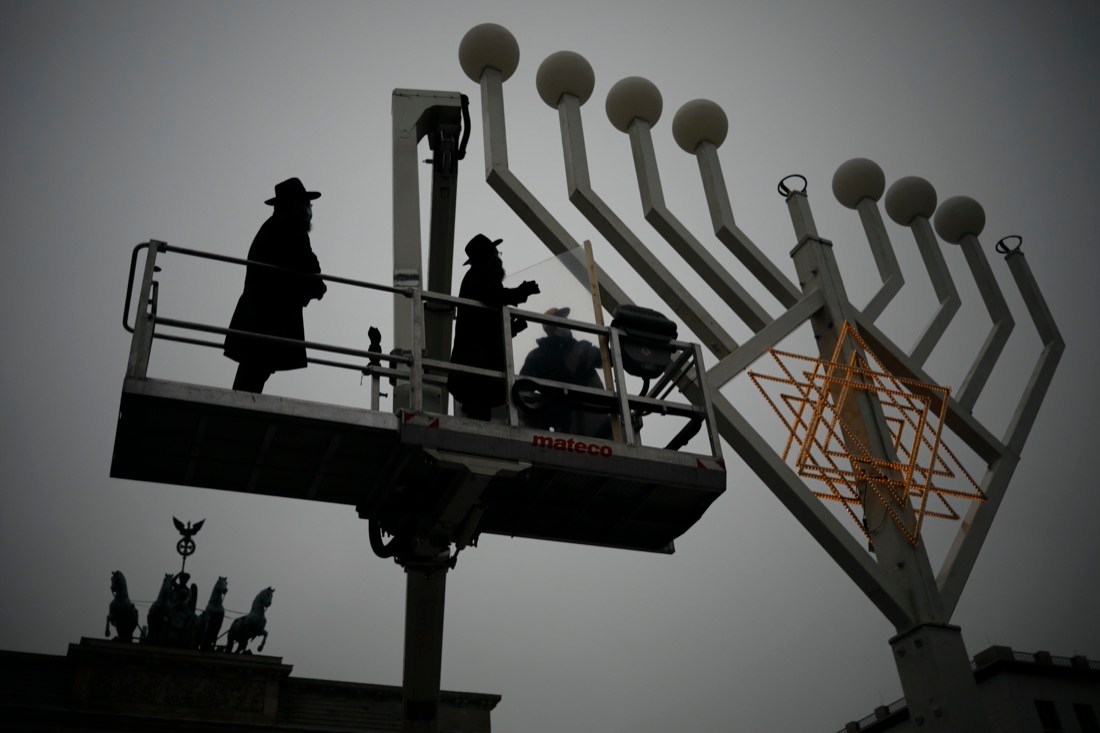
Jewish Americans from a variety of branches of the faith are celebrating Hanukkah with smaller-than-usual gatherings this year, in hopes of keeping the year-end holiday safe but still joyful as coronavirus cases spike across the country.
Many Jewish Americans are already accustomed to more intimate celebrations of a holiday focused more on the home than on the synagogue, including Haredim or ultra-Orthodox communities. So the recent successful Supreme Court challenge to New York restrictions on in-person worship by some Orthodox groups won’t mean much as far as their Hanukkah plans.
But celebrating Hanukkah during a pandemic still poses a challenge to some Jewish Americans, for whom the holiday has risen in prominence in part because its social elements and timing line up with non-Jewish holidays such as Christmas.
That has often provided a reason to host get-togethers, said Rabbi Avi Shafran, director of public affairs at Agudath Israel of America, a plaintiff in the court case.
But such large gatherings are “not an essential part of the holiday on any level whatsoever,” he added. “So to Haredim, to us ultra-Orthodox, it’s not something that’s going to cramp our style.”