
Tuesday, November 3, 2026Nov 3

This story is free to read.

Old steel mill will soon be world’s largest vertical farm

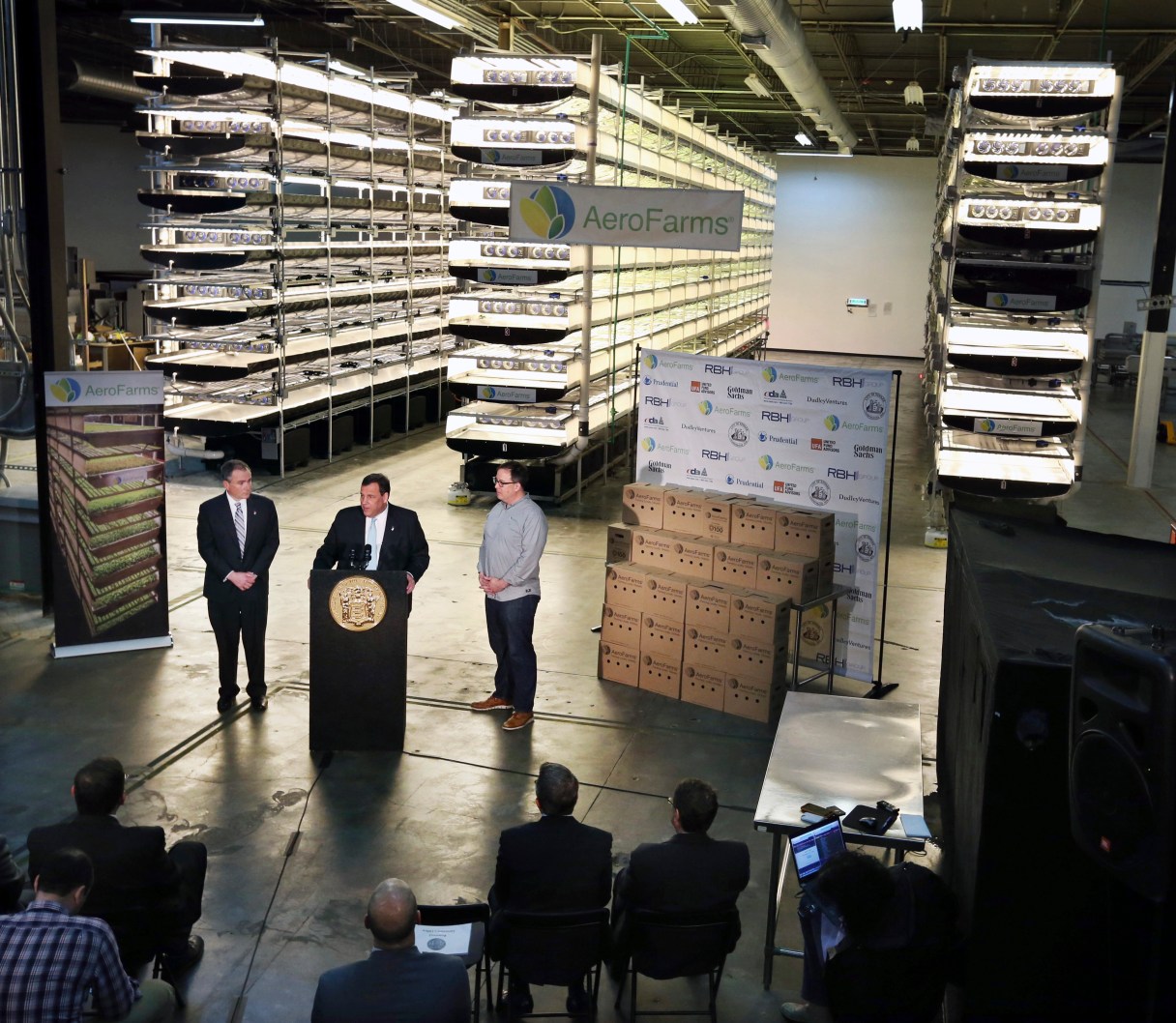
FILE - In this Thursday, March 24, 2016, file photograph, New Jersey Gov. Chris Christie, center at podium, addresses a gathering at AeroFarms, a vertical farming operation in Newark, N.J. AeroFarms is now refurbishing an old steel mill in New Jersey and they say it will soon be the site of the world's largest indoor vertical farm. The company says their Newark facility, set to open in September, could produce 2 million pounds of food per year and help with farming land loss and long-term food shortages. (AP Photo/Mel Evans, File)
FILE - In this Thursday, March 24, 2016, file photograph, New Jersey Gov. Chris Christie, center at podium, addresses a gathering at AeroFarms, a vertical farming operation in Newark, N.J. AeroFarms is now refurbishing an old steel mill in New Jersey and they say it will soon be the site of the world's largest indoor vertical farm. The company says their Newark facility, set to open in September, could produce 2 million pounds of food per year and help with farming land loss and long-term food shortages. (AP Photo/Mel Evans, File) FILE - In this Thursday, March 24, 2016, file photograph, New Jersey Gov. Chris Christie, center at podium, addresses a gathering at AeroFarms, a vertical farming operation in Newark, N.J. AeroFarms is now refurbishing an old steel mill in New Jersey and they say it will soon be the site of the world's largest indoor vertical farm. The company says their Newark facility, set to open in September, could produce 2 million pounds of food per year and help with farming land loss and long-term food shortages. (AP Photo/Mel Evans, File)

NEWARK, N.J. (AP) – An old steel mill in New Jersey will soon be the site of the world’s largest indoor vertical farm.

AeroFarms says their facility in Newark could produce 2 million pounds of food per year and help with farming land loss and long-term food shortages.

The plants are grown using an aeroponic system, artificial light and a climate control environment.

The farm will be open to community members who want to buy the produce. It also plans to sell the food at local grocery stores.

Critics say the artificial lighting in vertical farms takes up a significant amount of energy that in turn creates carbon emissions.