
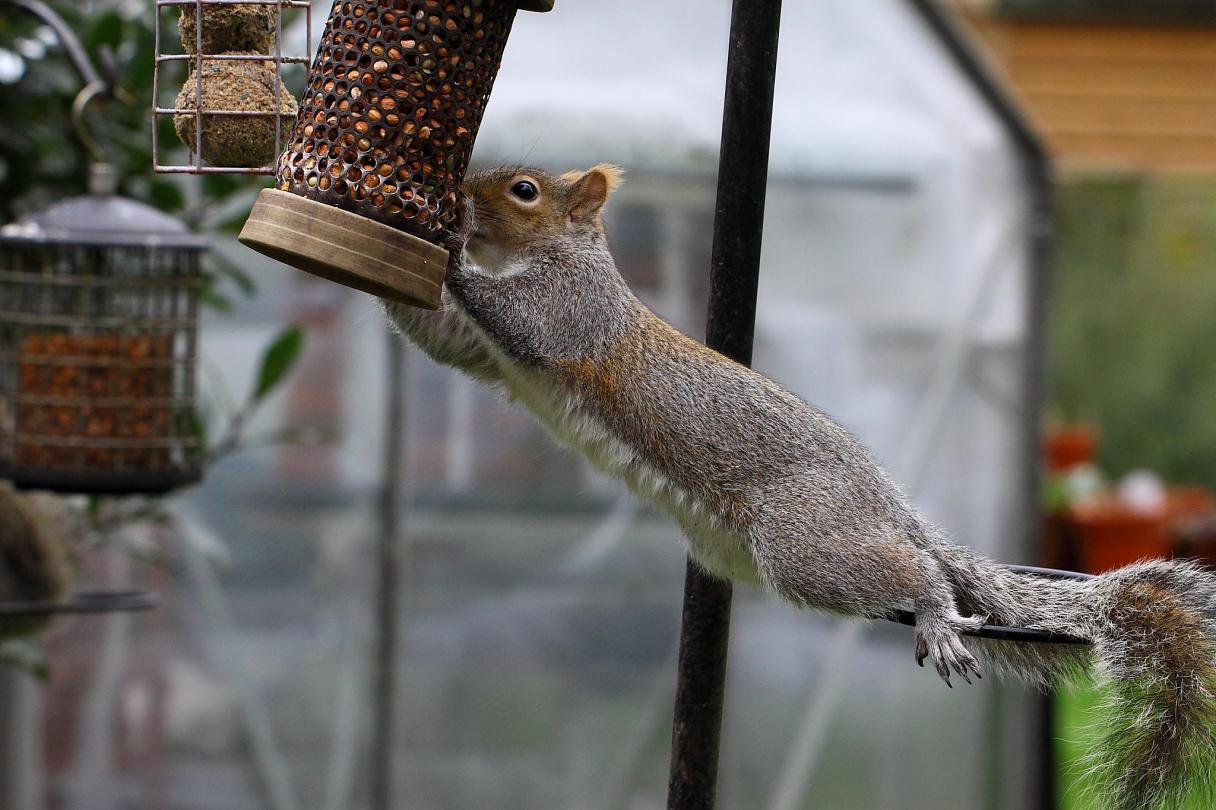
More than 52 million Americans feed wild birds, which means the lot of you can identify with the associated struggles: from greedy squirrels to sprouting seed. Here are some quick tips on what to do (and what NOT to do!) to help promote a happy backyard ecosystem.
The Squirrel Situation
You have two easy – and humane – options when dealing with a squirrel coup d’etat of your feeder.
Do try a pole-mounted feeder. Squirrels are sly, but the slickness of a metal pole typically prevents them from getting traction. The feeder should be five feet off the ground and at least 10 feet from trees, homes, fences – anything from which a squirrel might launch itself.
If your squirrels are acrobats and make it up the pole anyway, attach a slinky to the bottom of the feeder. Thread the pole through the center of the slinky, then let it hang. Thanks to the toy’s springiness, when the squirrel goes for a grab, it will just be lowered back to the ground.
Finally, if you can’t beat them, feed them. Stock a separate ground feeder a safe distance from your bird feeder. Squirrels are opportunists, not gluttons. Keep the furry “friends” full and you’ll likely keep them away from your birds.
Don’t use capsaicin-coated seeds or anything laced with hot peppers. While birds don’t seem to mind some spice, squirrels detest it because it burns them. In extreme cases it can cause blindness, or worse.
Sprouted Seed
No matter the kind or quality of birdseed you buy, birds will make a mess of it – which can help create habitats for unwanted creatures.
Do sterilize your birdseed. It’s easy: For a gallon of bird food, bake it in the oven for 30 minutes at 300 degrees. Or, put it in a paper bag and cook it in the microwave for five minutes. This will prevent spilled seed from sprouting, but it will not change its nutritional value.
Don’t let the sprouting go unchecked. That’s like rolling out a welcome mat for rats and mice.
Window Collisions
Fact: Between 100 million and 1 billion birds in the U.S. die from window strikes each year.
Do locate your feeders at least 30 feet away from windows. Or, place them within three feet of windows. Thirty feet is too far for a bird to confuse its reflection for a foe invading its turf. Three feet is too close for the bird to harm itself in the event of mistaken identity.
It also helps to hang blinds or curtains inside your home, which fragments the window’s reflection.
Disease Prevention
Birds are messy fellows. Between spilled food and haphazard poo, bird feeders can be a breeding ground for disease.
Do clean bird feeders twice a year: at the end of summer and the end of winter. Toss old seed, then rinse the feeder in a 10 percent chlorine bleach solution. (Mix 9 parts water with 1 part bleach.) Rinse and dry thoroughly, then refill with fresh seed. Remember: Disease spreads quickest in wet, warm weather. While biannual cleanings suffice, seasonal cleanings are ideal.
Don’t assume winter months will be cold enough to kill bacteria.