

As unemployment rolls increased across the United States in late 2008 and throughout 2009, the number of volunteers likewise went up.
Chattanooga organizations that use volunteers bear that out.
About 63.4 million people, or 26.8 percent of the U.S. population, volunteered at least once between September 2008 and September 2009, according to the U.S. Bureau of Labor Statistics. The increase lifted the U.S. volunteering rate from 26.4 to 26.8 percent.
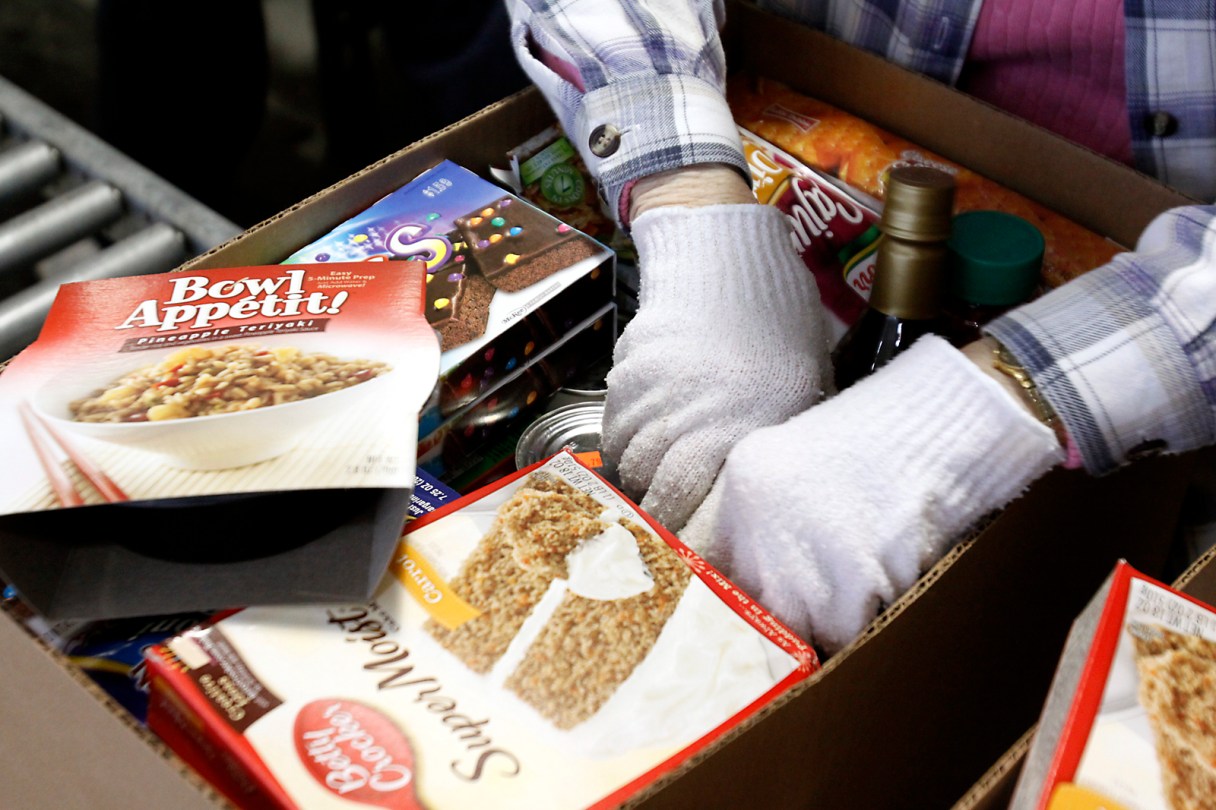
Sterling Gillum, volunteer coordinator at the Chattanooga Area Food Bank, said his organization has seen a rise in volunteers who say they have been laid off.
“It’s a surprise in this economy, the number of volunteers,” he said, “but it’s probably due to a compassionate heart and a good focus.”
Rosemary Miller, volunteer coordinator at the Partnership for Families, Children and Adults, said she is thrilled that people out of work are willing to give their time and energy.
WHO VOLUNTEERSThe percentage of the national population who volunteer, by age:Ages 2005 2006 2007 2008 200916-24 years 24.4% 21.7% 20.8% 21.9% 22%25-34 years 25.3 23.1 22.6 22.8 23.535-44 years 34.5 31.2 30.5 31.3 31.545-54 years 32.7 31.2 30.1 29.9 30.855-64 years 30.2 27.9 28.4 28.1 28.365-over years 24.8 23.8 23.8 23.5 23.9Source: U.S. Bureau of Labor StatisticsWHO VOLUNTEERS?The U.S. Bureau of Labor Statistics’ recent report, “Volunteering in the United States, 2009,” indicates:* 35- to 44-year olds (31.5 percent) and 45- to 54-year olds (30.8 percent) were the most likely age groups to volunteer.* Rates were lowest among persons in their early 20s (18.8 percent) and ages 65 and over (23.9 percent).* Among race and ethnicity groups, whites volunteered at a higher rate (28.3 percent) than did blacks (20.2 percent), Asians (19 percent) and Hispanics (14.7 percent).* Married people had a higher rate (32.3 percent) of volunteering than those who had never married (20.6 percent) and those with other marital statuses (21.5 percent).* Among people ages 25 and over, 42.8 percent of college graduates volunteered, 18.8 percent of high school graduates did so and 8.6 percent of those with less than a high school diploma did.* The type of organization for which volunteers worked the most hours during 2009 was religious (34 percent), followed by educational or youth service related (26.1 percent) and social or community service related (13.9 percent).
“They did not want to sit at home while job hunting,” she said. “And they wanted something they could put in their resume.”
Elaine Erwin, disaster services volunteer coordinator at the Chattanooga chapter of the American Red Cross, said most of the 50 new volunteers who took a recent training course at the organization are out of work.
“So many people are idle,” she said. “They want to do something with their time.”
Several local volunteer coordinators said many of their new recruits have come from the legion of the retired.
Rachel Withers, coordinator of public relations at Hospice of Chattanooga, and Mrs. Erwin said the bulk of their volunteers are ages 55 and up.
“Our biggest trend is that our volunteers have been touched by this organization,” Ms. Withers said. “They feel more connected … and want to maintain that connection.”
Retirees have a little more flexibility in their schedules, Mrs. Erwin said.
“They don’t mind waking up in the middle of the night and going on a fire call,” she said.
The Labor Bureau survey also indicated that the volunteer rate for women increased from 29.4 percent in 2008 to 30.1 percent in 2009, while the volunteer rate for men, at 23.3 percent, remained essentially unchanged.
Local volunteer coordinators said they didn’t see a marked increase in women volunteers, but several said far more women already populate their rolls.
Cheryl Horn, volunteer coordinator at the Humane Educational Society, said at least 85 percent of her volunteers are women, while Amy Hyder, director of public relations for Hospice of Chattanooga, said at least two-thirds of her volunteers are female.
The survey also indicated the rate of volunteerism among 20 to 24-year-olds fell by eight hours from 2008 to 2009, the largest drop in median hours served of any age group.
Area coordinators of volunteers said they didn’t notice such a drop by young adults but indicated that many young adults volunteer in spurts with groups.
Ms. Withers said college students often must get service hours in for classes, while Ms. Horn said volunteering with animals has attracted a number of graduate students.
“We’re seeing that it’s more an association thing for students,” Mr. Gillum said. “It’s nice when they find out volunteering is OK. They gravitate toward it.”