
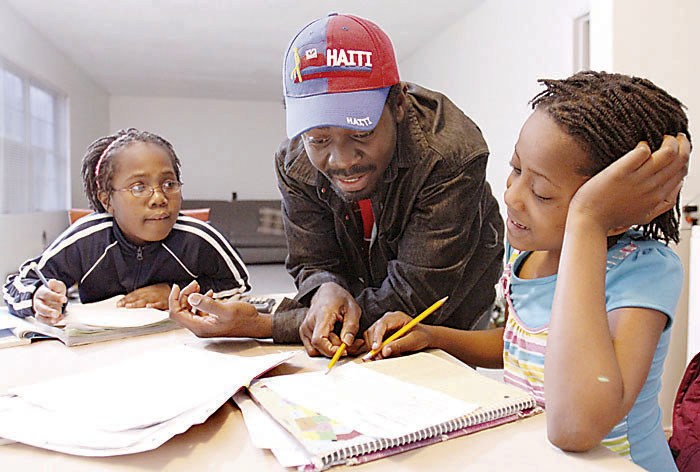
It’s a miracle that all Haitian immigrants illegally in America now have temporary protected status, a local Haitian-American bishop said.
“This is an opportunity for those who are here to do something that will help,” said Bishop Jean Valentin, adding that protected status allows them to work and get driver’s licenses. “Haitian-Americans will continue to support Haiti even if they don’t have any more family to support.”
The day after the 7.0-magnitude earthquake struck the Caribbean nation, Department of Homeland Security Secretary Janet Napolitano said the government stopped removals of illegal Haitian immigrants. On Jan. 15, temporary protected status was given to those who were in this country before the quake.
U.S. Sen. Bob Corker, R-Tenn., agrees with the moves, his spokesman said.
“U.S. assistance in Haiti must be focused on caring for those who are suffering,” said Todd Womack, Sen. Corker’s chief of staff. “Given the extent of the devastation and level of instability there, it would be inhumane to forcibly return anyone to Haiti at this time.”
He said that once basic government services and security are restored, “it is our understanding that these orders will be executed.”
The government also is hurrying to process some immigration applications from Haitians, local officials said, such as parents, spouses and minor children of U.S. citizens.
But Robert Divine, leader of the Chattanooga office of the immigration group at the Baker Donelson law firm, said not to expect similar expedited processing for relatives of noncitizens or adult children. He said those filings are subject to long waiting lists.
“The people at the front of the lines for those number-limited categories had petitions filed for them between 1999 and 2004,” Mr. Divine said.
Most Haitians don’t have the luxury of time, said Herndeur Joseph, whose siblings survived the earthquake two weeks ago but now are struggling to find food and water.
“They have only days … not years,” he said.
Immigration is not the solution to Haiti’s problem, said Steven Camarota, director of research for the nonprofit Center for Immigration Studies.
“We should be thinking a lot more about how to help Haiti recover and develop,” he said. “Immigration can only help a trivial fraction, even if you changed the law (to increase the number of visas).”
U.S. Sen. Saxby Chambliss, R-Ga., said his office has worked with a number of constituents who needed assistance for family members in Haiti and will continue to work with the U.S. Department of State on those matters.
MORE ONLINE
Go to timesfreepress.com/haitiearthquake for all the Chattanooga Times Free Press stories, photos and videos on the disaster. Get information about how to help. Comment on this story.
HAITIANS OBTAINING PERMANENT STATUS
Fiscal year 2008
* Total: 26,007
* Family-sponsored: 9,675
* Employment-based: 117
* Immediate relatives of U.S. citizens: 8,958
* Refugees and asylum seekers: 5,620
* Other: 1,637
Source: Department of Homeland Security, Office of Immigration Statistics
ON THE WEB
www.uscis.gov
TIMELINE
* Jan. 12: 7.0-magnitude earthquake strikes Port-au-Prince.
* Jan. 13: U.S. officials temporarily halt removals of illegal immigrants to Haiti.
* Jan. 15: Temporary protected status given Haitian nationals in the United States as of Jan. 12.
* Jan. 18: U.S. allows orphaned Haitian children to enter the United States temporarily to ensure that they receive the care they need.
Source: Department of Homeland Security
TEMPORARY PROTECTED STATUS
Until July 22, 2011, eligible Haitian nationals may stay and work in the United States. Deadline to apply for temporary protected status is July 20.
Source: U.S. Citizenship and Immigration Services