
An organization of doctors joined an environmental group Thursday to encourage the EPA to adopt to tougher regulations for coal ash waste, which they say is toxic.
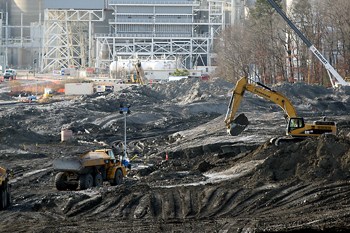
The 1.2 billion-gallon spill of wet coal ash from a breached dam near Kingston, Tenn., just before Christmas 2008 received national attention, but it didn’t reveal the full dimensions of the health threats from coal ash waste, according to Dr. Peter Wilk, executive director of Physicians for Social Responsibility.
“Coal ash is the second-largest industrial waste stream in the U.S., after mining wastes,” states a new report, “Coal Ash: The Toxic Threat to our Health and Environment.” The report was prepared by the Washington, D.C.-based Physicians for Social Responsibility and Earthjustice.
Coal waste fills about 2,000 dump sites across the nation, according to the report, and there are concerns that leakage of toxic substances such as arsenic is contaminating water supplies or that dust is blowing uncontrolled from some sites.
Points from the study* Coal ash commonly contains arsenic, lead, mercury, cadmium, chromium and selenium.* Coal ash is the second-largest industrial waste stream in the U.S., after mining wastes.* Coal ash is in about 2,000 dump sites across the nation; in at least 629 wet ash ponds and 311 dry landfills at power stations; in at least 100 offsite dry landfills; and in about 750 inactive dumps, as well as hundreds of abandoned and active mines.* Coal is used to generate electricity in the nation’s 495 coal-fired power plants and hundreds of industrial boilers.