
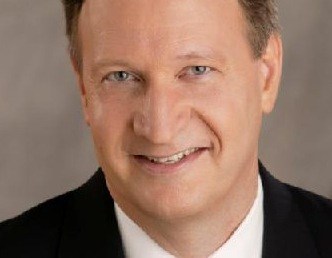
 Tennessee Finance Commissioner Mark Emkes
NASHVILLE — Tennessee tax revenues are projected finally to return to their 2008 levels in 2013, but inflation will have eroded the state’s effective buying power by about 10 percent, a University of Tennessee economist says.
“Tax revenues will be higher in 2013 than in 2008 for the first time in five years,” William Fox, director of UT’s Center for Business and Economic Research, told reporters Wednesday. But while “we’re back to the number of dollars we got in 2008, if you realize the effect of inflation on those dollars, we’re still 10 percent lower. We’re far from being back to the same fiscal situation we were in 2008 despite the fact we have as many dollars,” he said.
As a result, Fox said, “it remains a very tight fiscal environment.”
Fox’s comments came after a meeting of the State Funding Board in which he and other officials presented their forecasts for revenue growth in the remainder of this year, as well as during the 2012-13 budget that Gov. Bill Haslam will present to lawmakers in 2012.
Fox told board members that, in the current fiscal year, state revenues grew at 5.8 percent in the first quarter, but he expects growth to slow. Growth of 3.6 percent for the remainder of the year still will put the state above revenue projections adopted by the State Funding Board in the spring, he said.
Fox estimated growth in the state’s general fund, which pays for most functions of government, would be 4.6 percent. For all funds, which includes fuel taxes, the increase would be 4.3 percent, he said.
For the 2012-13 budget year, Fox forecasts 3.8 percent general fund growth and 3.7 percent growth in all funds.
This year’s total growth should put the state at $9.08 billion — about $229 million above estimates, Fox said.
Revenue Commissioner Richard Roberts offered slightly less-optimistic projections. His department is forecasting 4.4 percent total revenue growth in the current fiscal year and 3.4 percent for the 2012-13 budget year.
On Monday, the four Funding Board members will try to reach a consensus on a revenue range to present to Haslam.
Finance Commissioner Mark Emkes, a Funding Board member, noted that other estimates have forecast growth of 3.9 percent and 4 percent.
“We have to digest the numbers,” Emkes said. “But either way, whether it’s 3.7 or 4.5 percent, there’s still going to be pain involved in this budget, unfortunately.”