
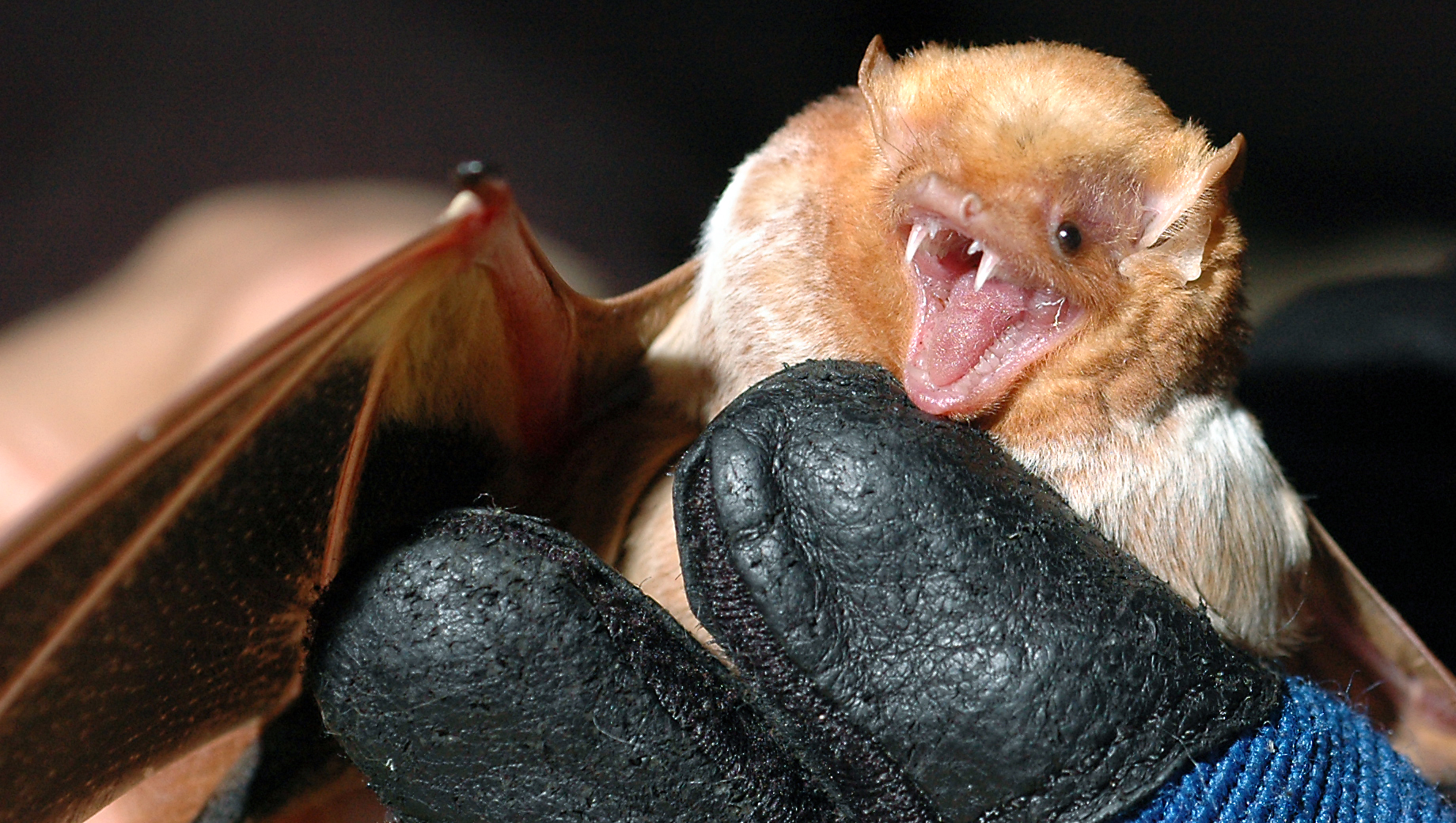
 A researcher holds an uninfected eastern red bat captured during July 31, 2007 in the Cherokee National Forest. The die-off of an estimated half-million bats from white-nose syndrome in the Northeast has frightening implications for Tennessee, which has an estimated 9,000 known bat caves.
Help may be on the way against a fungus that already has killed millions of mosquito-eating and beetle-chomping bats in the Northeast and now is threatening Tennessee, Georgia and Alabama, according to wildlife officials.
Congress has directed the Department of Interior to allot $4 million from its 2012 endangered species recovery fund toward research and management of white-nose syndrome, which is fatal to bats.
Mike Armstrong, Southeast region white-nose syndrome and bat recovery coordinator for the U.S. Fish and Wildlife Service, said the Southeast could be the biggest beneficiary of the money.
“Biologists in Tennessee, Georgia and Alabama are all working very hard right now setting their goals for the upcoming winter of WNS [syndrome] monitoring and surveillance work,” he said.
Additionally, a recent research breakthrough at the University of Tennessee has given wildlife watchers something specific to aim at in seeking a cure. They have confirmed the cause of the fungus that first showed up in the United States five years ago in the Northeast. The disease since has spread to 16 states, including Tennessee, where it was confirmed last winter.