
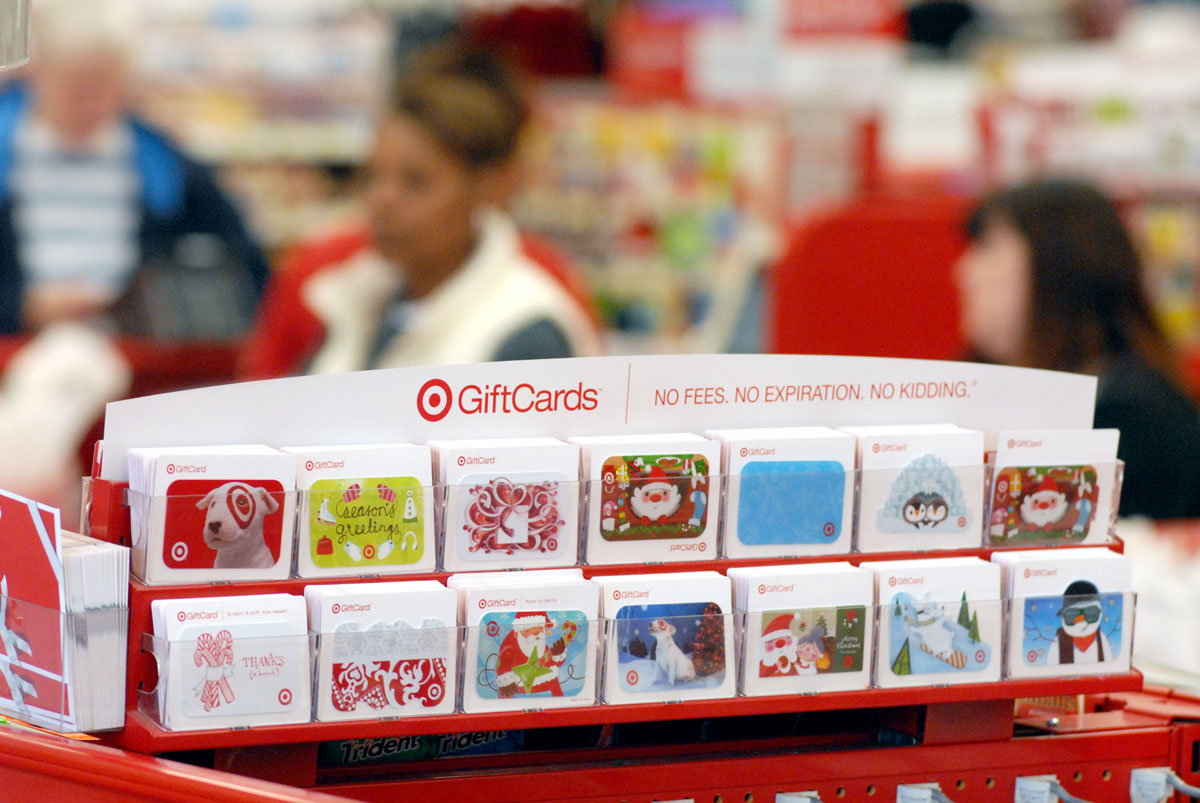
 Staff Photo by John Rawlston
Gift cards are displayed for sale at the Target store in Hixson.
The top holiday gift last year was not a shirt, tie or electronic gizmo. Gift cards ranked No. 1 among holiday presents according to the National Retail Federation. Research firm TowerGroup estimates card sales totaled $91 billion in 2010, expected to exceed $100 billion by 2012.
With all these virtual dollars floating around, it was just a matter of time before a mechanism developed to exchange unused cards for cash or different cards. Indeed, there are websites making a secondary market in gift cards, presenting interesting possibilities for sellers and buyers alike.
Holders of gift cards wishing to sell them for cash can do so on one of a dozen exchange websites such as Cardwoo, PlasticJungle and Giftcards.com. The seller enters information about the specific card and receives an offer, generally between 50 percent and 90 percent of the remaining value.
If the bid is acceptable, the seller prints a mailing label or requests a prepaid envelope and sends the card
to the exchange company. A check is mailed or electronic funds credited once receipt of the card is verified. The amount offered depends upon the relative popularity of the issuing merchant, the type of merchandise, and the quantity of cards in circulation from that purveyor.
By far the more interesting aspect of this nascent marketplace is the buy side. Shoppers can search for gift cards issued by their favorite stores or restaurants and purchase them at discounts that can be quite substantial.
Cards from retailers like J.C. Penney and Kohl’s are trading at 10 percent to 14 percent discount from their face value. That means that a fully loaded $100 gift card can be purchased for as little as $86. Cards of certain merchants and restaurant chains are in greater demand and therefore carry smaller markdowns, but concessions of 3 percent to 10 percent are common.
Buyers can purchase physical cards that are shipped to them postpaid, or they may select electronic versions to redeem on the merchants’ web sites. There are no fees or charges with most exchange sites (be sure of this before you buy), and the transactions are secure (use your credit card or use PayPal for extra security).
Stick with store-branded cards, since they do not typically expire or impose fees, while bank-branded cards can lose value. Since there are dozens of issuers whose cards trade actively, a little research can yield substantial savings.
Get answers to financial questions on Wednesdays from our columnists who work in the financial services industry. Chris Hopkins is vice president, investments, at Barnett & Co. Inc. Submit questions to his attention by writing to Business Editor John Vass Jr., Chattanooga Times Free Press, P.O. Box 1447, Chattanooga, TN 37401-1447, or by e-mailing him at jvass@timesfreepress.com.