
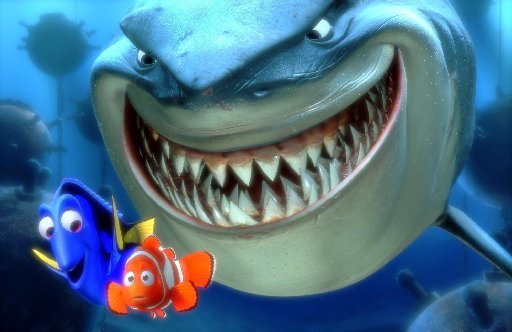
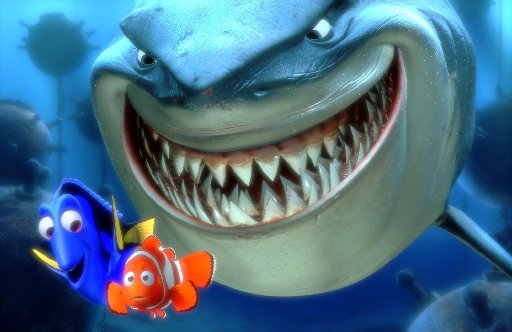
 In this 2003 file image released by Pixar Animation Studios, fish Dory, voiced by Ellen DeGeneres, left, and Marlin,voiced by Albert Brooks, lower right, face an ocean full of perils in their efforts to rescue Nemo in “Finding Nemo.” (AP Photo/Pixar Animation Studios, file)
Pixar Animation Studios has won six Golden Globes, a dozen Academy Awards and almost 50 Annie Awards, but fans and experts say memorable characters, not industry recognition, have driven the studio for the last 25 years.
Apple CEO Steve Jobs acquired Lucasfilm’s computer graphics division and incorporated it as Pixar in 1986. Since then, films such as “Toy Story,” “Finding Nemo” and “Up” have set the industry standard, not only technically but also for character development, said Hendel Butoy, a professor of animation at Southern Adventist University since 2005.
“That’s not to say that the other studios don’t attempt that — they do — but there’s a certain knack to getting memorable characters that are interesting and believable,” said Butoy, who worked as an animator at Disney from 1979 to 2003.
When Pixar and Disney began collaborating in the early ’90s, Butoy’s office at Disney was outside the room where Pixar made its pitch for its first feature, “Toy Story.” Rather than present the unheard of concept of a full-length computer-animated film using traditional story boards, Pixar instead focused on explaining the relationships between the characters, Butoy said.
‘Toy Story’s’ release in 1995 demonstrated that an approach blending narrative and technical achievement could work. Watching it was like feeling the wind shift in a new direction, Butoy said.
“I think everyone thought (‘Toy Story’) was a renaissance for animation. I was pretty much blown away by the look of it and knew that here was something that was going to take off.”
Raising the standard for animation has become a tradition for Pixar. The Oscar for Best Animated Feature was established in 2001, and all seven films the studio released since have been nominated in the category. Five won.
Pixar’s 11th feature film, “Toy Story 3” received five Academy Award nominations this year, including Best Animated Feature and Best Picture. After “Beauty and the Beast” and Pixar’s “Up,” it is only the third animated film to be recognized for the latter category.
University of Tennessee at Chattanooga alumnus Dustin Cawood has worked on Pixar’s last four films as a sound editor at Skywalker Sound, a frequent collaborator with Pixar.
At the Academy Awards show on Feb. 27, Cawood and the rest of Skywalker Sound’s work on “Toy Story 3” will be up for consideration in the Best Sound Editing category.
Every component of a Pixar film, including sound, is driven by the need to strengthen the story, Cawood said.
“They know these characters. They’ve been working with them for years and years,” he said. “They come in with an idea of what they think things should sound like and are using sound as a storytelling device, not just to add to a picture. They’re very good at that over there.”
Pixar’s ability to combine cutting-edge technology and creative narratives has helped elevate their characters onto equal footing with human actors, said Sujeel Taj, a Pixar fan and product specialist at Tricycle Inc. on Broad Street.
“They’ve actually moved beyond just being simply animated film,” Taj said. “Nobody before that thought that animated films could compete on the same level playing field as a live-action movie. “Pixar has changed that.”
FROM THE BEGINNING: A TIMELINE
1986: Apple co-founder and CEO Steve Jobs purchases Lucasfilm’s computer graphics division for $10 million, rebranding it as Pixar.
1987: Pixar receives its first Academy Award nomination (Best Animated Short Film) for “Luxo Jr.”
1989: The studio wins its first Academy Award for the short film “Tin Toy.”
1991: Pixar and Walt Disney Studios agree to develop, produce and distribute three feature-length animated films.
1995: “Toy Story,” Pixar’s first feature-length and the first fully computer-animated film, is released.
1996: Pixar chief creative officer John Lasseter receives the Special Achievement Award at the Academy Awards for his leadership of the “Toy Story” team.
1997: Disney and Pixar sign a new agreement to jointly create five films.
1998: “A Bug’s Life” is released, breaking Thanksgiving weekend box-office records.
1999: “Toy Story 2” is released, becoming the first animated film to gross more than its predecessor.
2000: “Toy Story 2” receives Pixar’s first Golden Globe for Best Picture — Musical or Comedy.
2001: “Monsters, Inc.” grosses $100 million at the domestic box office in nine days, faster than any other animated film.
2002: “Monsters, Inc.” wins an Academy Award for Best Song and is nominated for Best Animated Feature, which every subsequent Pixar film has also been nominated for.
2003: “Finding Nemo” releases. “Tin Toy” is added to the National Film Registry.
2004: “Finding Nemo” wins the Academy Award for Best Animated Film. “The Incredibles” releases.
2005: “The Incredibles” wins the Academy Award for Best Animated Film. “Toy Story” is added to the National Film Registry.
2006: Disney acquires Pixar in a deal worth $7.4 billion. “Cars” releases, marking John Lasseter’s first return to directing since “Toy Story 2.” The film wins Best Animated Feature at the Golden Globes and Academy Awards.
2007: “Ratatouille” releases, garnering five Academy Award nominations (winning Best Animated Feature Film) and becomes the best reviewed film of 2007.
2008: “WALL*E” releases to a Pixar record of six Academy Award nominations, winning Best Animated Feature Film, a category it also wins at the Golden Globes.
2009: “Up” is released and becomes the first animated film since “Beauty and the Beast” to garner an Academy Award nomination in the Best Picture category.
2010: “Toy Story 3” releases, becoming the first animated film to gross $1 billion in its theatrical run.
2011: “Toy Story 3” is nominated for five Academy Awards, including Best Picture and Best Animated Feature.
Source: Pixar.com
AT THE BOX OFFICE
Nine of Pixar’s 11 feature-length films are among the 100 highest-grossing films of all time.
* No. 5: “Toy Story 3” ($1.06 billion)
* No. 22: “Finding Nemo” ($867 million)
* No. 40: “Up” (731 million)
* No. 50: “The Incredibles” ($631 million)
* No. 52: “Ratatouille” ($623 million)
* No. 73: “Monsters, Inc.” ($525 million)
* No. 75: “WALL*E” ($521 million)
* No. 85: “Toy Story 2” ($485 million)
* No. 98: “Cars” ($462 million)
Source: BoxOfficeMojo.com (as of Tuesday)
NEXT UP
Pixar’s 12th feature film, “Cars 2,” will release June 24. Other Pixar projects listed as being in development on the Internet Movie Database include “Brave” and “Monsters, Inc. 2,” both of which are tentatively scheduled for a 2012 release.