
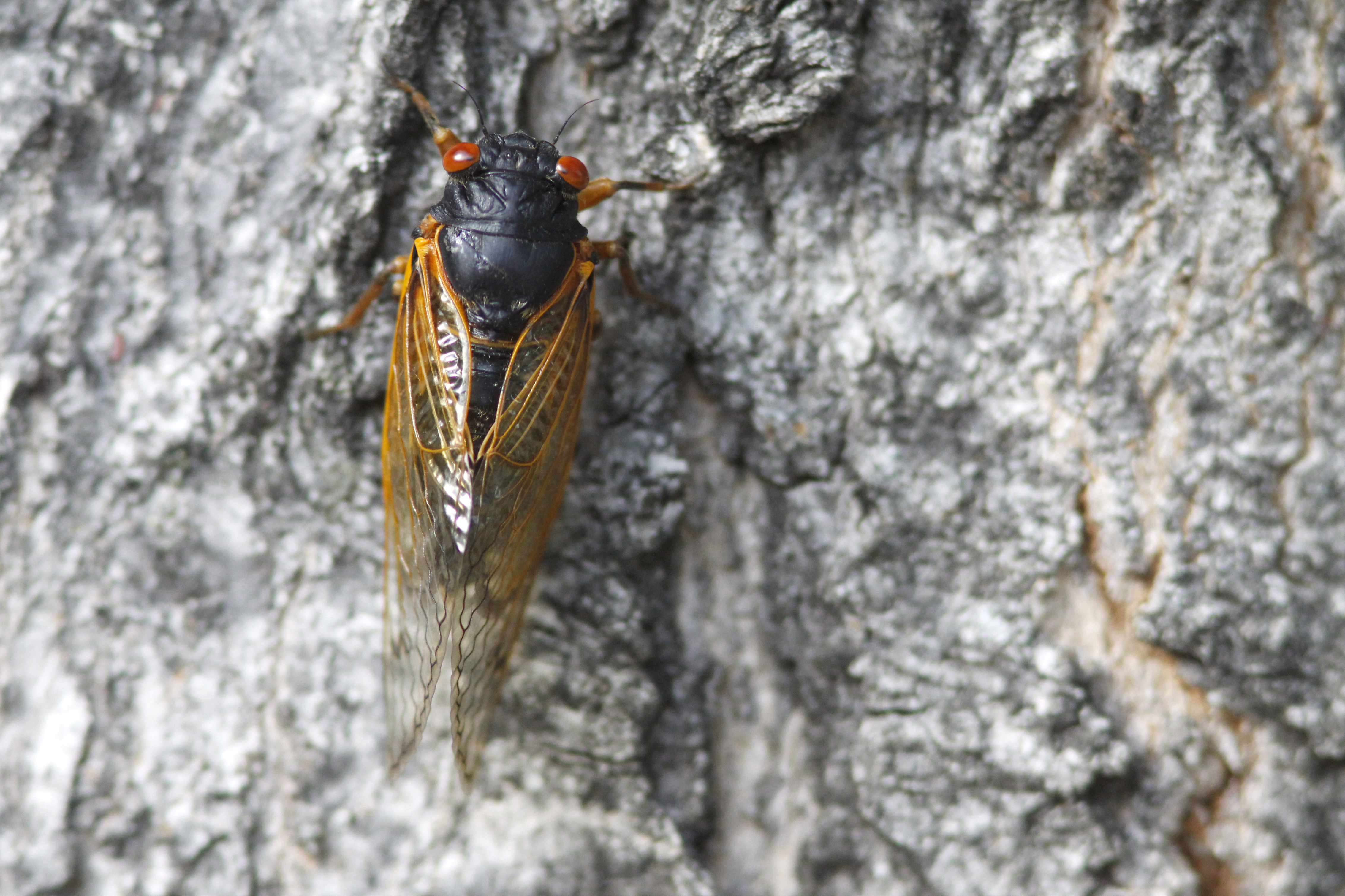
 A cicada rests on a tree at the Chattanooga Riverpark. Most North American cicadas have a 13- or 17-year life cycle living underground as nymphs for the majority of their lives.
Staff Photo by Dan Henry/Chattanooga Times Free PressA cicada rests on a tree at the Chattanooga Riverpark.
More annoying than high schoolers kissing at the movies and more likely to keep you awake than the next-door couple in your college dorm, cicadas bring mating cries to a whole new level.
“It’s deafening at my house,” said Dorothy Weaver, of South Pittsburg, Tenn. “You can’t talk, you can’t do anything.”
Weaver ate lunch with co-workers at the Tennessee Riverpark on Wednesday while hundreds – maybe thousands – of cicadas buzzed in the background. Sitting at an otherwise silent picnic table it was impossible to ignore the bugs’ clicking, buzzing and whining, but Weaver and her friends could easily hear one another talk.
At its worst, the sound would be several times louder. Standing under a tree filled with cicadas, their chorus can reach levels higher than 90 decibels, or as loud as truck traffic.
Unfortunately for Weaver, she’ll be putting up with the red-eyed arthropods for a few more weeks. Once they emerge from the ground, the bugs spend about a month mating, the female cutting shallow gashes in branches to lay up to 600 eggs. After the adults die, the eggs hatch and a new generation of cicadas burrows underground – in this brood’s case for 13 years – before re-emerging and starting the cycle all over again.
Though annual cicadas make a small appearance every summer, about five of the 15 United States broods mate in the area. That’s why Chattanooga sees – but mostly hears – millions of the boldly buzzing bugs every few years.
“I’ve had two people ask, ‘What is that alarm and can someone turn it off?'” Chattanooga Nature Center spokeswoman Tina Harvey Crawford said.
Of course, the noise isn’t the world’s worst car alarm. Male cicadas spend the daylight hours making their songs using rigid membranes, called tymbals, on their abdomens. The noise is amplified within their hollow stomachs, creating a croon irresistible to female cicadas.
But the giant bugs aren’t just good for ballads. CNC Wildlife Curator Tish Gailmard has been collecting the insects, feeding them to the center’s crows, turtles, possums and toads.
“The crows eat them like popcorn,” she said. “Even the wolves have been eating them.”
Cicada population densities have been recorded at levels as high as 1.5 million per acre. That ensures their survival in spite of predators and guarantees that anyone or anything within earshot will hear the cicadas’ full song before they die off.
“You sort of get accustomed to it. If I’m out in the yard working, it’s OK,” said Hugh Barns, who has lived in the Chattanooga area for 16 years. “But if I just want to sit down outside on the deck, they can be annoying.”
He has steeled himself to the annoyance and is ready to wait out the rest of the bugs’ life cycle.
“I call them the choir,” said Barns. “I tell my wife, ‘The choir’s still singing.'”