
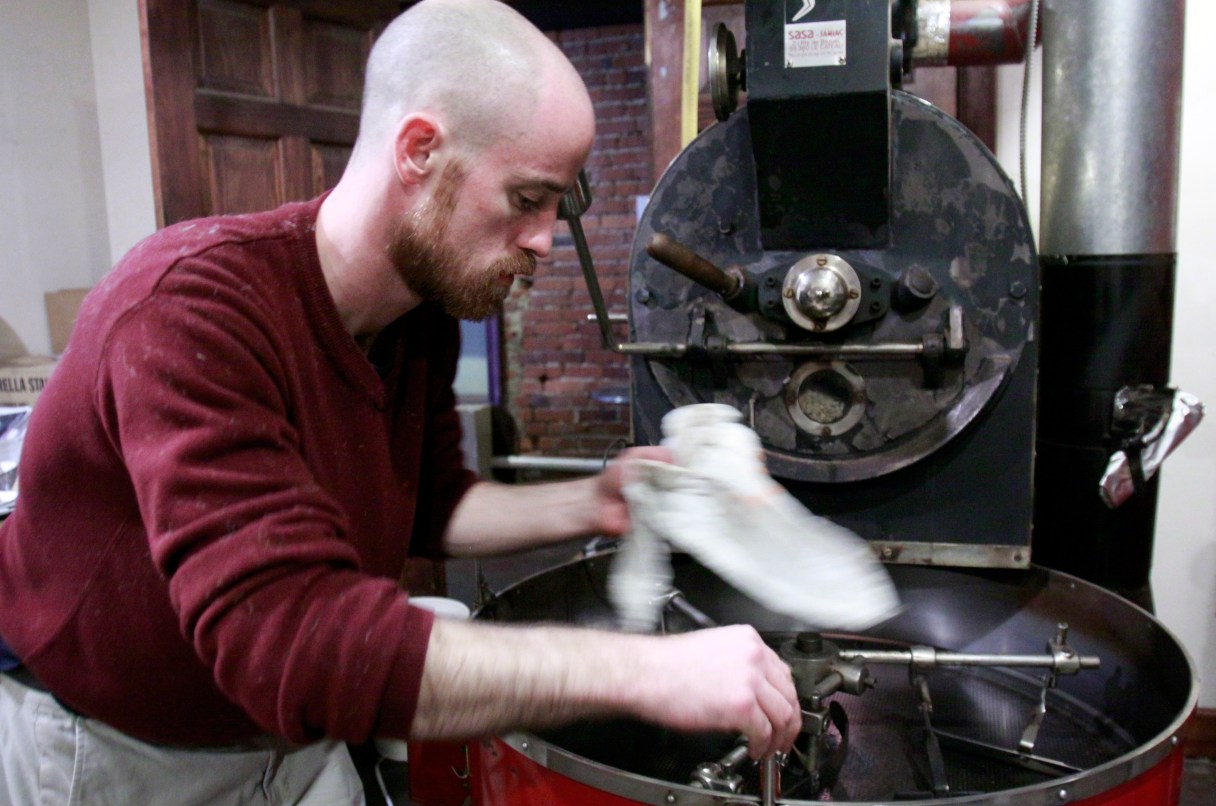
The best part of waking up is getting expensive, as the cost of a cup of coffee has climbed faster than the price of a tank of gas.
The precious beans that fuel much of America’s work force have doubled in price for some Chattanooga roastmasters, and costs have climbed nationally for the producers of Folgers, Dunkin Donuts and Starbucks.
“It’s definitely out of control,” said Andrew Gage, founder of Chattanooga-based Velo Coffee Roasters. “I’m paying 100 percent more than when I started a year ago.”
The higher cost of coffee is cutting into his profits, he said, in an already competitive business.
But if local retailers raise their prices to reflect the higher expense of supplies, they risk driving loyal customers to cheaper alternatives.
Economists say that demand for coffee is fairly constant regardless of price, much like cigarettes. Price fluctuations may cause drinkers to switch to switch to a cheaper brand or coffee shop, but a few cents difference isn’t likely to drive consumers to quit drinking coffee cold turkey.
“I’m trying to slowly raise prices over time as customers become aware of the green prices going up,” Gage said.
The high price of beans is mitigated somewhat for retailers by the low percentage of actual bean that makes it into each cup of coffee.
The drink mostly consists of water, with about 9.5 ounces of beans yielding about 125 ounces of brewed coffee, said Matt Skudlarek, assistant store manager at Pashaj Coffee & Tea
“We only had to adjust our prices a little bit,” he said. “We went up anywhere from 6 to 8.5 percent on each drink.”
UTC Economist Bruce Hutchinson said the price of beans could be tied to the world’s economic woes.
When economic conditions are uncertain at home and abroad, and with cheap money available, traders typically sink their money into commodities – things the world’s consumers will always need.
A stagnant global economy and worldwide inflation, or stagflation, drives investment into coffee futures as a safe bet, he said.
“It’s not just coffee, it’s not just petroleum; it’s commodities in general, particularly commodities that are traded on world markets,” Hutchinson said. “It’s low economic growth combined with high unemployment – two characteristics that describe much of the world’s economy.”
Starbucks in March raised the price of packaged coffee by 12 percent, Dunkin Donuts raised prices by 10 percent in February, and Folgers coffee went up 11 percent in late May to reflect the new reality.
With suppliers raising prices on everything from cheap Colombian decaf to exclusive Hawaiian Kona Coffee, the key to retailers’ survival is to lock in prices as soon as possible, said Chris Anderson, coffee roastmaster for Rembrandt’s Roasting Co.
By signing a contract when prices are lower, roastmasters like Anderson avoid wild market fluctuations that bedevil many sellers.
“I was able to lock in March prices for the year,” Anderson said. “In March they had gone up a lot, but hadn’t gone up as much as they have now.”
With the exception of slightly increased consumption among China’s growing middle class, he hasn’t seen a rise in actual demand to go along with the prices, nor has there been a significant disruption in supply beyond the usual inclement weather.
The sooner the governments grab hold of inflation and restore economic confidence, the sooner things can get back to normal in the world of coffee, Hutchinson added.
“If we’re correct, the solution is for the Federal Reserve to slow or stop excessive expansion of the U.S. money supply,” he said. “This ought to be something the Federal Reserve should be following much more closely than they are.”