
Once, there was an automobile industry that rebelled against any suggestion of improved fuel economy, that labeled as “impossible” the achievement of more miles per gallon without reduced crash safety, that treated economy cars as motorized dross for the poor and certifiably less fortunate.
That automobile industry no longer exists.
Ample proof of change can be found in the market segments for compact and subcompact cars, in which manufacturers are battling for sales and customer loyalty by doing what they once deemed undoable, offering high fuel economy and top road performance in small cars with base prices below $20,000; getting top safety ratings from the federal government and the automobile insurance industry in little cars once called “crash buggies”; and redefining “luxury” by turning out small cars with the comforts, amenities and communications technology found in their larger, more expensive brethren.
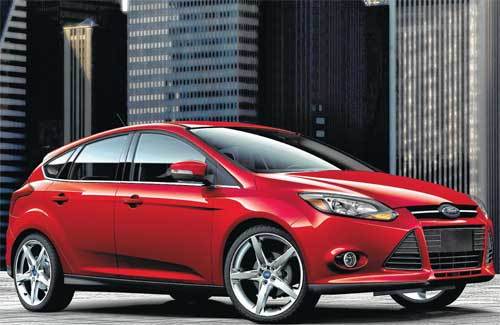
Consider, as a case in point, the 2012 Ford Focus SE four-door hatchback. It gets 26 miles per gallon in the city and 36 on the highway using regular gasoline. And it does that with a direct- injection 2-liter in-line four-cylinder engine that puts out a maximum 160 horsepower and 146 footpounds of torque.
In the past, Ford would have been happy with that little car. It would have driven it up to Capitol Hill