
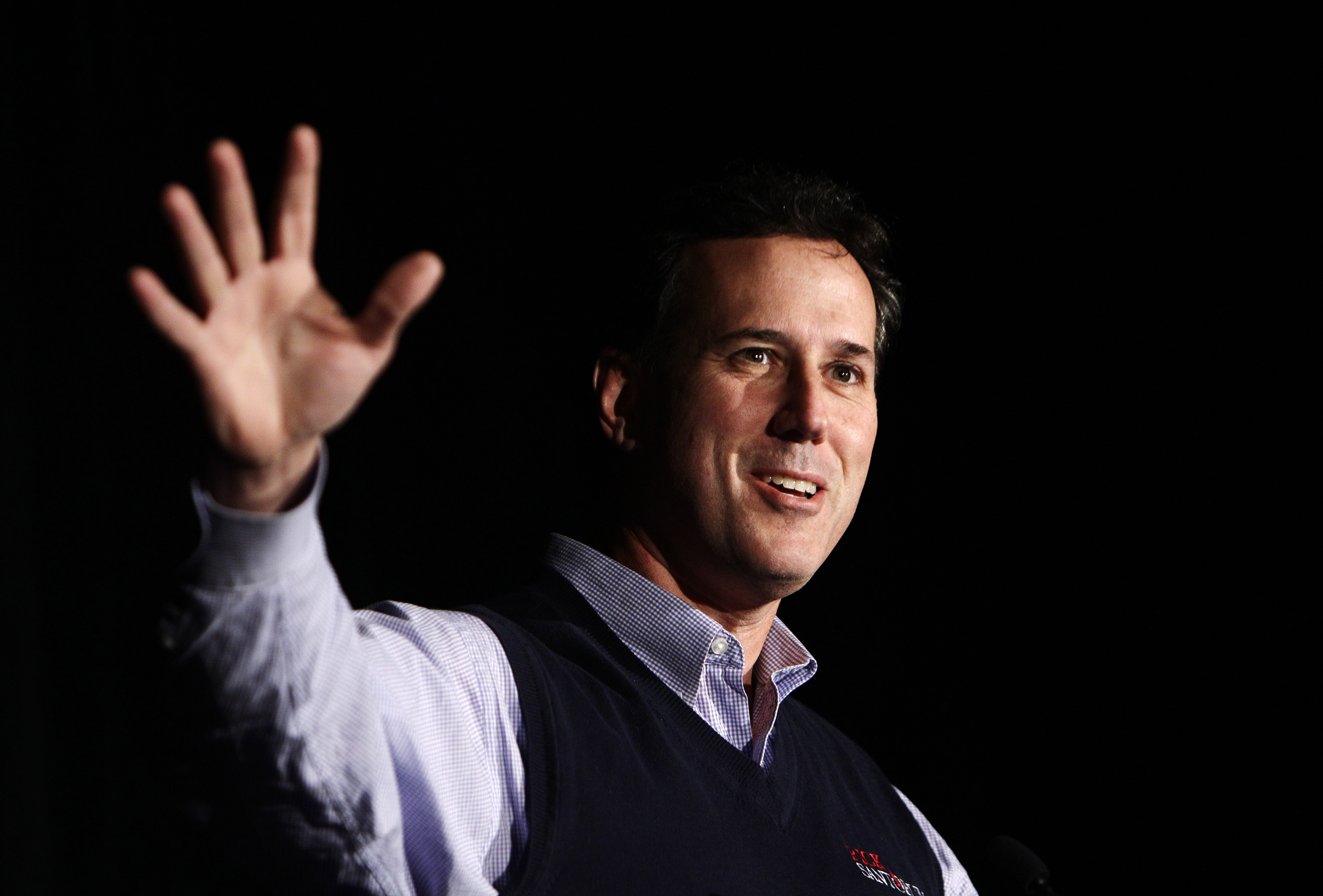
 Republican presidential candidate, former Pennsylvania Sen. Rick Santorum speaks in this file photo.
Rick Santorum’s decision Tuesday to end his campaign for the Republican presidential nomination all but guarantees the nomination for front-runner Mitt Romney. Yet it hardly ends a political rebound for Santorum that, before his unlikely victory in the Iowa caucuses, had seemed more quixotic than substantive. Whether and how the pair stanch the bad blood that has since spilled between them will be important for the careers of both. It possibly could help determine the outcome of the November presidential election.
Santorum entered the Iowa caucuses in a pickup truck with a few aides and what pundits claimed was faint hope for a decent showing. But he managed to do there what Romney, despite frequent visits and a large campaign staff that he directed from his luxury bus, failed to do: rally substantial support from conservative evangelicals, a must-win wing of the Republican base. Romney ended the night of the caucuses thinking he had won. Final tallies later confirmed the victory for Santorum.
Santorum followed his Iowa victory with intermittent wins in 10 other states’ Republican primaries and caucuses, but he couldn’t keep pace with Romney’s intensively planned and well-heeled campaign. Nor could the weaker super-PAC that supported Santorum counter the overwhelming wave of negative advertising against him by the deep-pocket super-PAC that supports Romney. Hence the current bad blood, which is now so thick that Santorum refused even to mention the name of Romney in his press conference, let alone to urge his supporters to fall in behind Romney. So much for party solidarity.
But while Santorum kept the primaries more interesting than Ron Paul and Newt Gingrich could do in combination, delegate math and the polls put him out of the race weeks ago. As of Tuesday, he had accumulated just 275 delegates to Romney’s 659, and polls suggested that Romney would easily win the nomination by summer.
In fact, it wasn’t clear that Santorum would win the primary in Pennsylvania, where he lost a campaign for re-election for a third term to the U.S. Senate in 2006. Just as his stands on social issues defeated him then, they also worked against him in this year’s GOP presidential primary.