
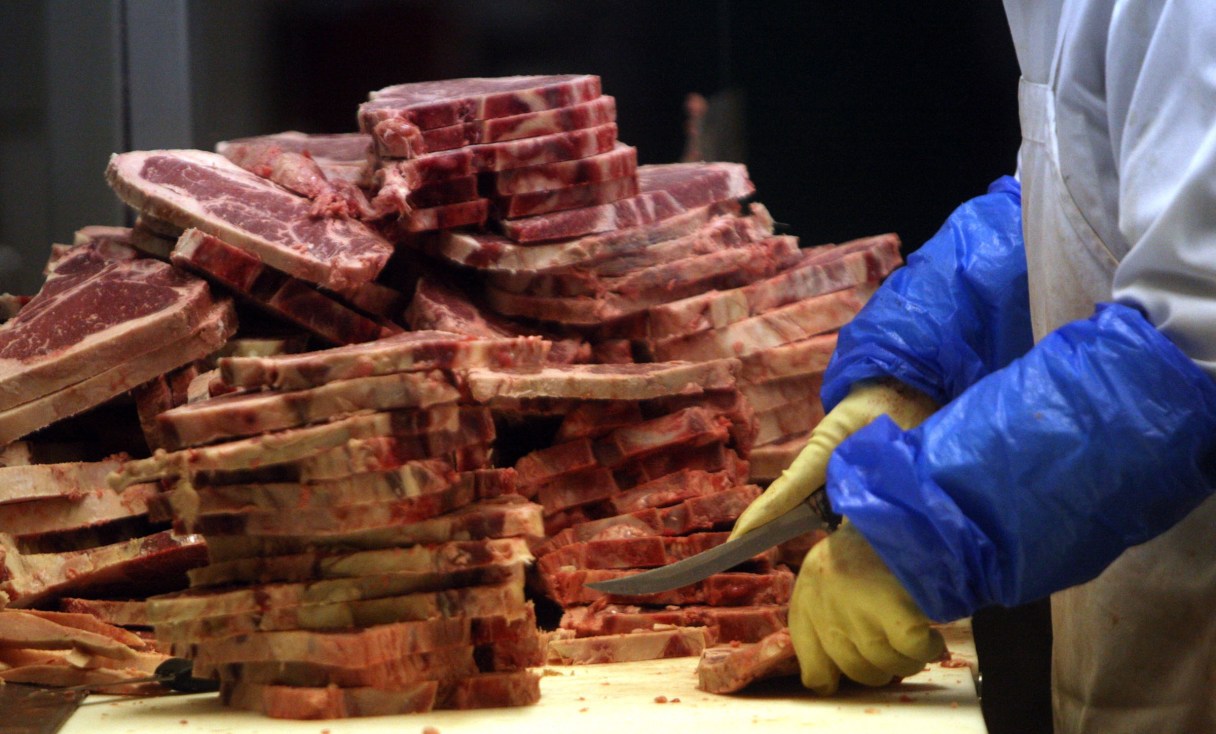
 A worker slices up meat in this file photo.
WASHINGTON – The bacon you had for breakfast is at the center of a 35-year debate over antibiotics.
That’s because the same life-saving drugs that are prescribed to treat everything from ear infections to tuberculosis in humans also are used to fatten the animals that supply the chicken, beef and pork we eat every day.
Farmers say they have to feed the drugs to animals to keep them healthy and meet America’s growing appetite for cheap meat. But public health advocates argue that the practice breeds antibiotic-resistant germs in animals that can cause deadly diseases in humans.
The U.S. government moved to ban the use of some of the drugs in animals in the 1970s, but the rule was never enforced. Then last week, the Food and Drug Administration outlined plans to phase out the use of antibiotics in farm animals for nonmedical purposes over three years.
The U.S., the biggest global consumer of meat by far, follows Europe and other developed nations in restricting the use of penicillin and other antibiotics in animals. The issue has moved to the front burner as documentaries such as “Meet Your Meat” and “Food Inc.” have led Americans to focus more on what goes into their food. Sales of antibiotic-free meat, for instance, are up 25 percent to $175 million in the past three years.