
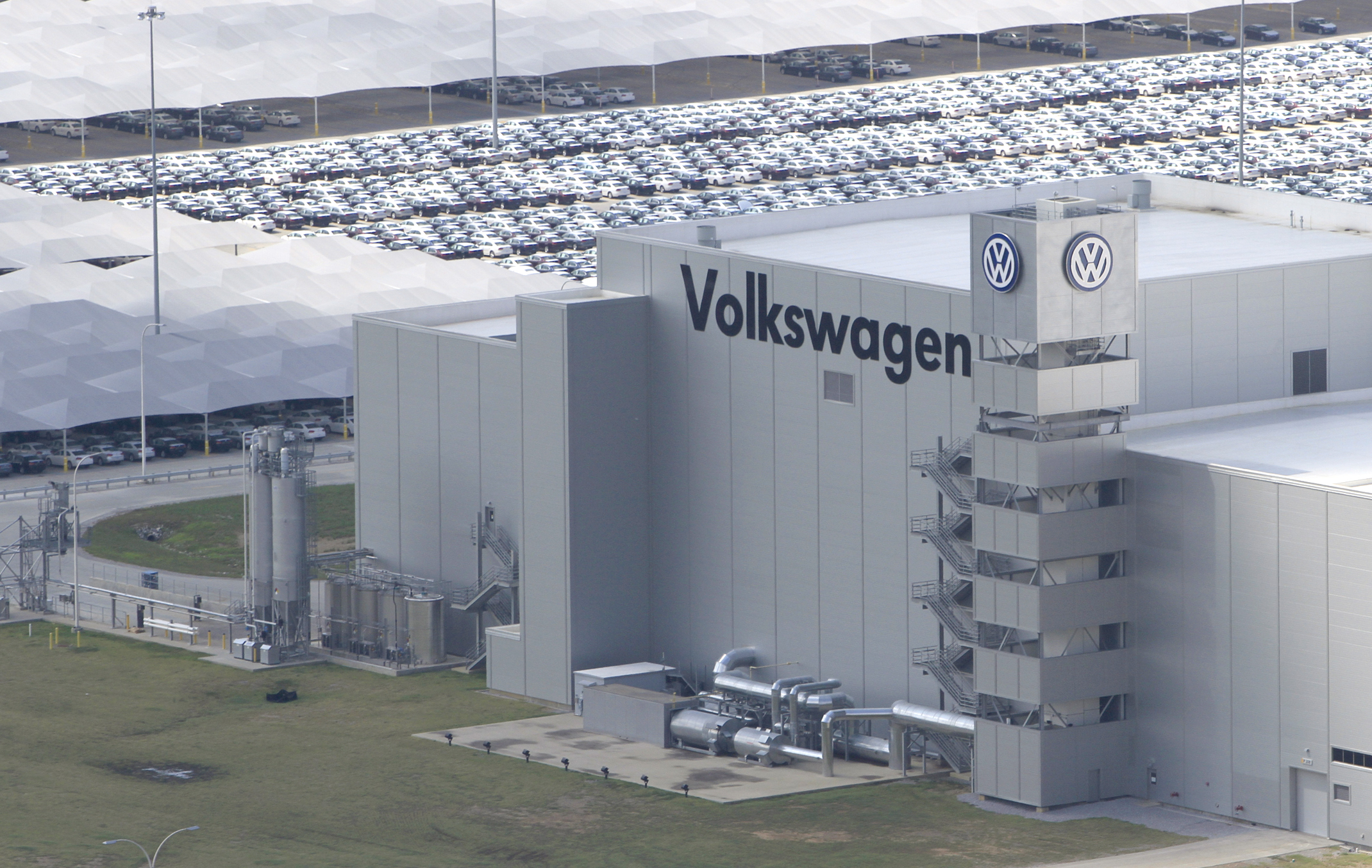
 New Volkswagen Passats are seen behind the Chattanooga assembly plant’s building.
The globalization of trade increases pressure on middle-class incomes in western nations that a generation ago seemed immune to such pressure. As the jobs of American workers in both factories and white-collar businesses become more exportable, the downward pressure on America’s middle-class wages can only become more onerous, further squeezing family incomes and driving bereft workers to lower-wage jobs.
It’s not just wage differentials and tax advantages that are driving the off-shoring of jobs, however. The technology base and manufacturing skills in many industrializing nations have risen exponentially, which is why Apple assembles most of its products in China, and why Thailand assembles most of our computers. There’s also the widening educational gap in the workforce that puts American students, with their relatively low number of school days and curriculum barriers, further and further behind the nation’s chief economic competitors.
American students’ achievement levels as a whole lag those of students in China, South Korea, Japan and other aggressive Asian nations, as well students in much of Europe. Recent figures from the Organization for Economic Cooperation and Development, for example, place 15-year-old American students 29th in math in international OECD-sponsored tests, 21st in science, and 22nd in reading literacy. The United States has also fallen sharply in college graduation rates.
America’s upper-middle-class students, to be sure, generally still score well against foreign competition, but that’s hardly a consolation. The nation needs all students and workers to do well if America as a whole is going to prosper and avoid becoming a declining, frightened, class-divided society where social ills will only be compounded.
These trends raise compelling questions for families: What kind of education do adults and their children need to get the jobs that will sustain their incomes, their livelihoods and their quality of life? And what will their governments do to nurture the educational and technological foundation needed to grow America’s industrial base?