
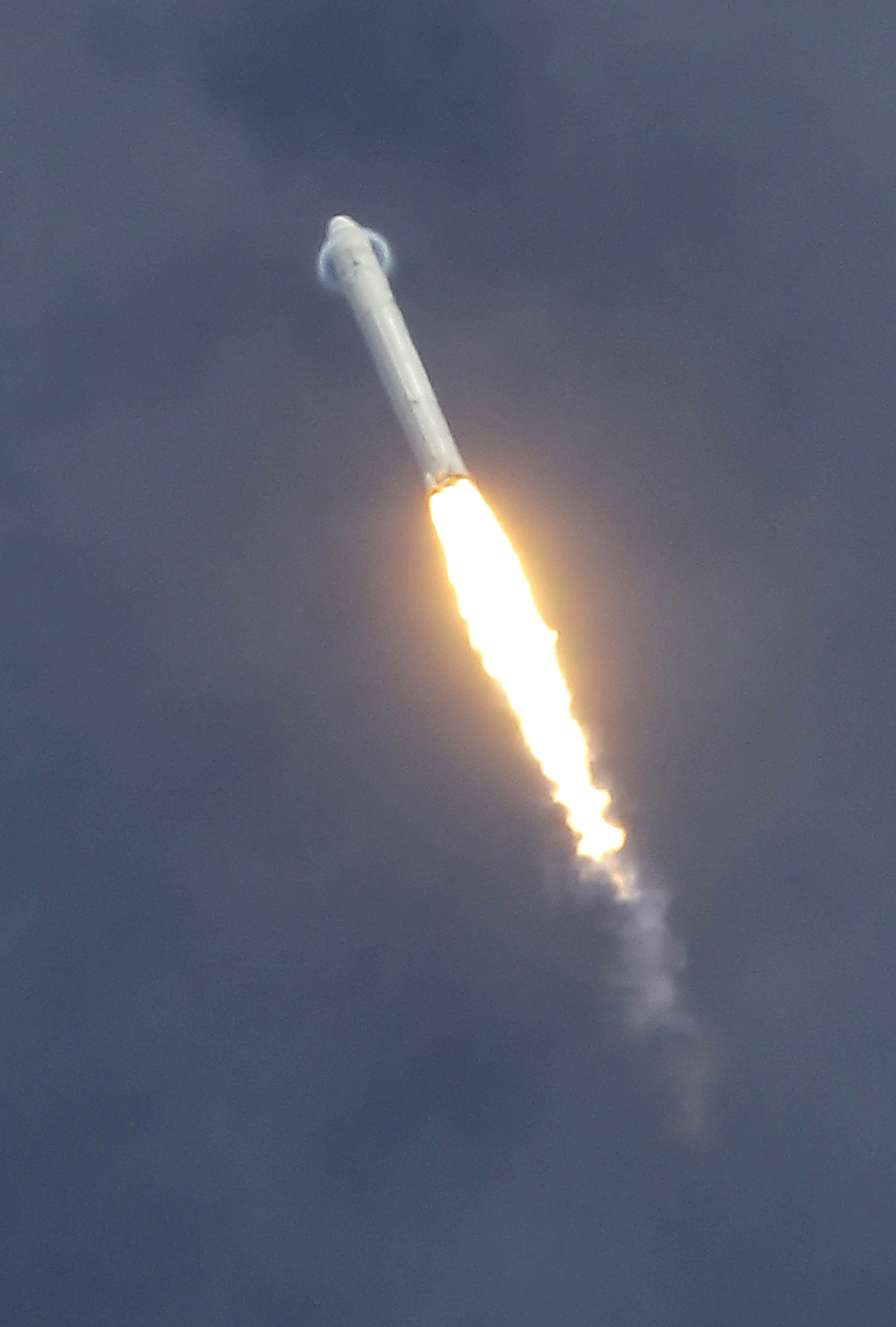
 A halo forms around the top of the SpaceX Falcon 9 test rocket as launches from complex 40 at the Cape Canaveral Air Force Station in Cape Canaveral, Fla. A launch scheduled for Saturday will mark the first time a private company will send its own rocket to the orbiting International Space Station, delivering food and ushering in a new era in America’s space program.
By KENNETH CHANG
c.2012 New York Times News Service
It sounds like a routine event for NASA: At 4:55 a.m. Saturday, a rocket is scheduled to lift off from Cape Canaveral, Fla., and carry cargo – but no people – to the International Space Station.
But if all goes as planned, that morning will mark something transformative for the space industry: a victory for capitalism in what has been for decades a government-run enterprise. The capsule, built by Space Exploration Technologies Corp. – SpaceX, for short – would be the first commercial spacecraft to make it to the space station, and many observers view its launching as the starting gun in an entrepreneurial race to turn space travel into a profit-making business in which NASA is not necessarily the biggest customer.
Already, there are some hints of how the era of commercial space travel might unfold. Companies like Virgin Galactic, XCOR and Space Adventures are booking passengers on suborbital joy rides to space, promised for dates within the next few years, and hundreds of people are signing up. And already there are celebrity tie-ins: Among the people who have signed up for Virgin’s first flights are Ashton Kutcher, Angelina Jolie, Brad Pitt, Tom Hanks and Katy Perry.