
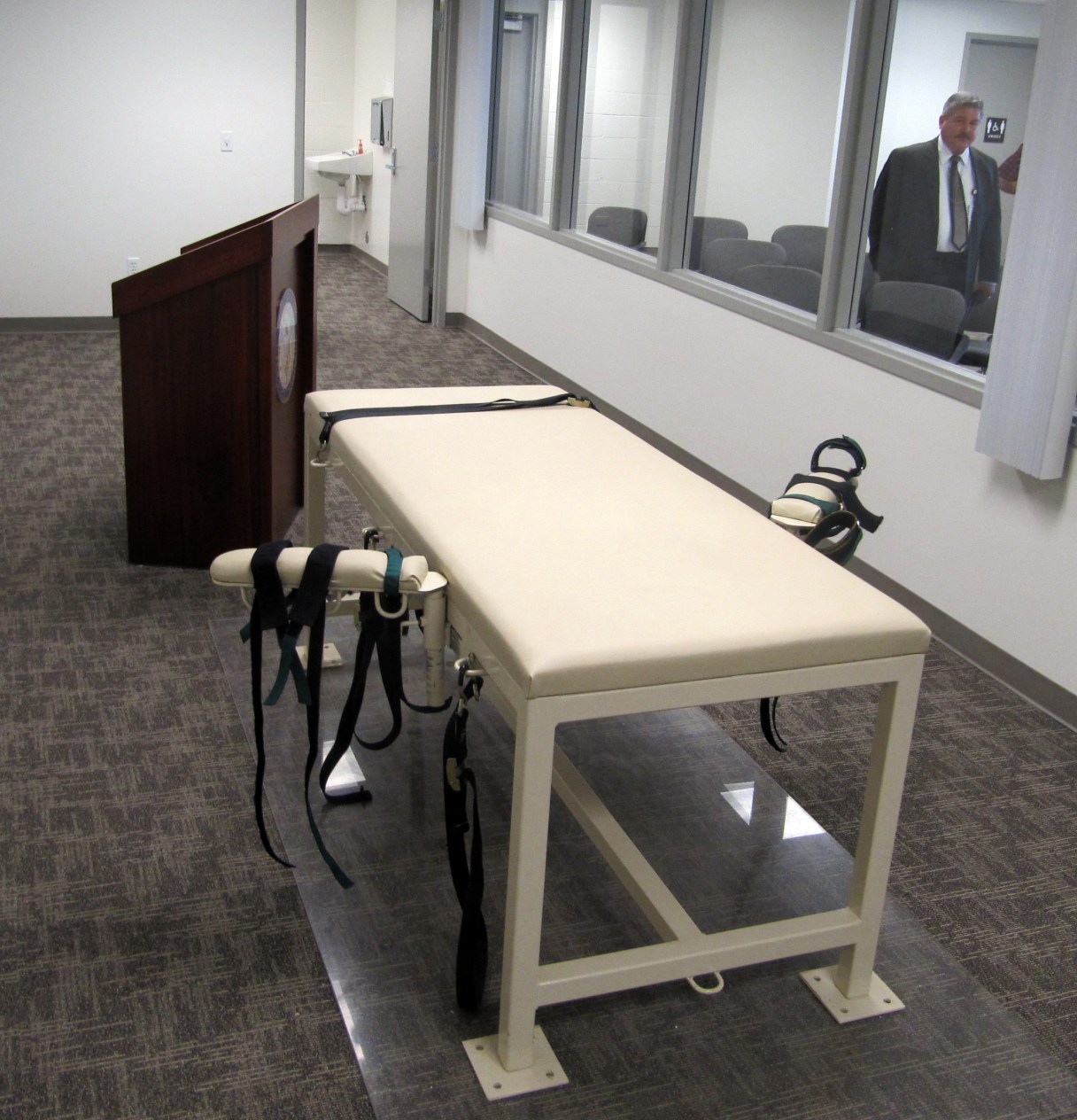
 This Oct. 20, 2011 file photo shows the execution chamber at the Idaho Maximum Security Institution as Warden Randy Blades, right, stands in the observation room, in Boise, Idaho. The Associated Press and 16 other organizations are suing the state of Idaho to force officials to allow media witnesses to view executions in their entirety. The lawsuit, filed in Boise’s U.S. District Court on Tuesday, May 22, 2012, asks a federal judge to require the state to increase witness access before the scheduled execution of convicted killer Richard A. Leavitt on June 12. (AP Photo/Jessie L. Bonner, File)
REBECCA BOONE
BOISE, Idaho (AP) – A San Francisco-based federal appeals court ruled in 2002 that every aspect of an execution should be open to witnesses, from the moment the condemned enters into the death chamber to his final heartbeat.
The ruling established what was expected of the nine Western states within the court’s jurisdiction. A decade later, five of the states have kept part of each execution away from public view, according to an Associated Press review and death penalty experts.
Idaho, Arizona, Washington, Montana and Nevada have conducted 15 lethal injections since the ruling, and half of each procedure has been behind closed doors.
That means that a small group of witnesses, including members of news organizations who act as representatives of the public, do not see, for instance, the insertion of the IVs that deliver the fatal drug mixture.