
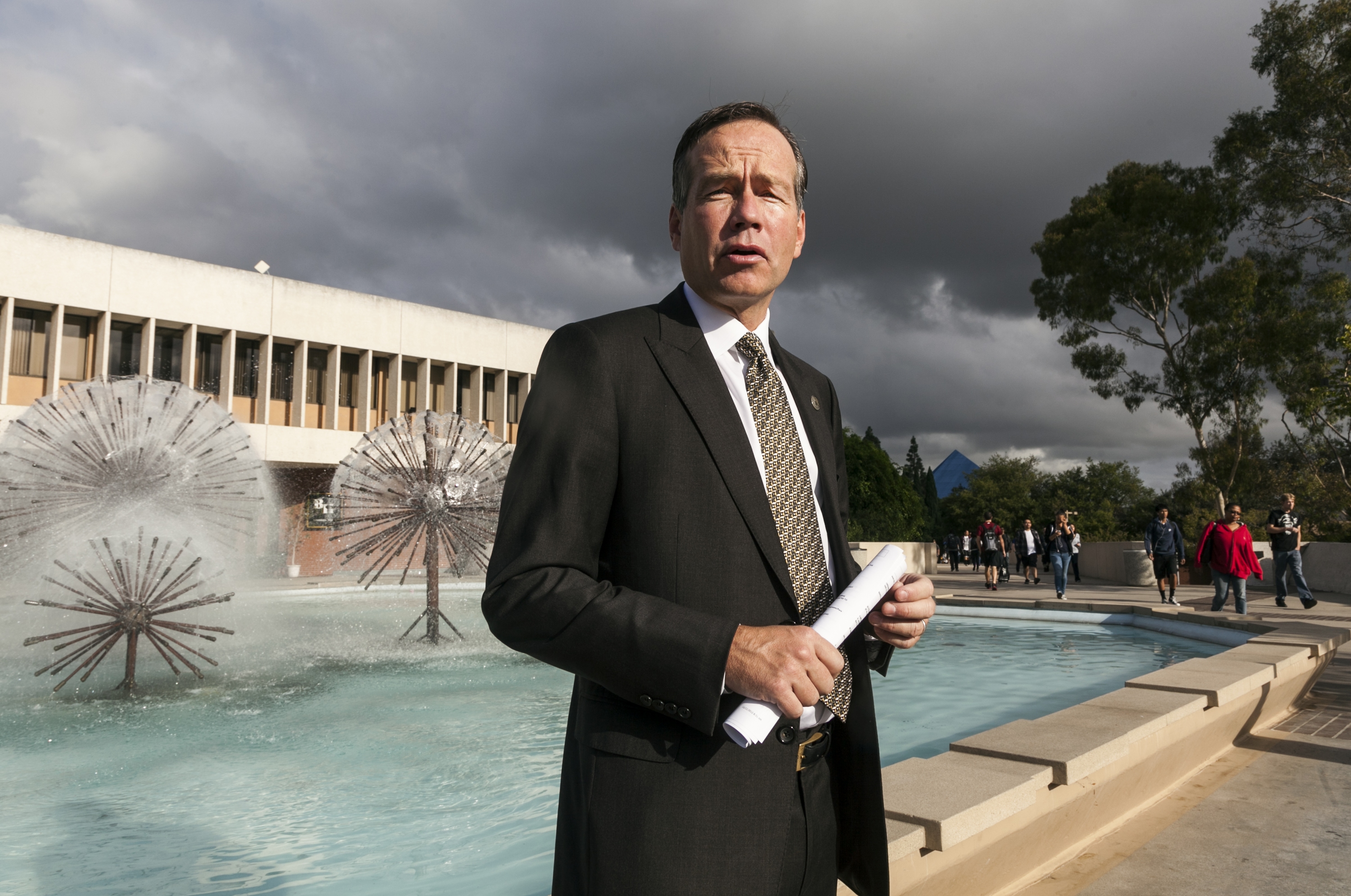
 King Alexander, president of California State University, Long Beach, stands on the campus in Long Beach, Calif. Cal State-Long Beach’s tuition of $6,800 is below the national average, which helps explain why it got 78,000 applications last year, said Alexander. But prices are $2,000 higher than two years ago, only partly offsetting cuts of $4,000 per student from the state, and have hit low-income students hard.
The sticker price of in-state tuition at four-year public universities climbed about $400 this fall, an increase of nearly 5 percent that brought the average to $8,655. That’s a modest increase compared to recent years but still painful for families with stagnant incomes after a prolonged economic slump.
Room-and-board charges grew by a comparable amount, raising the full cost for students living on campus to $17,860.
The latest annual figures from the College Board, out Wednesday, show only about one-third of full-time students pay that published price. The estimated net price – what students pay on average after accounting for grants and tax credits – remains considerably lower than the list price: about $2,910 for tuition at public four-year universities, and $12,110 including room and board.
But after several years when a wave of student aid from Washington held net prices mostly in check, real costs for students have now jumped two straight years, as that wave washes back from its high-water mark.
At private colleges, enrolling about one-quarter of four-year college students, list prices remained substantially higher: $39,518 on average, including room and board. During the previous three years, net prices at private colleges had declined. But this year net tuition and fees increased about $780. Including room and board, but factoring in aid, the typical student at a private college is paying $23,840.