
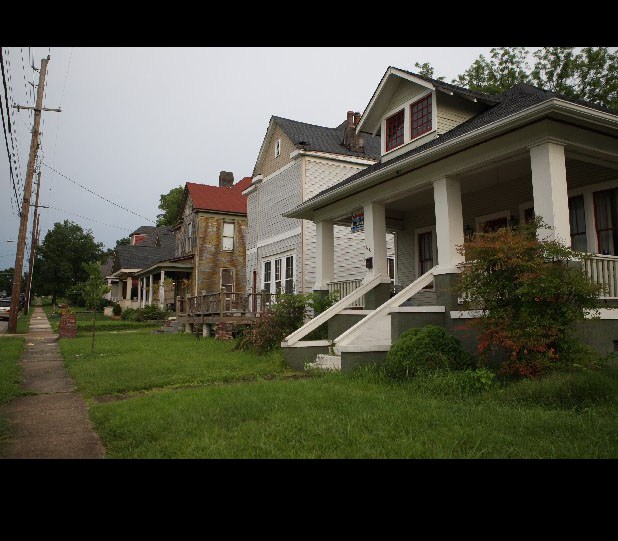
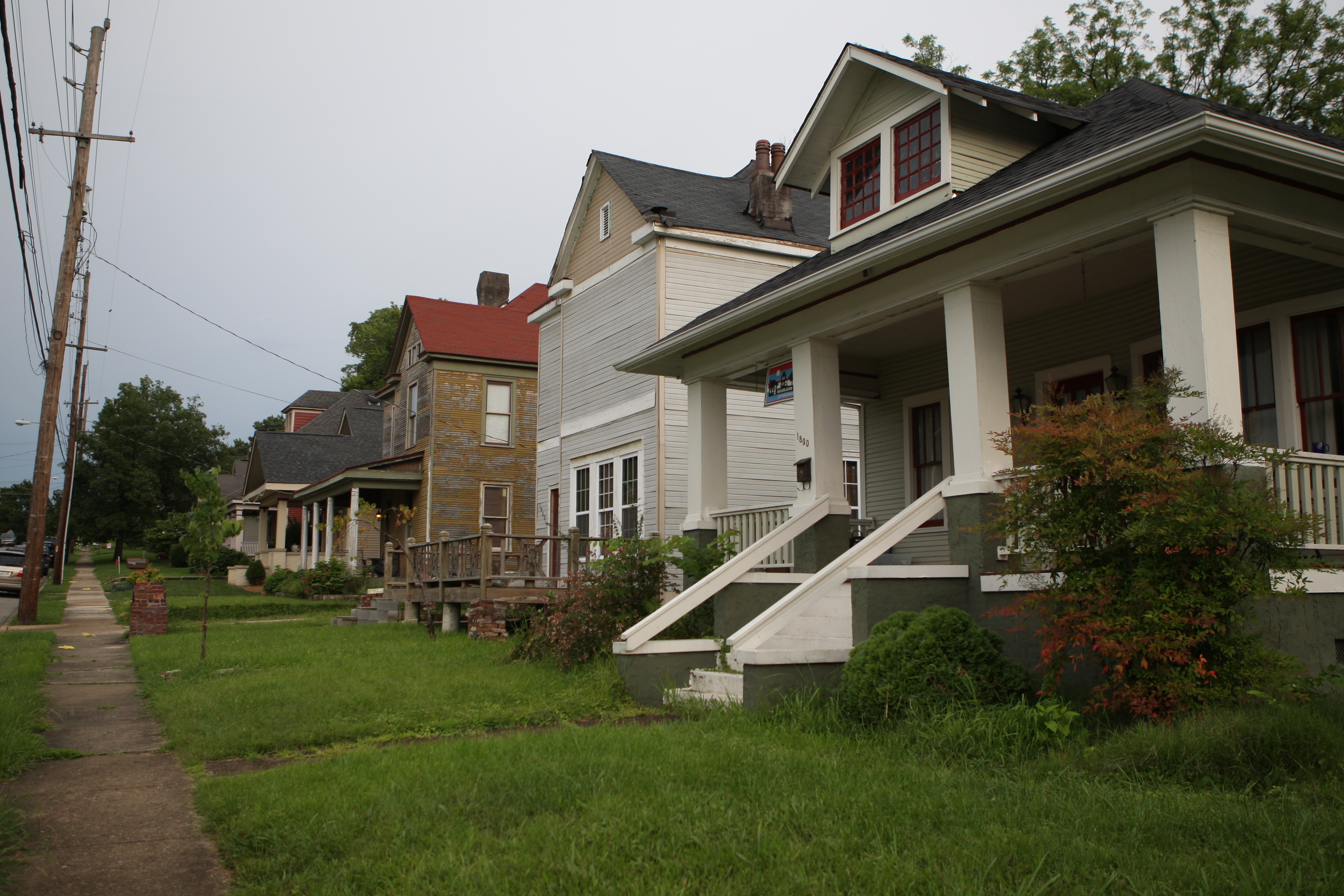
 Homes sit along the 1800 block of Duncan Avenue in the Highland Park Neighborhood.
URBAN STRATEGIES• Reduce the number of visibly blighted structures and remove structures with a destabilizing influence on neighborhoods• Increase the number of new, moderate-density housing like townhouses or two- and three-unit dwellings in established urban neighborhoods• Ask major urban employers to provide incentives for employees to live in nearby neighborhoods• Form a Housing Task Force to review housing recommendations, track trends and evaluate how effective current housing policies areSource: Chattanooga-Hamilton County Regional Planning Agency, Chattanooga Housing Study 2013
Drivers heading into the Scenic City on Interstate 24 are confronted with a compelling view: the mountains, river, downtown – it’s everything that makes Chattanooga Chattanooga, said Abby Garrison, Chattanooga Neighborhood Enterprise chief operating officer.
“It’s so gorgeous,” she said. “But we tend to forget that there’s this whole core of neighborhoods between that view and downtown. And they’re key to supporting downtown.”
Garrison joined a small group of community leaders Wednesday to discuss how the city can refocus its makeover power – like the effort that turned the Southside from an eyesore into a cultural hotspot – to transform the untouched neighborhoods in East Chattanooga.
“Let’s get more folks in the urban neighborhoods, rather than continuing to grow and sprawl outwards,” Garrison said.