
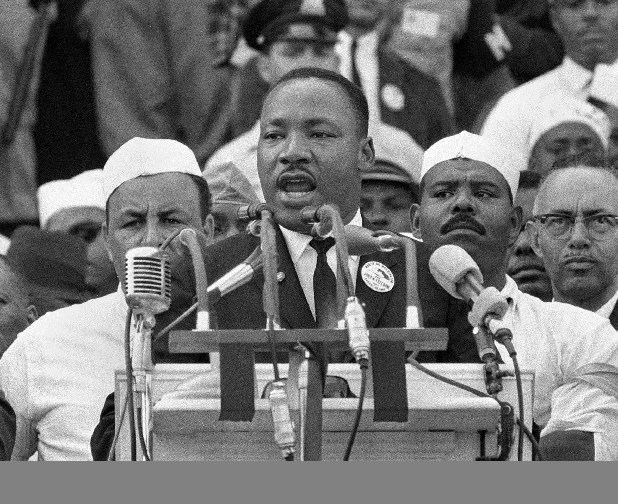
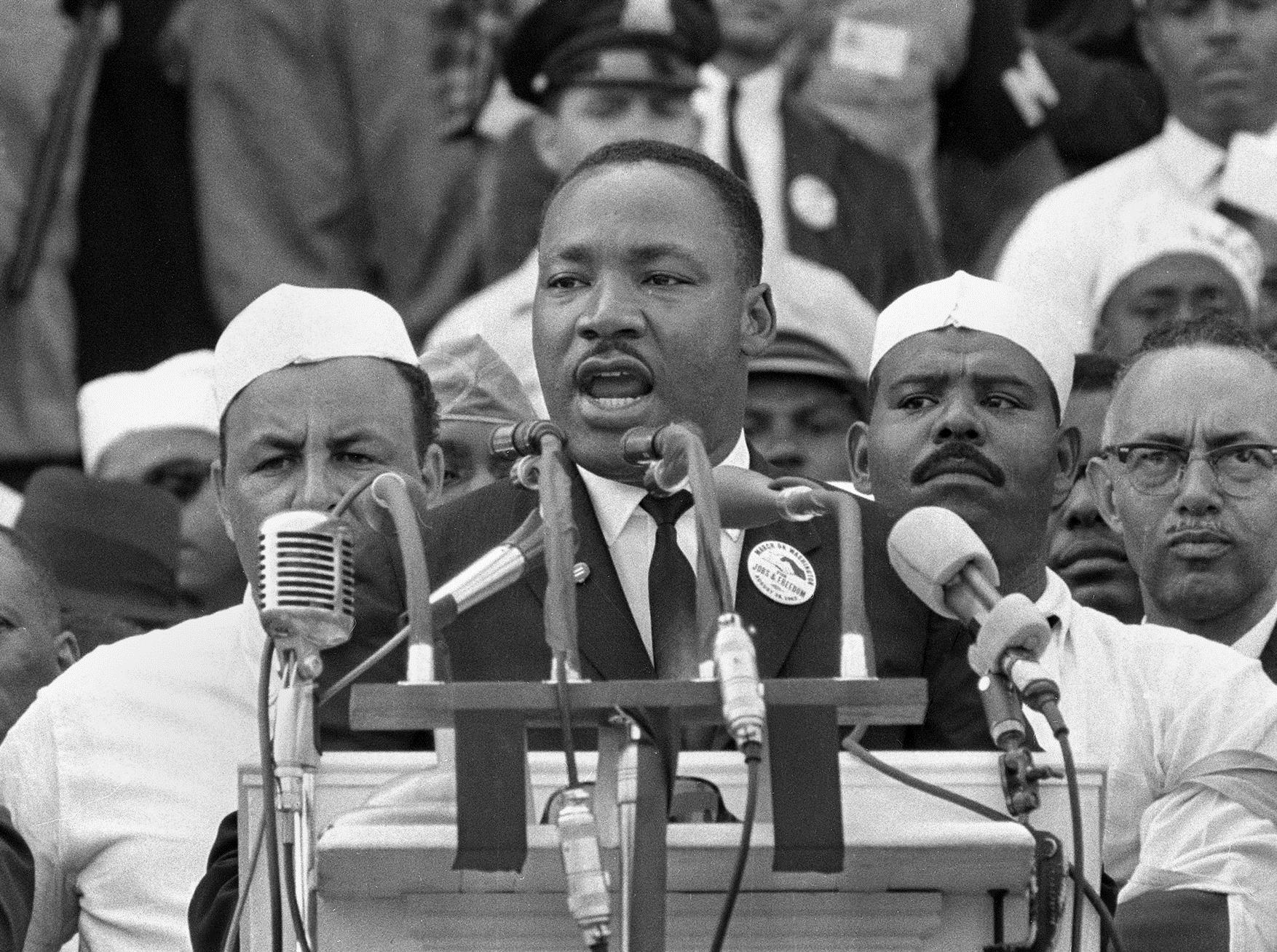
 Dr. Martin Luther King Jr. addresses marchers during his “I Have a Dream” speech in 1963 at the Lincoln Memorial in Washington.
THEN AND NOW1964• 25.7: Percentage of blacks age 25 and over who completed at least four years of high school.• 41.8: Poverty rate for blacks – 1966 is the closest year these statistics are available to the historic speech. Nationally, the poverty rate for all races was 14.7 percent.2012• 85: Percentage of blacks age 25 and over who completed at least four years of high school.• 27.6: Poverty rate for single-race blacks. Nationally, the poverty rate for all races was 15 percent.
By Michael Kanell and Ernie Suggs, Atlanta Constitution-Journal
The 50 years since the March on Washington have reshaped the economic landscape of America – for everyone.
For black Americans, the five decades since march organizers lifted up the twin goals of “jobs and freedom” have seen both impressive economic gains and painful disappointments.
The end of Jim Crow and legal segregation opened pathways to public-sector as well as corporate jobs – with many companies and governments embracing racial diversity. Millions of blacks surged out of poverty, with many achieving the middle class or even affluence.