
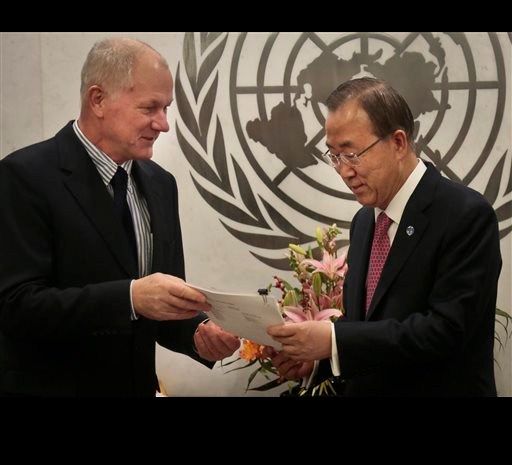
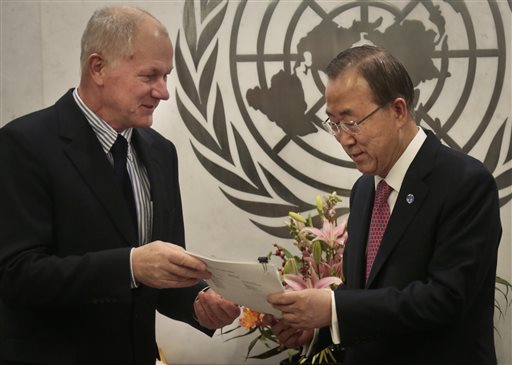
 Prof. Ake Sellström, lead, head of the U.N. mission to investigate allegations of the use of chemical weapons in the Syria, hands U.N. Secretary Ban Ki-moon a report on the investigation on Thursday, Dec. 12, 2013, at U.N. headquarters.
UNITED NATIONS – U.N inspectors said Thursday that chemical weapons have been used in the Syrian conflict, definitely in a widely publicized Aug. 21 attack near Damascus and probably in four other locations between March and late August.
The report by U.N. chemical weapons experts, led by Swedish professor Ake Sellstrom, examined seven alleged chemical weapons attacks and said it lacked information to corroborate the allegations at two locations. The inspectors’ limited mandate barred them from identifying whether the government or opposition fighters were responsible for any of the attacks.
Sellstrom issued an initial report on Sept. 16 which concluded that evidence collected in the Ghouta area of Damascus following an Aug. 21 attack provided “clear and convincing evidence that surface-to-surface rockets containing the nerve agent sarin were used.” Graphic video footage showed dozens of people gasping for air and bodies lined up.
Thursday’s report said evidence indicated chemical weapons were probably used in Khan al Assal outside Aleppo, Jobar in Damascus’ eastern suburbs, Saraqueb near Idlib in the northwest, and Ashrafiah Sahnaya in the Damascus countryside.
The confirmed use of chemical weapons in Ghouta, and the threat of possible U.S. military action, led to a U.S.-Russian agreement to eliminate Syria’s chemical weapons by mid-2014. The process of getting Syrian chemicals that can be used to make weapons out of the country is currently underway.