
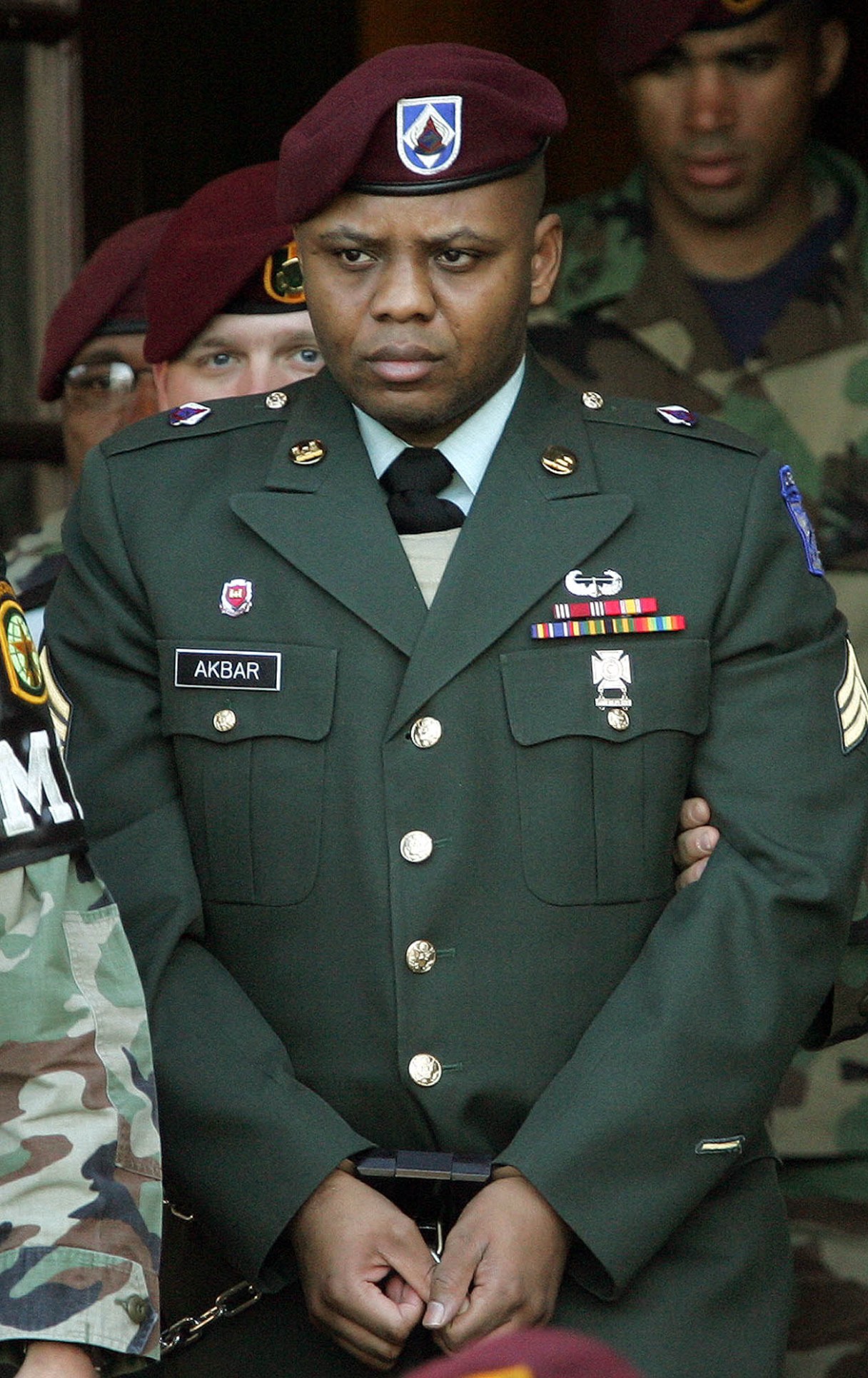
LOUISVILLE, Ky. (AP) – A military appeal hearing was set Thursday for a U.S. soldier sentenced to death for killing two fellow service members and wounding 14 others in a grenade attack in Kuwait nearly 10 years ago.
The hearing for 43-year-old Army Sgt. Hasan K. Akbar is scheduled for Nov. 18 in Washington, the U.S. Court of Appeals for the Armed Forces said on its website. Akbar was sentenced to death in 2005 by a military jury.
He was convicted of premeditated murder and attempted premeditated murder in connection with an attack on the 101st Airborne Division at Camp Pennsylvania in Kuwait during the early days of the Iraq war. Prosecutors say he threw four hand grenades into tents as members of his division slept, then fired his rifle at soldiers in the ensuing chaos on March 23, 2003.
Air Force Maj. Gregory L. Stone was killed by a grenade. Army Capt. Christopher S. Seifert was fatally shot in the back. Fourteen soldiers were wounded, mostly from grenade shrapnel.
His appeal challenges the trial counsel’s. Maj. Jacob Bashore, one of Akbar’s military defense attorneys, said in a brief that the attorneys who defended Akbar during his trial should not have shown Akbar’s diary to the jury. The diary, which contained details of a conversion to radical Islam and expressed anti-government views, hurt Akbar’s case, Bashore said.