
Wednesday, November 18, 2026Nov 18

Mystery of Death Valley’s moving rocks solved

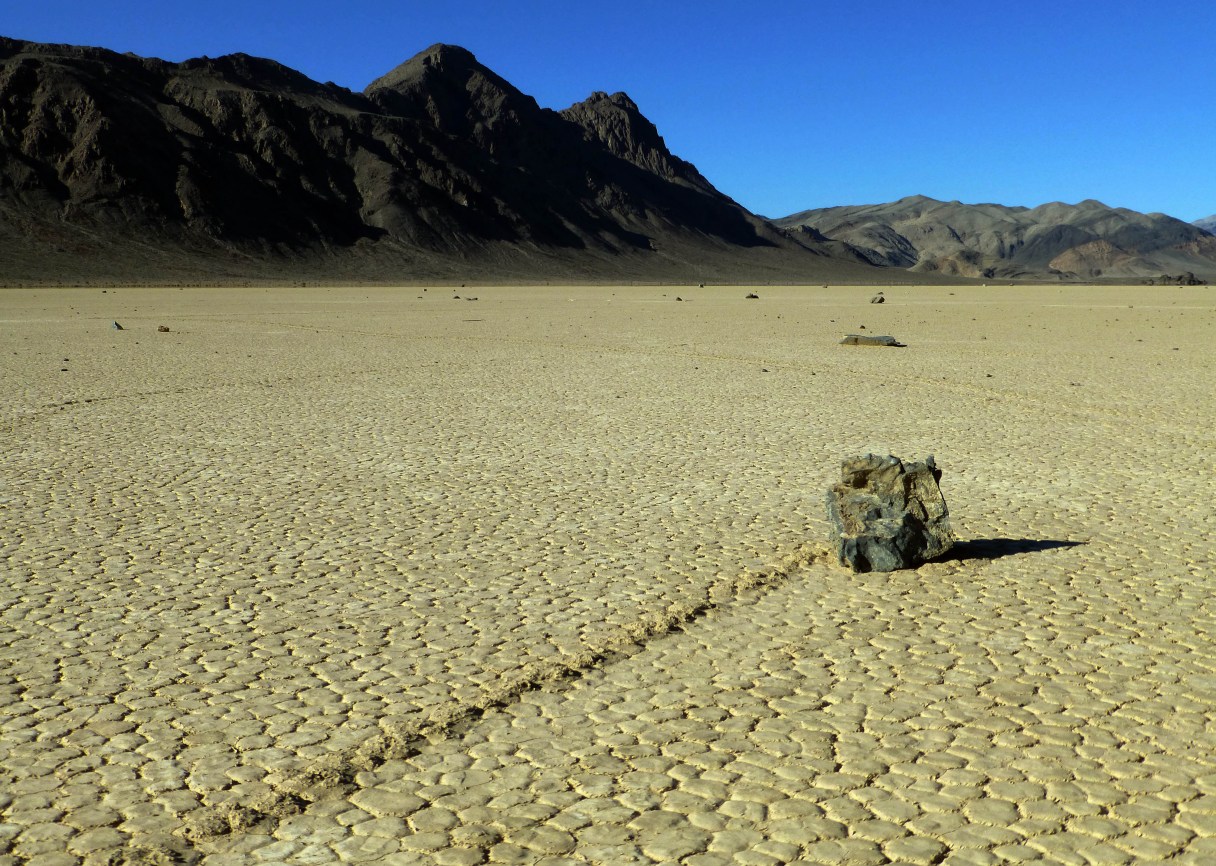
This undated photo provided by the National Park Service shows rocks that have moved across a dry lake bed in Death Valley National Park in California's Mojave Desert. For years scientists have theorized about how the large rocks — some weighing hundreds of pounds — zigzag across Racetrack Playa leaving long trails etched in the earth. Now two researchers at the Scripps Institution of Oceanography have photographed these "sailing rocks" being blown by light winds across the former lake bed. Cousins Richard Norris and James Norris say the movement is made possible when ice sheets that form after rare overnight rains melt in the rising sun, making the hard ground muddy and slick. (AP Photo/National Park Service)

DEATH VALLEY NATIONAL PARK, Calif. (AP) – For years scientists have theorized about how large rocks – some weighing hundreds of pounds – zigzag across Racetrack Playa in Death Valley National Park, leaving long trails etched in the earth.

Now two researchers at the Scripps Institution of Oceanography at the University of California, San Diego, have photographed these “sailing rocks” being blown by light winds across the former lake bed.

Cousins Richard Norris and James Norris said the movement is made possible when ice sheets that form after rare overnight rains melt in the rising sun, making the hard ground muddy and slick.

On Dec. 20, 2013, the cousins catalogued 60 rocks moving across the playa’s pancake-flat surface.

“Observed rock movement occurred on sunny, clear days, following nights of sub-freezing temperatures,” they wrote in a report published Wednesday in the online scientific journal PLOS ONE.