
Friday, November 13, 2026Nov 13

On Syria, Obama faces questions on Congress’ role

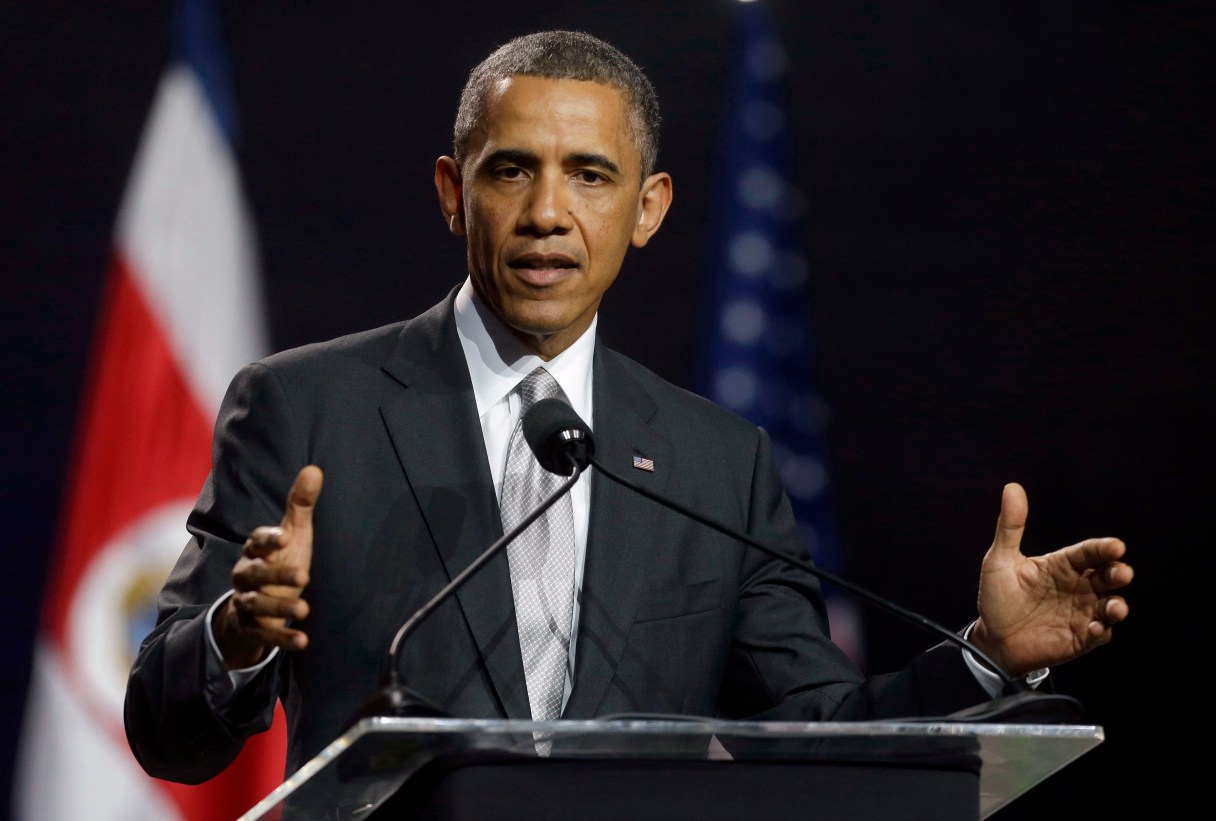
FILE - This May 3, 2013 file photo president Barack Obama responding to a question about the ongoing situation in Syria during a news conference in San Jose, Costa Rica. One year ago, President Barack Obama was barreling toward airstrikes in Syria when he abruptly announced that he first wanted approval from congressional lawmakers. The move threw his policy into confusion and the strikes were eventually scrapped. Now, as Obama again contemplates military action in Syria, the White House is suggesting it may not be necessary to get a sign-off from Congress. While cautioning that Obama has made no final decisions, officials say there is a difference between last year’s effort to strike Syria’s government in retaliation for chemical weapons use and a bombing campaign against Islamic State militants that is now under consideration.  (AP Photo/Pablo Martinez Monsivais, File)
FILE - This May 3, 2013 file photo president Barack Obama responding to a question about the ongoing situation in Syria during a news conference in San Jose, Costa Rica. One year ago, President Barack Obama was barreling toward airstrikes in Syria when he abruptly announced that he first wanted approval from congressional lawmakers. The move threw his policy into confusion and the strikes were eventually scrapped. Now, as Obama again contemplates military action in Syria, the White House is suggesting it may not be necessary to get a sign-off from Congress. While cautioning that Obama has made no final decisions, officials say there is a difference between last year’s effort to strike Syria’s government in retaliation for chemical weapons use and a bombing campaign against Islamic State militants that is now under consideration. (AP Photo/Pablo Martinez Monsivais, File) FILE - This May 3, 2013 file photo president Barack Obama responding to a question about the ongoing situation in Syria during a news conference in San Jose, Costa Rica. One year ago, President Barack Obama was barreling toward airstrikes in Syria when he abruptly announced that he first wanted approval from congressional lawmakers. The move threw his policy into confusion and the strikes were eventually scrapped. Now, as Obama again contemplates military action in Syria, the White House is suggesting it may not be necessary to get a sign-off from Congress. While cautioning that Obama has made no final decisions, officials say there is a difference between last year’s effort to strike Syria’s government in retaliation for chemical weapons use and a bombing campaign against Islamic State militants that is now under consideration. (AP Photo/Pablo Martinez Monsivais, File)

WASHINGTON (AP) – President Barack Obama faces a familiar question as he contemplates airstrikes in Syria: Should Congress have a say in his decision?

Obama was barreling toward strikes last summer when he abruptly announced that he first wanted approval from congressional lawmakers. But Congress balked at Obama’s request for a vote and the operation was eventually scrapped.

This time around, the White House is suggesting it may not be necessary to get a sign-off from Congress for airstrikes. While cautioning that Obama has made no final decisions, officials say there is a difference between last year’s effort to attack Syria’s government in retaliation for chemical weapons use and a bombing campaign against Islamic State militants that is now under consideration.

“What we’re talking about now is confronting a terrorist group that has sought safe haven in Syria,” White House spokesman Josh Earnest said when asked about the prospect of Obama again seeking congressional authorization. “This is a group that poses a threat to Americans in the region and could potentially, down the line, pose a broader threat to American interests and our allies around the globe.”

Earlier this month, Obama authorized U.S. airstrikes against Islamic State targets in Iraq. The militants have been moving with ease between Iraq and Syria, effectively blurring the border between the neighboring nations.