
Monday, November 9, 2026Nov 9

3 Hong Kong protest leaders surrender to police

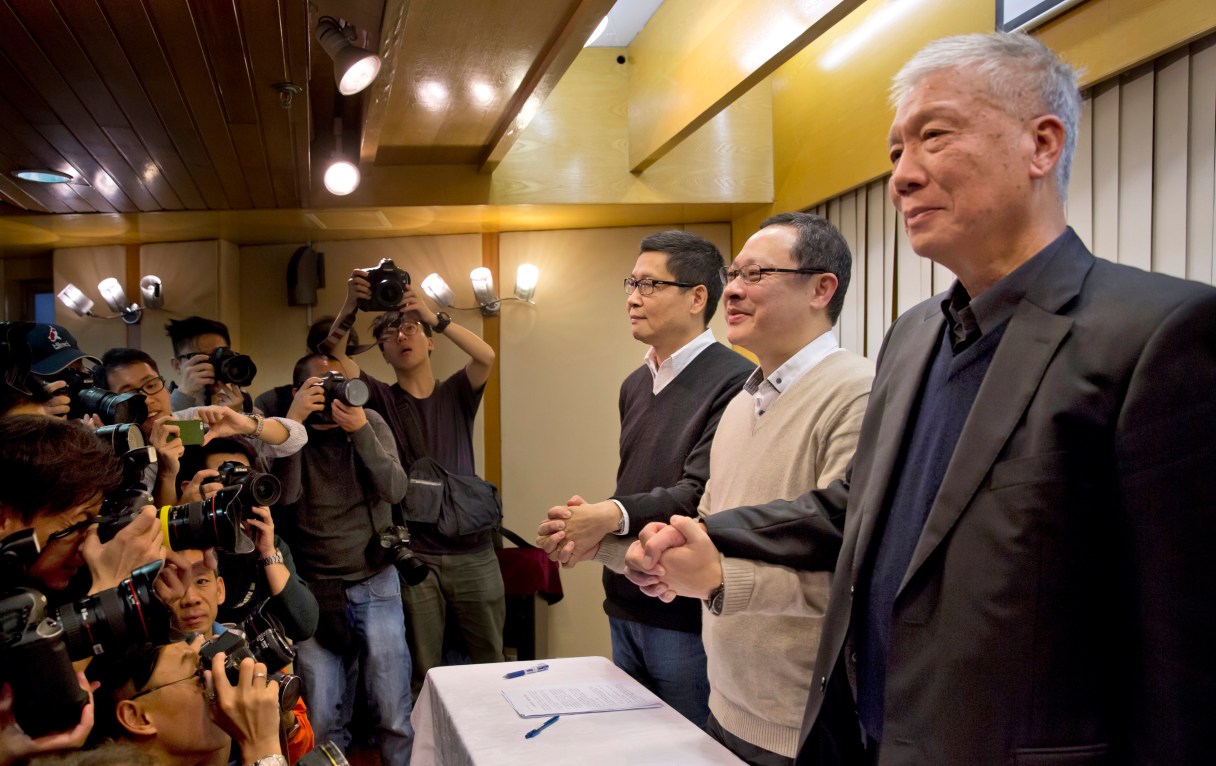
Three protest leaders, from left, Chan Kin-man, Benny Tai Yiu-ting and Chu Yiu-ming, pose for photographers during a news conference in Hong Kong Tuesday, Dec. 2, 2014 as they announce that they will surrender to police. Three protest leaders in Hong Kong - two professors and a pastor - are calling for an end to street demonstrations to prevent violence and take the campaign for democratic reforms to a new stage. (AP Photo/Kin Cheung)
Three protest leaders, from left, Chan Kin-man, Benny Tai Yiu-ting and Chu Yiu-ming, pose for photographers during a news conference in Hong Kong Tuesday, Dec. 2, 2014 as they announce that they will surrender to police. Three protest leaders in Hong Kong - two professors and a pastor - are calling for an end to street demonstrations to prevent violence and take the campaign for democratic reforms to a new stage. (AP Photo/Kin Cheung) Three protest leaders, from left, Chan Kin-man, Benny Tai Yiu-ting and Chu Yiu-ming, pose for photographers during a news conference in Hong Kong Tuesday, Dec. 2, 2014 as they announce that they will surrender to police. Three protest leaders in Hong Kong - two professors and a pastor - are calling for an end to street demonstrations to prevent violence and take the campaign for democratic reforms to a new stage. (AP Photo/Kin Cheung)

HONG KONG (AP) – Three founders of a civil disobedience campaign that helped spark Hong Kong’s pro-democracy protest movement have entered a police station to surrender after calling for an end to the street demonstrations.

Professors Benny Tai Yiu-ting and Chan Kin-man and the Rev. Chu Yiu-ming haven’t been charged but authorities say protests that have blocked streets in the Asian financial center for more than two months are illegal.

The three were joined by dozens of supporters also planning to turn themselves in.

The trio founded Occupy Central, which aimed to shut down streets in the financial hub to press for greater democracy in the semiautonomous Chinese city.

But their actions may have little influence on student protesters, who make up the bulk of the activists.