
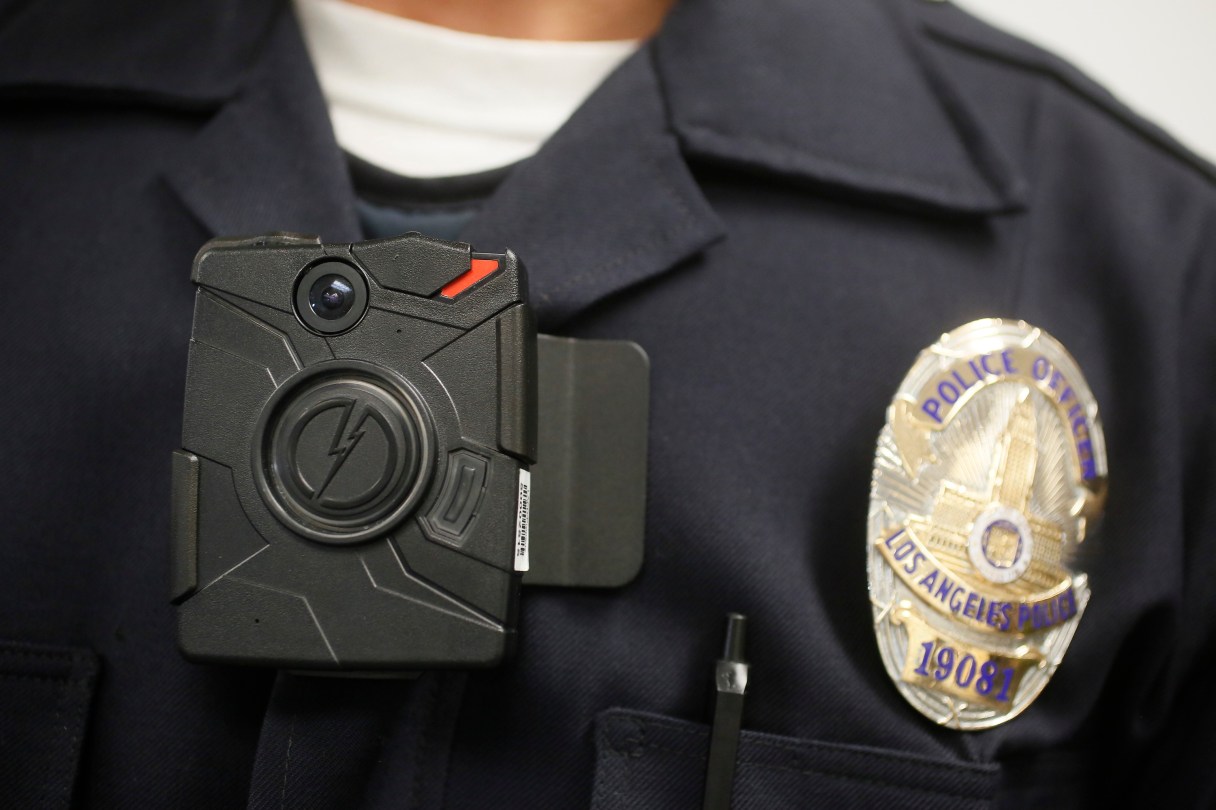
LOS ANGELES (AP) – Police body cameras have become a rallying cry in the wake of racially charged decisions by grand juries in Ferguson, Missouri, and New York City, but experts caution that increased use of the devices may raise more questions than answers.
Often what is filmed may appear excessive to a person unfamiliar with police work, even though the conduct may be legal.
“There’s this saying in policing: ‘It’s lawful, but awful.’ It’s technically legal to do that, but it’s a terrible thing to do … We have to work on the awful piece, that’s what we need to focus on,” said Jim Bueermann, who heads the nonprofit Police Foundation.
Officers in one of every six departments around the country now patrol with tiny cameras on their chests, lapels or sunglasses. And President Barack Obama wants to spend $74 million to equip another 50,000 with them around the country.
A camera captured a white New York police officer applying a chokehold that led to the death of Eric Garner, an unarmed black man. In Ferguson, Missouri, there was no camera showing what happened when a white police officer fatally shot Michael Brown, a black man.