
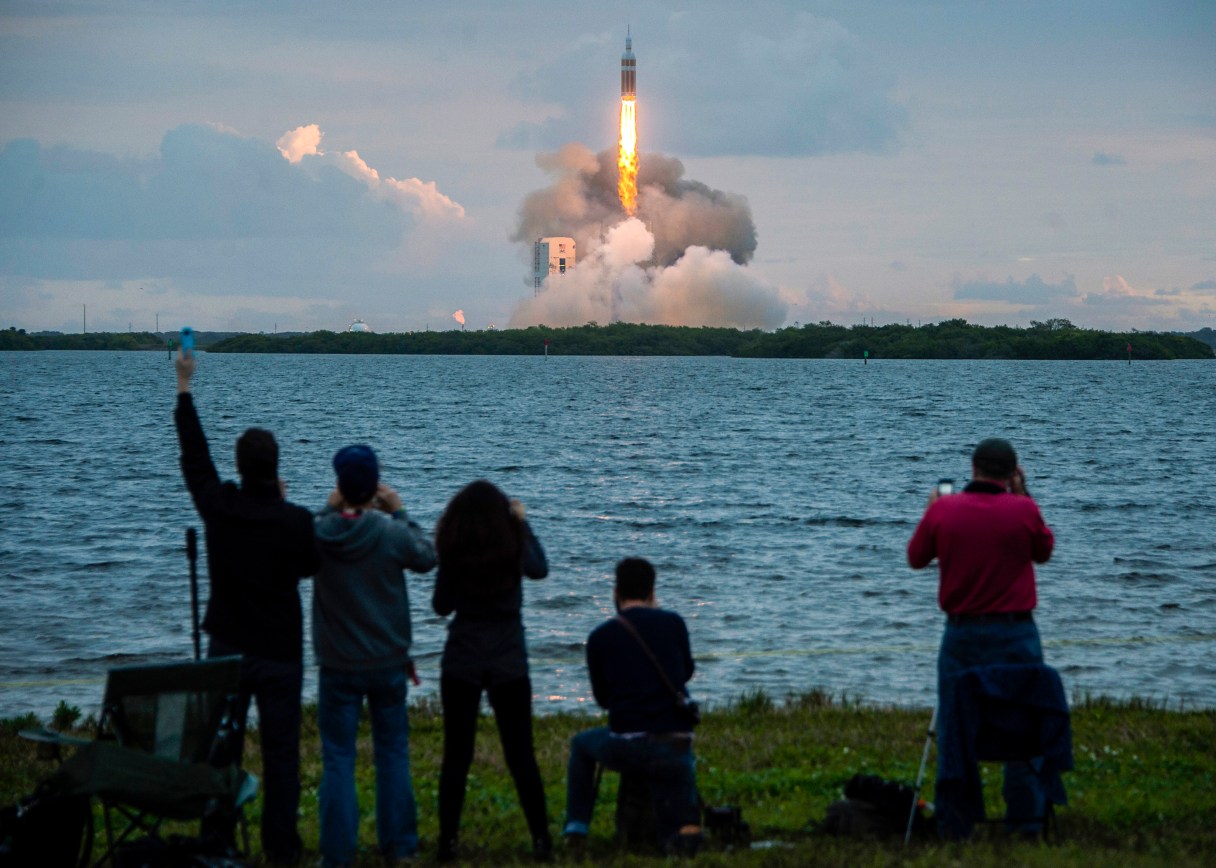
CAPE CANAVERAL, Fla. (AP) – NASA’s newest space vehicle, Orion, accomplished its first test flight with precision and pizazz Friday, shooting more than 3,600 miles out from Earth for a hyperfast, hot return not seen since the Apollo moon shots.
For a space agency still feeling the loss of its shuttles, the four-hour voyage opened a new era of human space exploration, with Mars as the plum. It even brought some rocket engineers to tears.
“There’s your new spacecraft, America,” Mission Control’s Rob Navias said as the unmanned Orion capsule came in for a Pacific splashdown after two orbits of Earth.
NASA is counting on future Orions to carry astronauts out into the solar system, to Mars and beyond.
The next Orion flight, also unmanned, is four years off, and crewed flights at least seven years away given present budget constraints. But the Orion team – spread across the country and out in the ocean, is hoping Friday’s triumphant splashdown will pick up the momentum.