
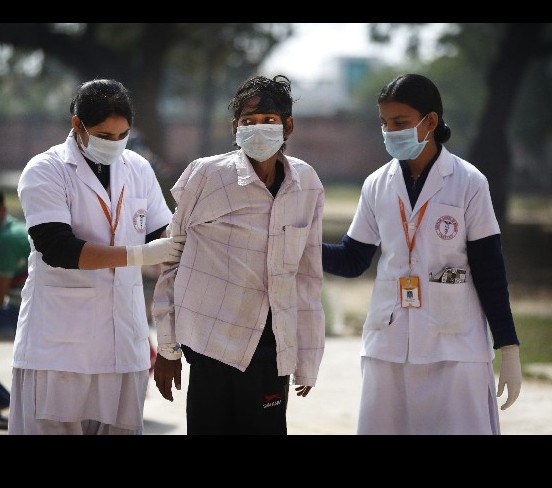
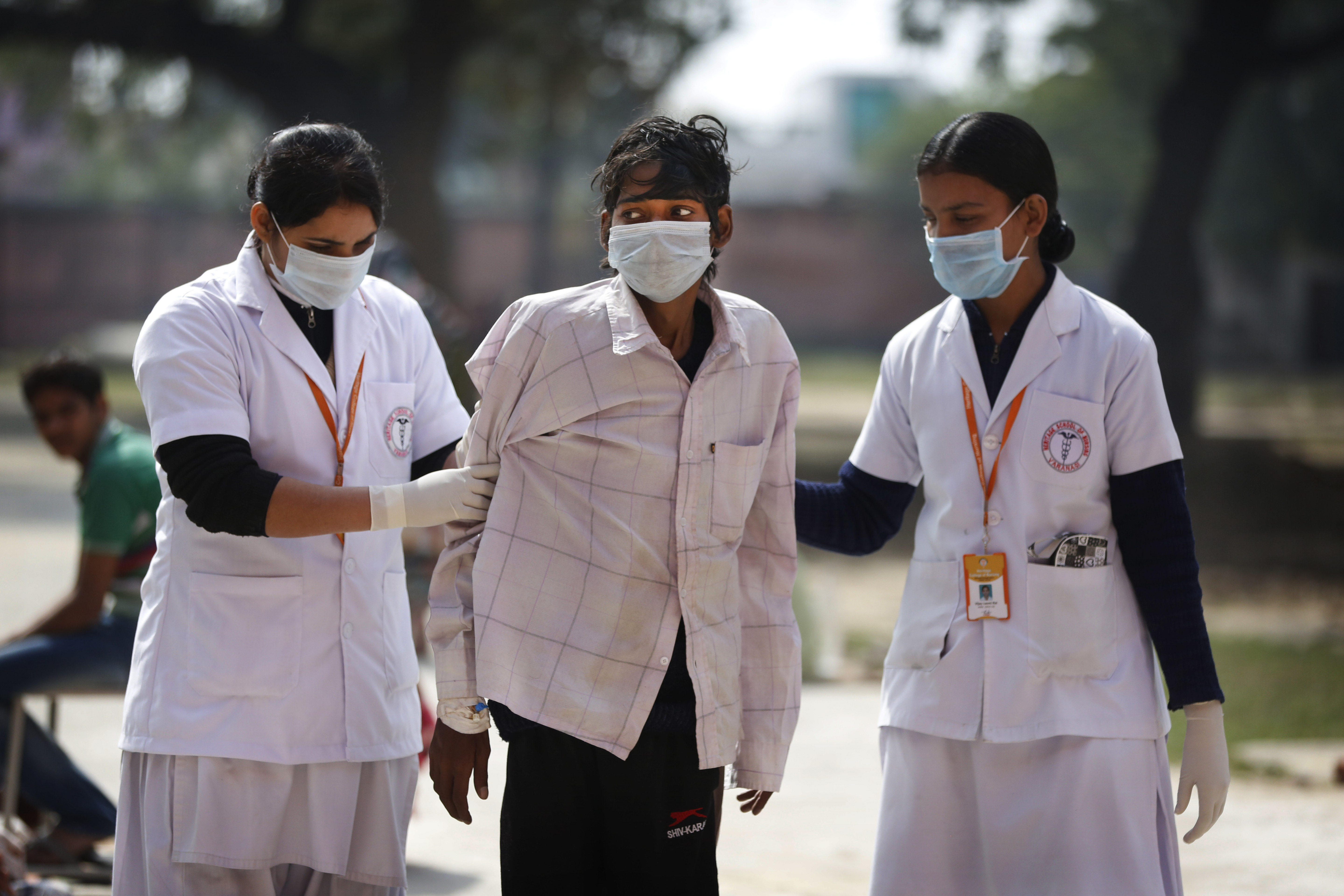
 Indian nurses help a tuberculosis patient Manjeet Mishra, 18, center, walk toward his ward at Lal Bahadur Shastri Government Hospital at Ram Nagar in Varanasi, India. India has the highest incidence of TB in the world, according to the World Health Organization’s Global Tuberculosis Report 2013, with as many as 2.4 million cases. India saw the greatest increase in multidrug-resistant TB between 2011 and 2012. The disease kills about 300,000 people every year in the country.
LOHATA, India – This cluster of poor villages, long known for its colorful silk saris, now is known for something else: tuberculosis. Nearly half of Lohata’s population has it – some 100,000 people – and the community’s weaving tradition is part of the reason it is on the front line of a major Indian health crisis.
The area of Uttar Pradesh state is under unofficial quarantine because of the epidemic. Strangers rarely venture into these villages outside the ancient city of Varanasi. Even rickshaw drivers refuse to enter, turning away the few passengers looking for a lift.
The high rate of TB cases in Lohata is unusual, even for India, where the disease kills about 300,000 people every year. Poverty and malnutrition are factors, but the fact that so many people in Lohata are weavers also is significant, said Dr. J.N. Banavalikar, vice chairman of the TB Association of India, a government agency.
Thousands of sari weavers work all day in cramped rooms, breathing in minute threads that weaken their lungs and make them more susceptible. “They work in poorly ventilated rooms for hours, and that spreads germs very fast,” Banavalikar said.
India has made important strides in health in recent years, most recently by launching a successful polio vaccination campaign. But tuberculosis has remained a stubborn problem in India, which has more than a quarter of the world’s new TB cases.