
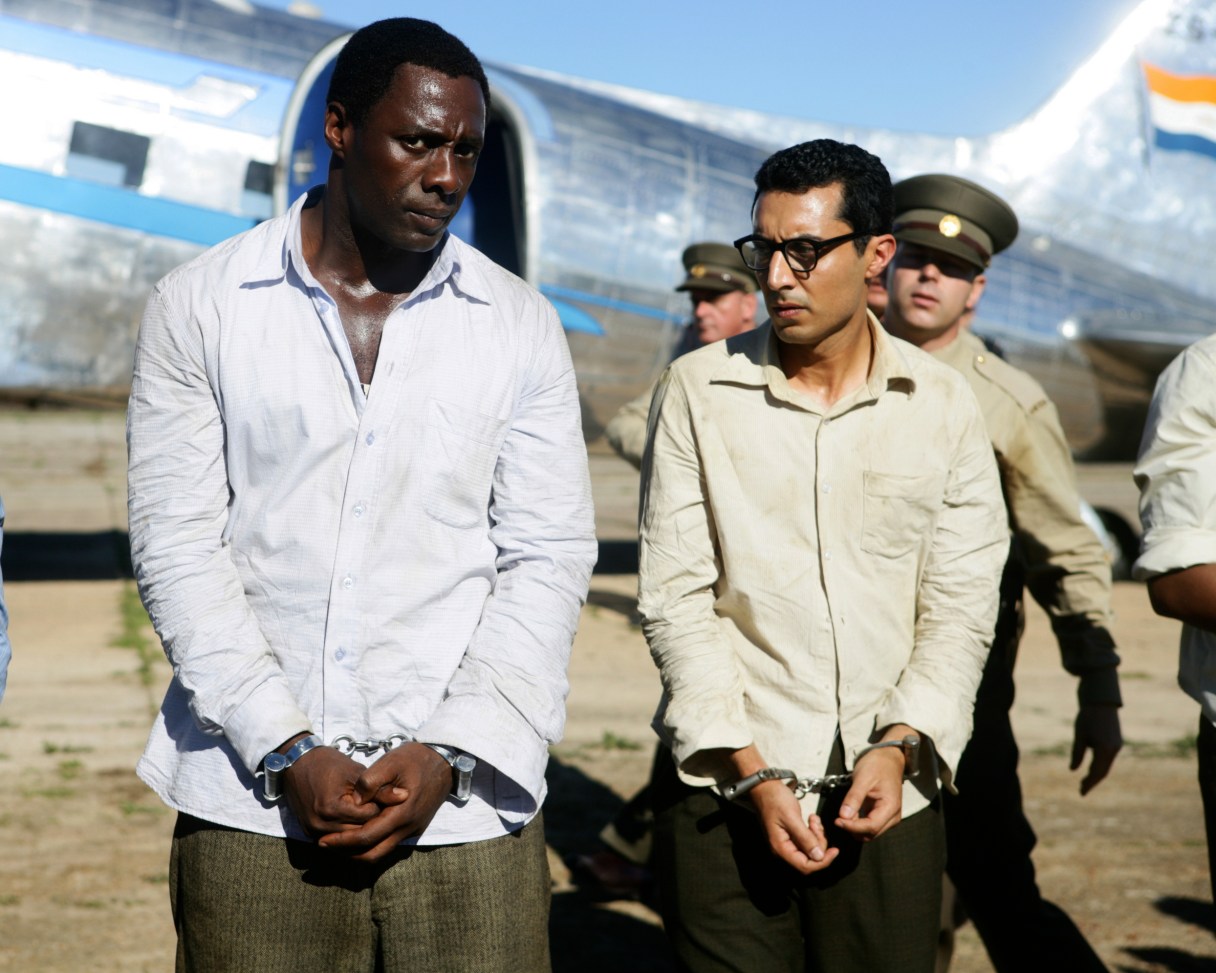
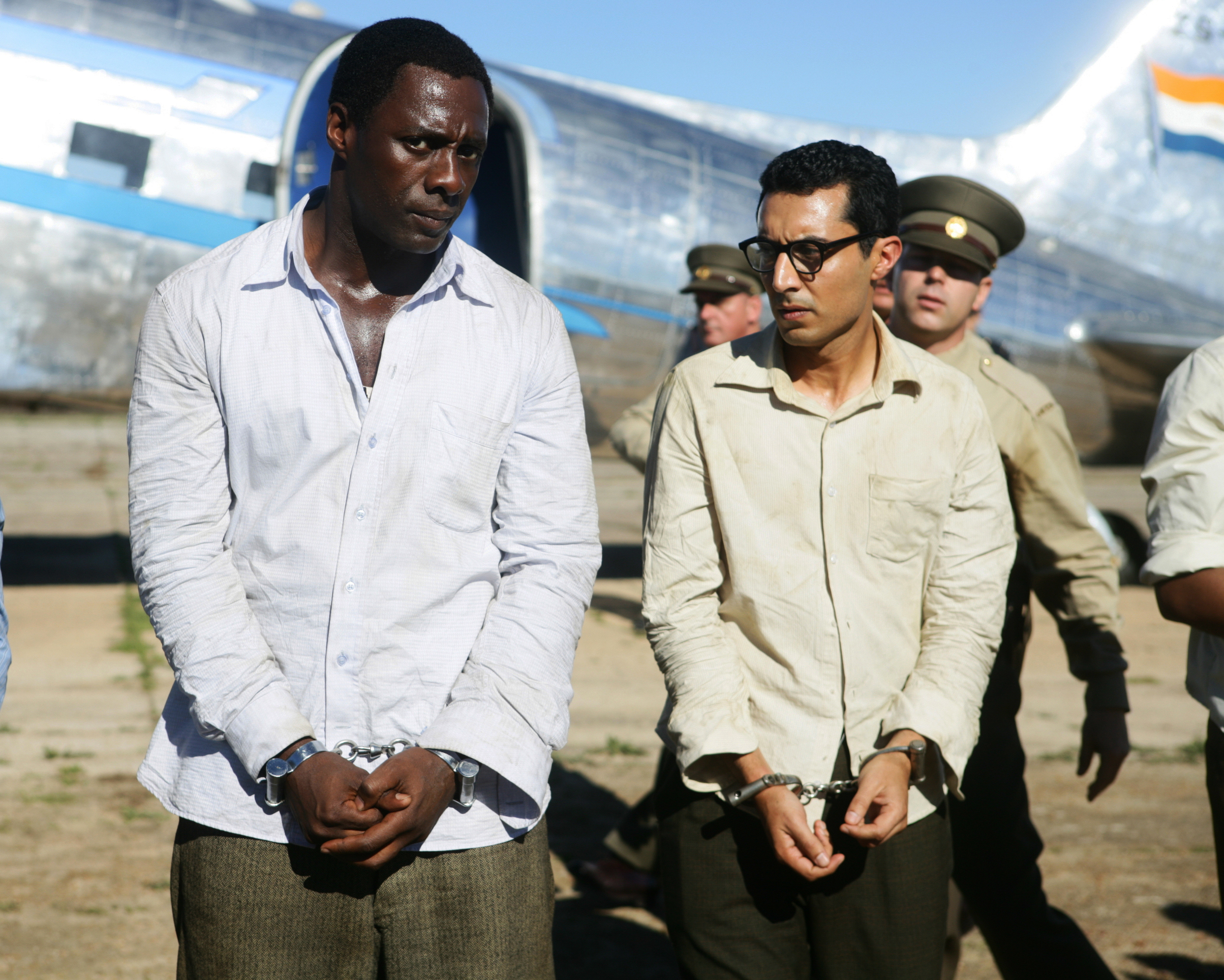
 Idris Elba, left, as Nelson Mandela, and Riaad Moosa, as Ahmed Kathrada, in the film “Mandela: Long Walk to Freedom.”
Nelson Mandela’s basic story is known to most Americans, but the details, as dramatized in “Mandela: Long Walk to Freedom,” will be a revelation for many. Even those familiar with the history will be impressed and moved to see these events as Mandela experienced them, before the Nobel Prize and universal adulation re-cast the past in a glow of inevitability.
What comes through in Idris Elba’s performance is a leader of enormous emotional strength. Here’s a man in his mid-40s, sentenced to life in prison on Robben Island, where he is called “boy,” forced to wear short pants and work at hard manual labor.
The international community is years away from caring. Clearly, only someone with a capacity to take the long view could find a shred of hope in this situation. Only someone with a regal sense of self could keep from breaking. And only someone with a preternatural mental discipline resist falling into an all-consuming vat of resentment.
“Mandela: Long Walk to Freedom” overcomes the two main challenges that any Mandela drama must face. The first is the obvious one, to make an audience understand and feel exactly what made Mandela remarkable.
The second is more subtle. It’s a dramatic challenge, to maintain movement and velocity in a story in which the central character spends 27 years in prison. That it’s possible to watch “Mandela” and not realize that difficulty is a measure of its success.