
Thursday, November 12, 2026Nov 12

Commanders suggest a 2nd group in Benghazi attacks

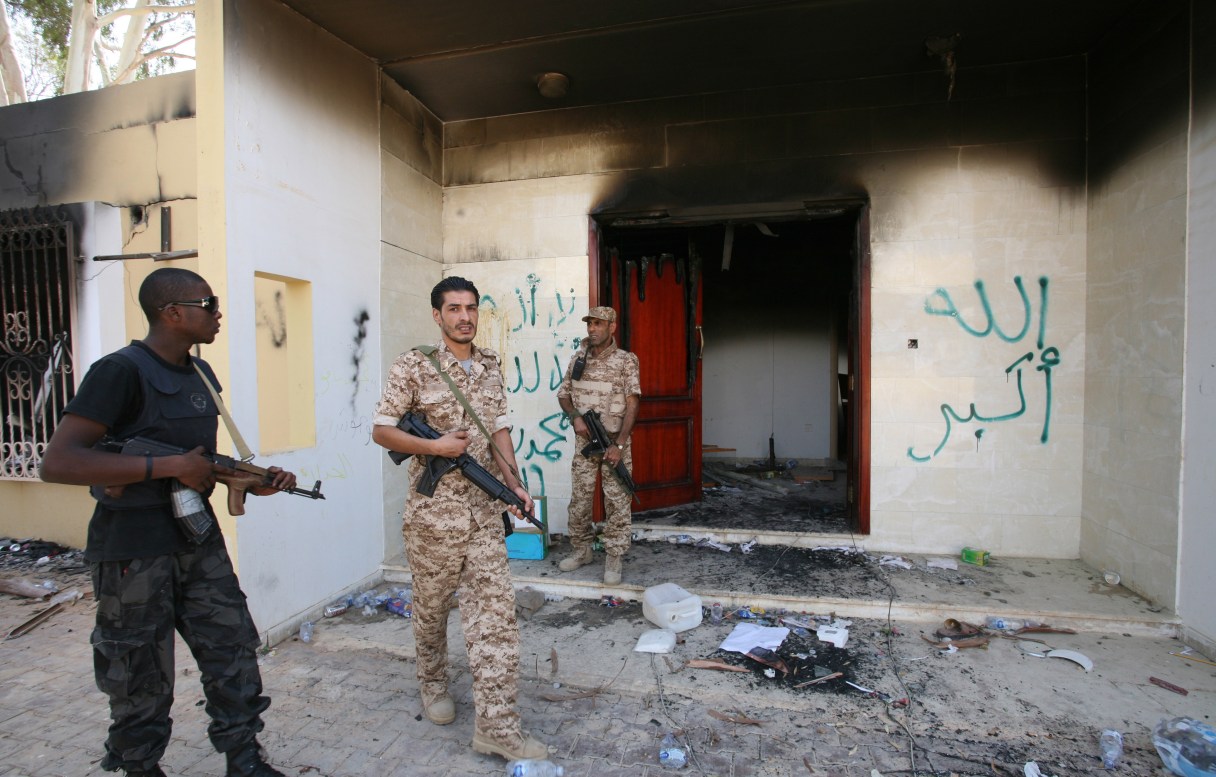
FILE - In this Sept. 14, 2012 file photo, Libyan military guards check one of the U.S. consulate's burned buildings after a deadly attack on Tuesday, Sept. 11, 2012 in Benghazi. Newly revealed testimony from top military commanders involved in the U.S. response to the Benghazi attacks suggests that the perpetrators of a second, dawn attack on a CIA complex probably were different from those who penetrated the U.S. diplomatic mission the evening before and set it ablaze, killing Ambassador Chris Stevens and another American. The second attack, which killed two security contractors, showed clear military training, retired Gen. Carter Ham told Congress in closed-door testimony. (AP Photo/Mohammad Hannon, File)
FILE - In this Sept. 14, 2012 file photo, Libyan military guards check one of the U.S. consulate's burned buildings after a deadly attack on Tuesday, Sept. 11, 2012 in Benghazi. Newly revealed testimony from top military commanders involved in the U.S. response to the Benghazi attacks suggests that the perpetrators of a second, dawn attack on a CIA complex probably were different from those who penetrated the U.S. diplomatic mission the evening before and set it ablaze, killing Ambassador Chris Stevens and another American. The second attack, which killed two security contractors, showed clear military training, retired Gen. Carter Ham told Congress in closed-door testimony. (AP Photo/Mohammad Hannon, File) FILE - In this Sept. 14, 2012 file photo, Libyan military guards check one of the U.S. consulate's burned buildings after a deadly attack on Tuesday, Sept. 11, 2012 in Benghazi. Newly revealed testimony from top military commanders involved in the U.S. response to the Benghazi attacks suggests that the perpetrators of a second, dawn attack on a CIA complex probably were different from those who penetrated the U.S. diplomatic mission the evening before and set it ablaze, killing Ambassador Chris Stevens and another American. The second attack, which killed two security contractors, showed clear military training, retired Gen. Carter Ham told Congress in closed-door testimony. (AP Photo/Mohammad Hannon, File)

WASHINGTON (AP) – Well-trained attackers executed the deadly dawn assault on a CIA complex in Benghazi, Libya, suggesting different perpetrators from those who penetrated the U.S. diplomatic mission the previous night, according to newly revealed testimony from top military commanders.

The initial attack, on Sept. 11, 2012, killed U.S. Ambassador Chris Stevens and communications specialist Sean Smith and set the mission ablaze. Nearly eight hours later at the CIA complex nearby, two more Americans, contract security officers Tyrone Woods and Glen Doherty, died in a mortar attack that showed clear military training, retired Gen. Carter Ham told Congress in closed-door testimony earlier this year.

The House Armed Services Committee released the testimony Wednesday.

The second assault probably was the work of a new team of militants who had seized on reports of violence at the diplomatic mission the night before and hit the Americans while they were most vulnerable, according to testimony that could clarify the events. The testimony also reveals how little information the military had on which to base an urgent response.

Bitter recriminations in the U.S. followed the 2012 attacks, including Republican-led congressional investigations and campaign-season denunciations of the Obama administration, which made inaccurate statements about the Libyan attacks. The testimony released Wednesday underscored a key detail that sometimes has been lost in the debate: that the attacks were two distinct events over two days on two different buildings, perhaps by unrelated groups.