
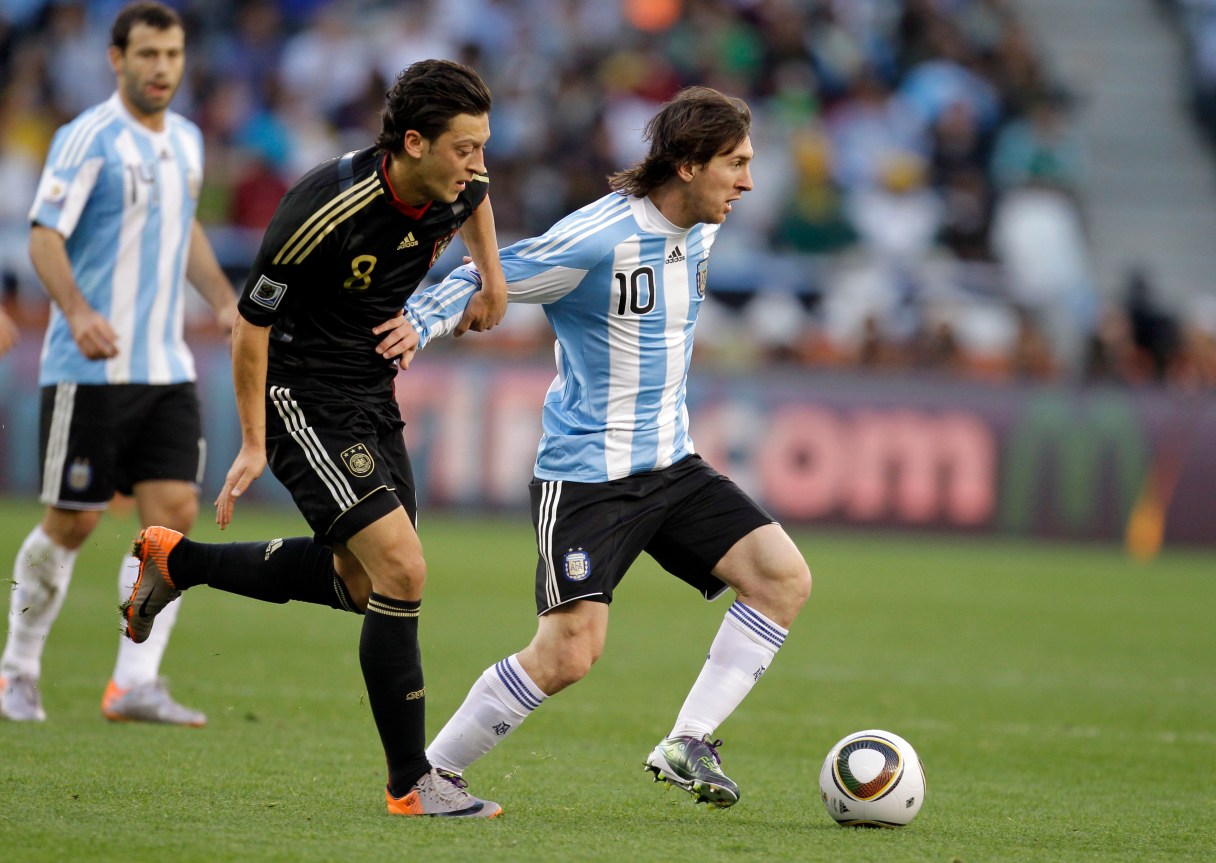
LONDON (AP) – Argentina and Germany face off in the World Cup final on Sunday and investors in both countries will do well to be alert to potential drops on their stock markets the day after in case of defeat.
With markets driven by sentiment as well as fundamental factors such as growth, dividend payments and inflation, a big sporting defeat can depress the mood of traders and cause the stock market to underperform.
Alex Edmans, a professor at London Business School and the Wharton School of the University of Pennsylvania, has assessed the impact of major sporting events on market behavior for years and his analysis of this World Cup has confirmed that defeats have generally resulted in declines the day after that are greater than, or counter, to the performance of the wider global market.
“The efficient markets hypothesis argues that stock prices depend only on fundamentals,” said Edmans. “That would be true if traders were robots. But, traders are human beings and they’re affected by emotions.”
Across all countries with a developed stock market index, Edmans has found that defeat in the World Cup led to the national index underperforming the main world market index, the MSCI, by 0.2 percentage points. The average losses experienced in many of the “soccer-crazy” countries – especially England, Italy and Spain – were met with bigger declines of some 0.6 percentage points.