
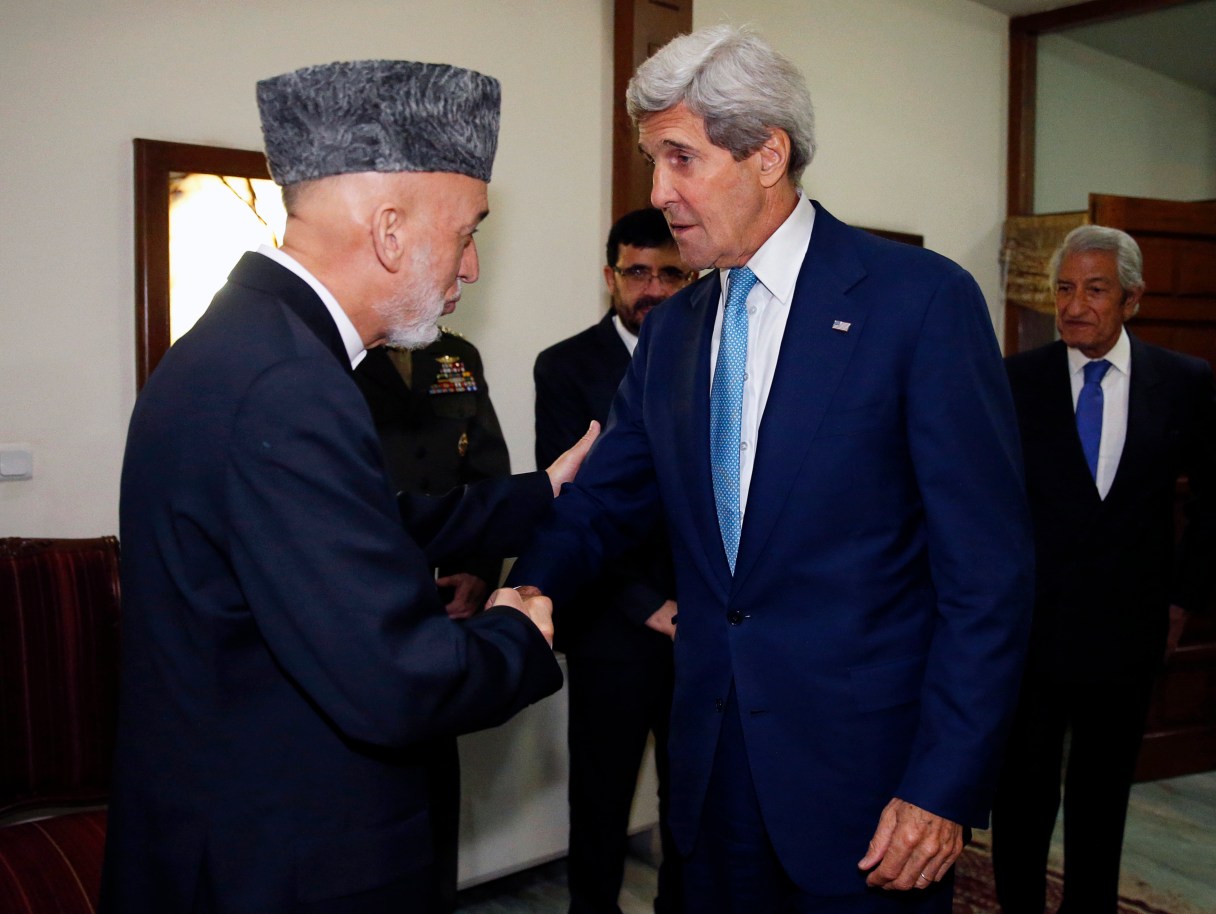
KABUL, Afghanistan (AP) – U.S. Secretary of State John Kerry was meeting with rival Afghan presidential candidates for a second day as the United States struggles to find a path out of the crisis enveloping the nation’s elections.
The prolonged uncertainty about the outcome of a runoff has jeopardized a central plank of President Barack Obama’s strategy to leave behind a stable state after the withdrawal of most U.S. troops at year’s end.
Kerry met Saturday with the candidates, former Finance Minister Ashraf Ghani Ahmadzai and former Foreign Minister Abdullah Abdullah, after discussions Friday proved inconclusive. The top American diplomat is grappling for a plan acceptable to all that would allow the United Nations to audit extensive fraud allegations in last month’s vote.
The bitter dispute over who is President Hamid Karzai’s rightful successor has alarmed Afghanistan’s U.S. and Western benefactors, creating a political crisis that risks undermining more than a decade of efforts to build an Afghan government capable of fighting the Taliban on its own and snuffing out terrorist groups like al-Qaida.
Extended instability would have more immediate consequences for Afghanistan. If no process is established and both Ghani and Abdullah attempt to seize power, the government and security forces could split along ethnic and regional lines.