
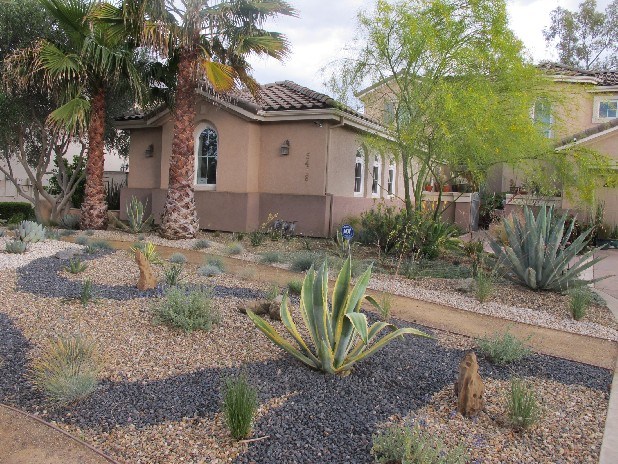
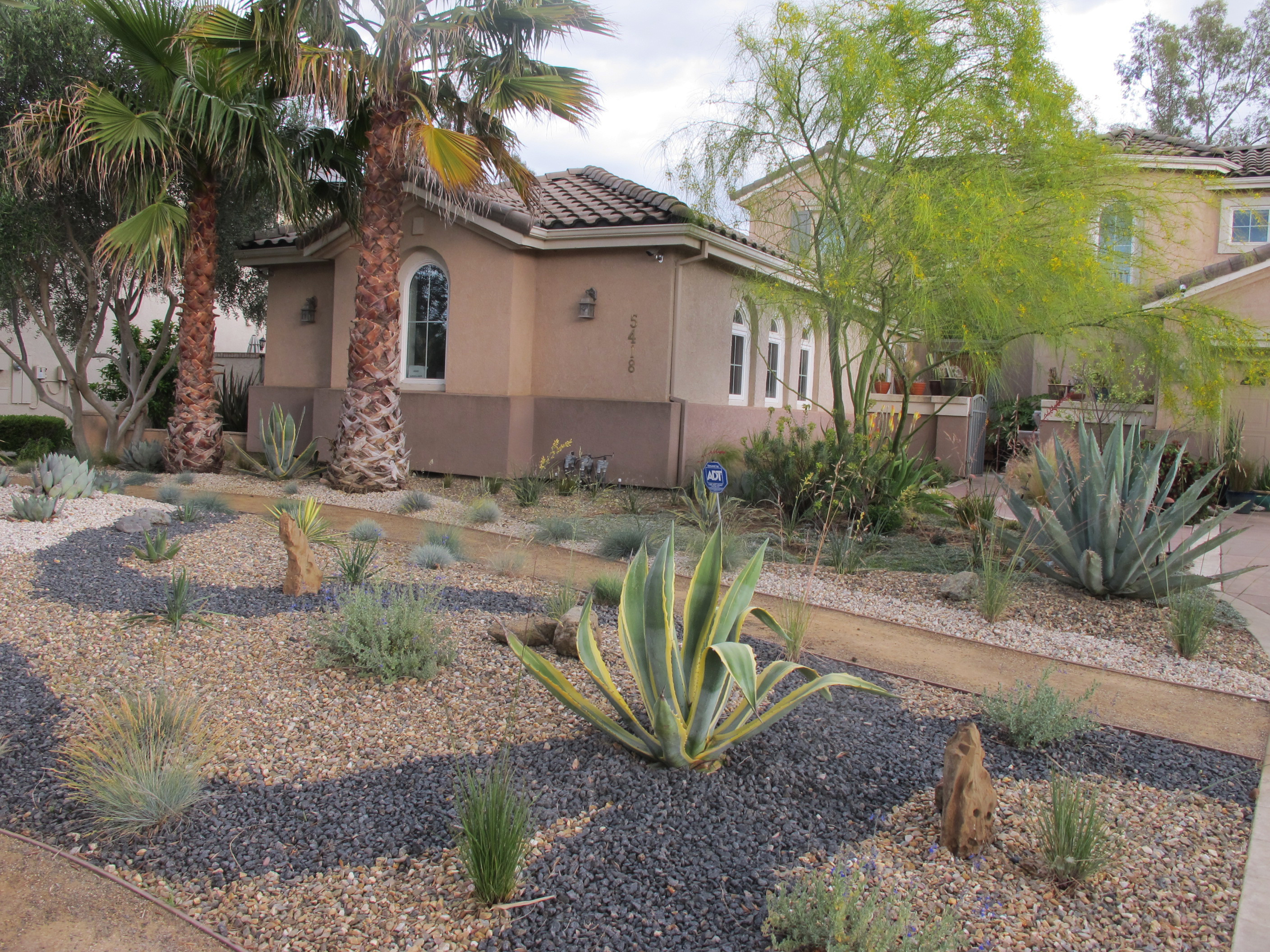
 Ann Savageau’s sustainable drought-tolerant garden has baby plants that have not fully grown in yet in Davis, Calif. As many parts of the country struggle with drought, heavy downpours and rising water bills, the move toward sustainable gardening is picking up steam, experts say.
Ripping out the front lawn and its bordering rhododendrons and replacing them with a landscape of native grasses, groundcovers, succulents and rocks once seemed an unfathomable act of defiance. No longer.
As many parts of the United States grapple with drought and rising water bills, “The thought of an English garden in the Central Valley of California is sheer madness. It wasn’t meant to be, and it’s sucking up precious groundwater we need for agriculture,” said Ann Savageau, a design professor at the University of California at Davis, who recently traded in her lush green lawns for a desert look.
Instead of scoffing, neighbors stopped to ask her landscaper for his business card. Other California towns, including Sacramento and Menlo Park, have begun offering rebates to homeowners who remove their lawns.
Gardeners nationwide are feeling the effects of climate change. In the East, and other areas where heavy downpours have become more intense, a sustainable garden might include native grasses and other plants that do well in heavy rain and the dry weather that can follow.
“Awareness is changing in a way that is here to stay,” said Brian Sullivan, a vice president for landscapes at The New York Botanical Garden. “Yard by yard, region by region, the overall environmental impact of this trend, which I think is very positive, is substantial.”