
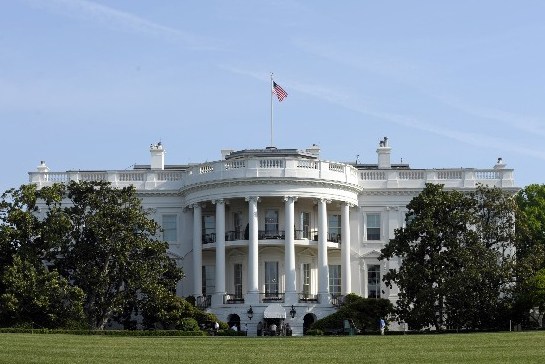
 The White House in Washington, D.C., is pictured.
ST. AUGUSTINE BEACH, Fla. – Opening the Eastern Seaboard to offshore oil exploration for the first time in decades, the Obama administration on Friday approved the use of sonic cannons to discover deposits under the ocean floor by shooting sound waves 100 times louder than a jet engine through waters shared by endangered whales and turtles.
The U.S. Bureau of Ocean Energy Management’s approval of this technology’s use off the U.S. East Coast is the first step toward identifying new oil and gas deposits in federal waters from Florida to Delaware. Energy companies need this detailed information as they prepare to apply for drilling leases in 2018 if the government reopens the area, as expected.
“The bureau has identified a path forward that addresses the need to update the nearly four-decade-old data in the region while protecting marine life and cultural sites,” acting BOEM Director Walter Cruickshank said in a statement. “The bureau’s decision reflects a carefully analyzed and balanced approach that will allow us to increase our understanding of potential offshore resources while protecting the human, marine, and coastal environments.”
The sonic cannons are already in use in the western Gulf of Mexico, off Alaska and other offshore oil operations around the world. They are towed behind boats, sending strong pulses of sound into the ocean every 10 seconds or so. The pulses reverberate beneath the sea floor and bounce back to the surface, where they are measured by hydrophones. Computers then translate the data into high resolution, three-dimensional images.
“It’s like a sonogram of the earth,” said Andy Radford, a petroleum engineer at the American Petroleum Institute, an oil and gas trade association in Washington DC. “You can’t see the oil and gas, but you can see the structures in the earth that might hold oil and gas.”