
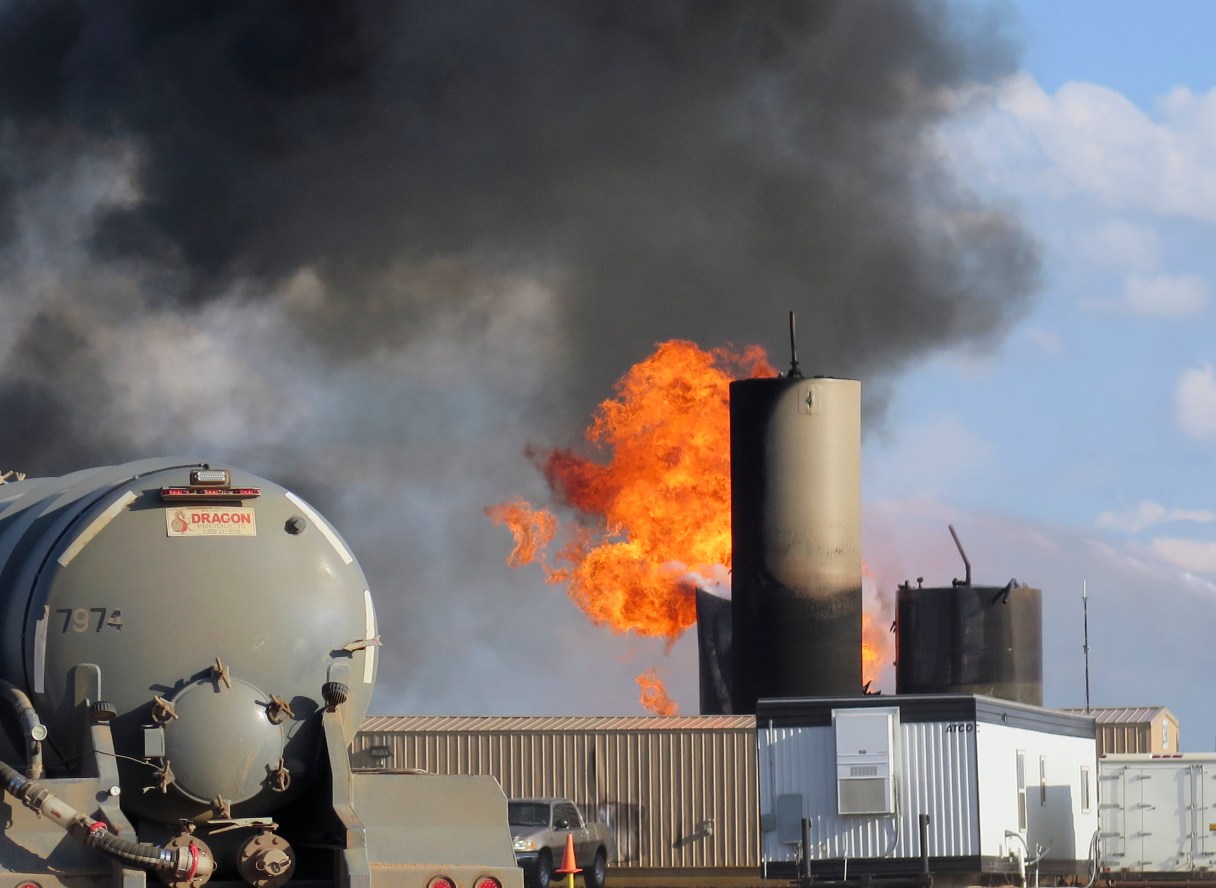
WILLISTON, N.D. (AP) – Three massive fires since the beginning of June have highlighted the threat lightning poses in the North Dakota oil patch, and in each case it was tanks that store the toxic saltwater associated with drilling – not the oil wells or drilling rigs – that were to blame.
The lightning-sparked fires destroyed the groups of silo-like storage tanks at the three locations, which are among of more than 440 sites in North Dakota where so-called saltwater is stored before being pumped into permanent disposal sites miles underground. In each case, the fires burned for days, spewing noxious black smoke into the air and literally salting the earth.
Although disposal tanks aren’t likely more susceptible to lightning strikes than similar structures that jut out over the prairie, their fiberglass components and combustible contents make it very likely they’ll go up in flames when they are hit.
“You’re creating the perfect mixture for ignition,” said Bruce Kaiser, president of the Clearwater, Florida-based Lightning Master Corporation, which is one of several companies that provide lightning protection systems to oil field facilities. “Counterintuitively, it’s the water tanks that blow up, not the oil tanks.”
Also called brine, saltwater is a byproduct of oil production that is between 10 and 30 times saltier than seawater and that contains oil residue when it is put in the tanks, where gas vapors also collect. Companies allow the liquid to settle and separate, then skim and sell off the oil to pad their profits injecting what remains into the ground.