
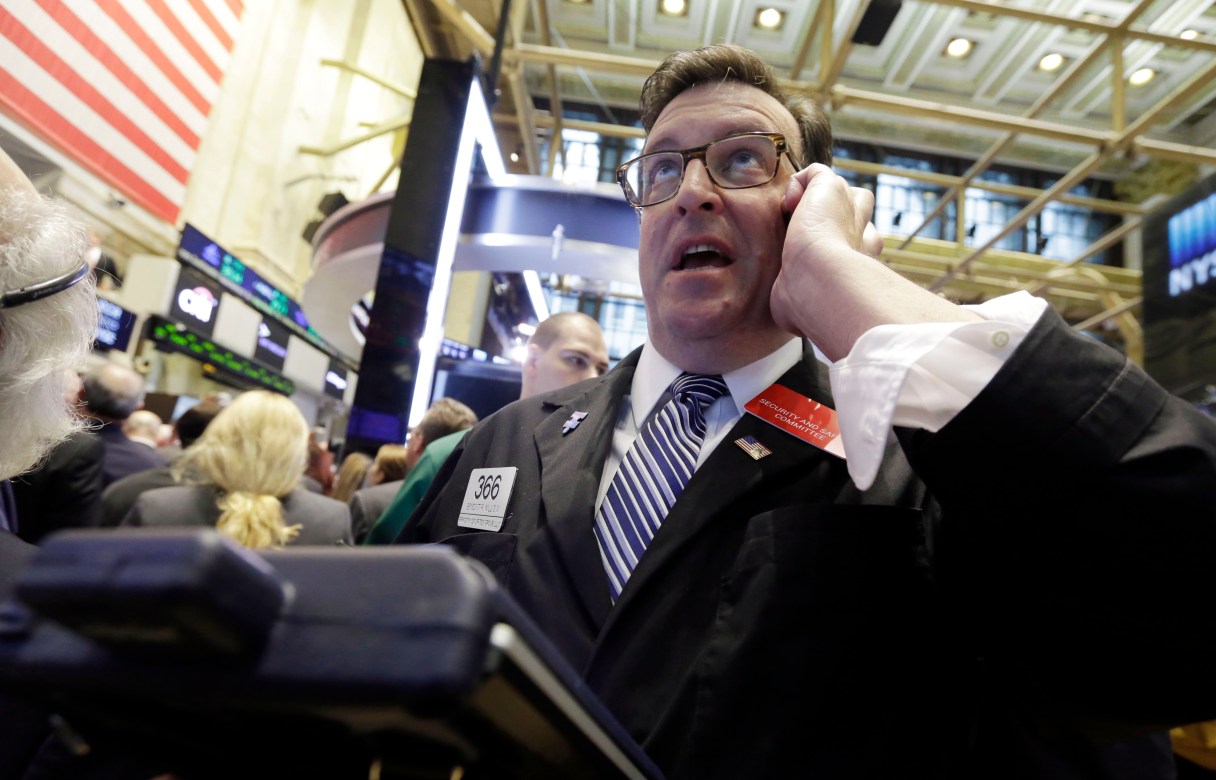
A war breaks out between Israel and Hamas. An airliner is shot out of the sky in Ukraine. A Portuguese bank’s finances look shaky.
And the U.S. stock market’s response? After dipping briefly on the bad news, it climbs higher.
The market’s resilience this year – which has pushed it to a series of records and extended its five-year bull run -is driven by investors’ optimism about the growth of the U.S. economy and record corporate earnings. That helped the market overcome its latest dip, on July 17th, when a passenger jet was shot down in eastern Ukraine and Israel invaded the Gaza Strip, raising investor worries that conflicts around the world could escalate and destabilize financial markets.
As they have all year, investors responded by using it as an opportunity to buy stocks. In fact, they’ve “bought on the dip” consistently for three years, keeping the market’s slips from becoming slides. Stock pullbacks since 2011 have been rare and relatively small, and none have become severe enough to qualify as a correction, Wall Street parlance for a fall of 10 percent or more from a peak.
The lack of a correction for such a long period is unusual, because the Standard & Poor’s 500 index experiences such a decline on average every 18 months, according to S&P Capital IQ research.