
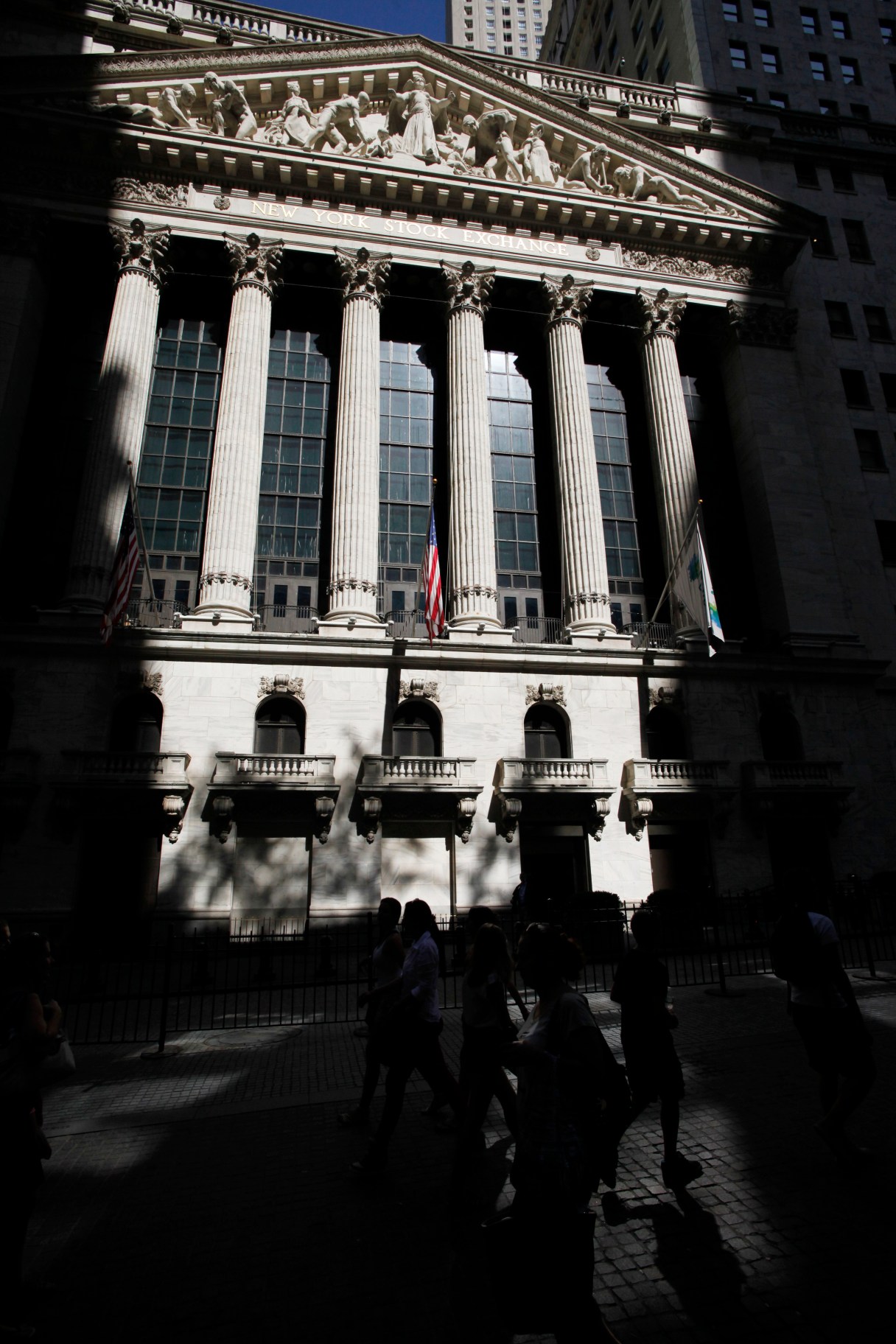
NEW YORK (AP) – The stock market sank in early trading Friday after Visa and Amazon posted weaker results than Wall Street expected. If the declines continue, the market would erase almost all of its gains from earlier in the week.
KEEPING SCORE: The Dow Jones industrial average lost 110 points, 0.6 percent, to 16,976 as of 10 a.m. Eastern time. The Standard & Poor’s 500 index fell six points, or 0.3 percent, to 1,981 and the Nasdaq composite dropped 19 points, or 0.4 percent, to 4,452.
For the week, the S&P 500 is up fractionally, 0.1 percent, and the Dow is down 0.7 percent.
MISSED: Amazon’s stock slumped 11 percent after the online retail giant posted a much wider loss than analysts had forecast, hit by expenses. The Seattle-based company is focused on spending the money it makes to expand into new areas and products, including a smartphone, the Fire, which starts selling Friday. Amazon was down $38.60 to $320.20 in early trading.
NOT EVERYWHERE: Dow member Visa fell $10, or 5 percent, to $212.83. The credit card processing giant said profits rose 11 percent from a year earlier, but the company cut back its full-year forecast on concerns about growth overseas. Visa is a closely watched company because of its heavy exposure to U.S. and global consumer spending.