
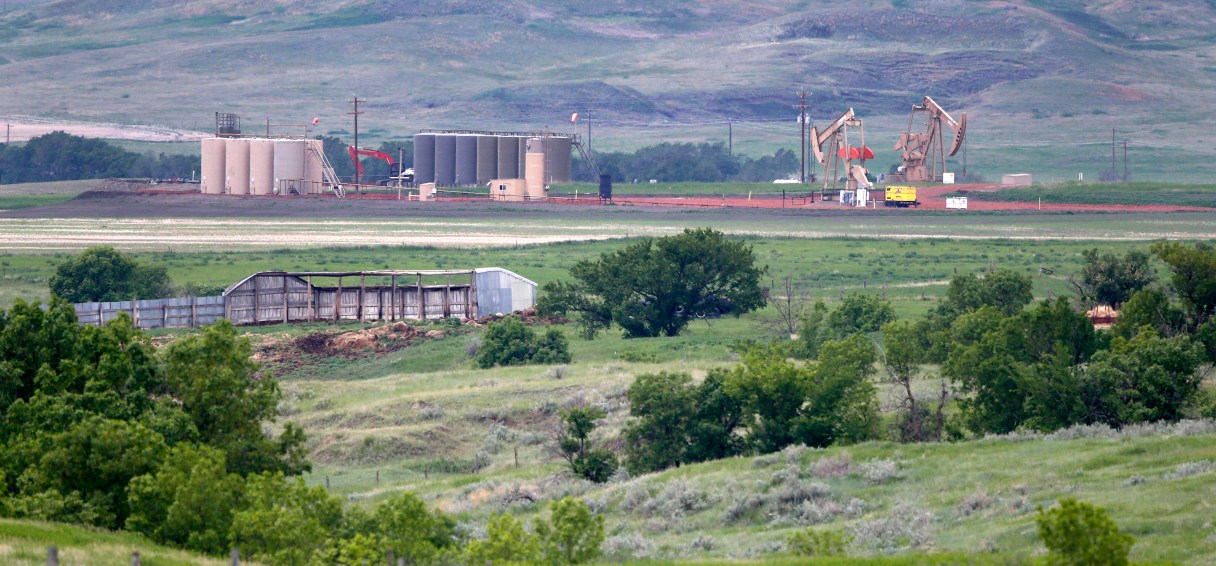
THEODORE ROOSEVELT NATIONAL PARK, N.D. (AP) – After the last hints of sunset dip behind the hills, the North Dakota horizon comes alive with flickering orange flames of a different kind – natural gas flares.
These tiny tongues of fire burn bright against the dark prairie just beyond the boundaries of Theodore Roosevelt National Park in the Badlands, where the man who later became the nation’s 26th president sought solace after his wife and mother both died unexpectedly on the same day in 1884 in his native New York.
Today, the resurgent American oil industry is tapping into this rugged landscape, so the vistas that soothed Roosevelt’s grief and helped instill his zeal for conservation now include oil rigs and flares used to burn off natural gas that comes to the surface.
Oil development is strictly forbidden within the park itself, but park officials worry that the flares, lights and noise from drilling just beyond the protected area are sullying the natural spaces cherished by Roosevelt as a bespectacled young man in his mid-20s.
Visitors know “that the park experience is much more than waking up inside the borders and looking around,” said Nick Lund, landscape conservation program manager at the Washington-based National Parks Conservation Association. “Things that happen outside the park really affect the experience of visiting, both from a visitor standpoint and from an environmental standpoint.”