
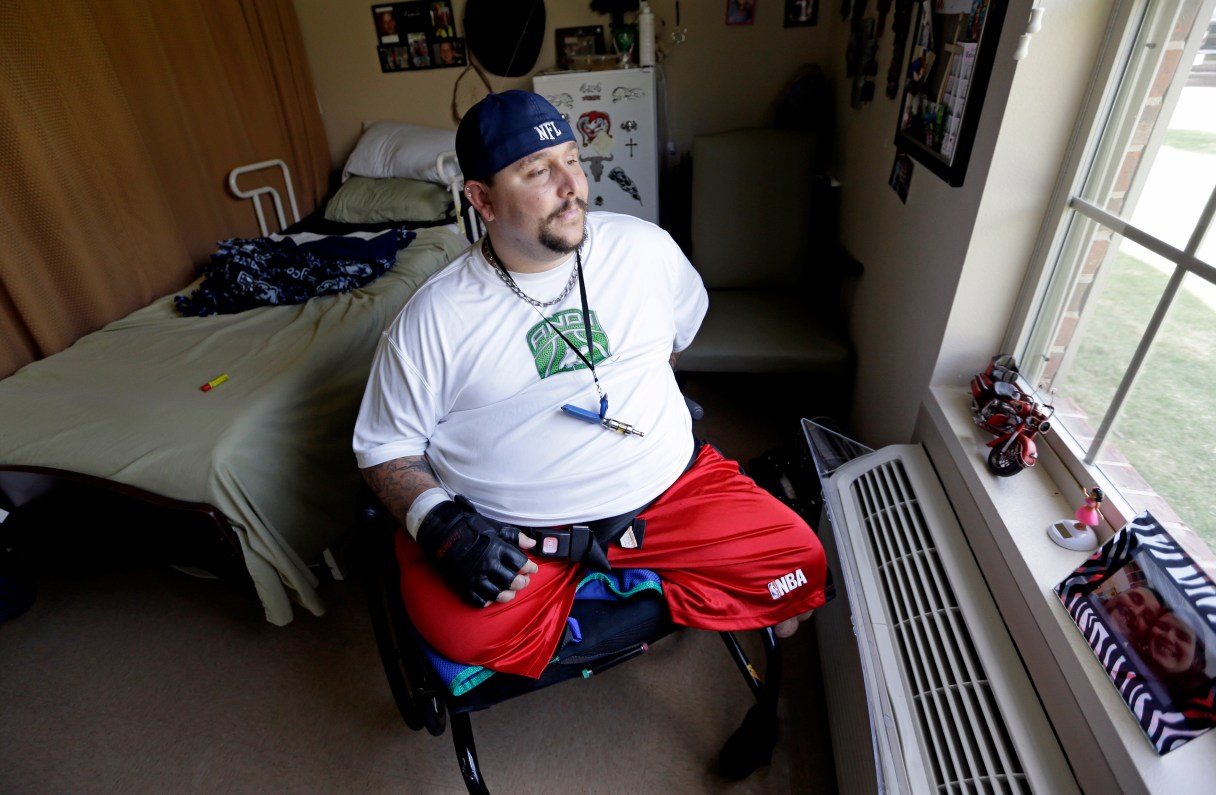
Brent Kaderli has a wheelchair-accessible van waiting in the driveway, a hospital bed in a spare bedroom and an electric lift that’s left unused. If the 30-year-old quadriplegic had his way, he’d be living here, in his father’s house, with help from aides. Instead, he is in an institution, hoping each day for a place that feels more like a home.
Fifteen years after a landmark Supreme Court ruling that the disabled should be given the choice to live outside nursing homes, mental hospitals and other institutions, its legacies are dueling. Progress has been made in every state to keep more aged and disabled people in their homes and communities, but only half of Medicaid spending goes to such care, with the services routinely denied by a system that favors institutions even though they’re typically more expensive to taxpayers.
Kaderli said Medicaid approved him for only three hours of at-home daily care, but he’d need at least six to get by while his father is at work. So he lives in a nursing home in Pasadena, Texas.
“It sucks and it’s sad and it’s depressing,” said Kaderli, who was paralyzed in a 2006 car crash. “I wish I was somewhere else every day.”
In the June 22, 1999, decision in Olmstead v. L.C., the justices ruled that unnecessarily segregating people with disabilities in institutions amounts to discrimination under the Americans with Disabilities Act if they can be cared for in more home-like settings. Advocates for the mentally ill, older people and the physically disabled regularly cite the ruling, but it has limitations. It says individuals should be “reasonably accommodated,” specifically noting “the resources available to the state,” caveats that have made it difficult to assess compliance and that have fueled widely different outcomes around the country.