
 Five-year-old Jeremiah Williams reaches for a plastic donut while working on balance and mobility skills at the Siskin Hospital for Physical Rehabilitation.
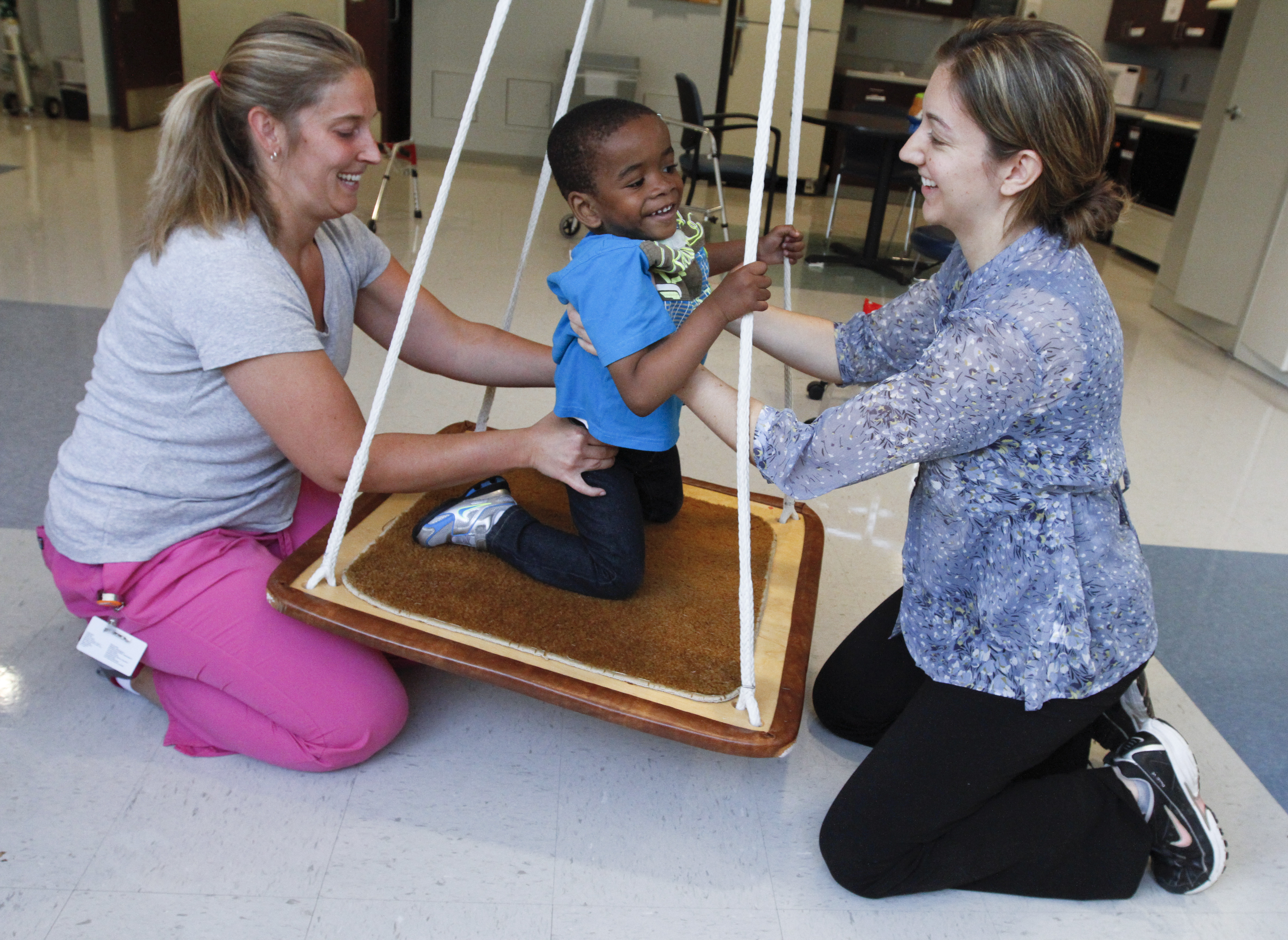 Occupational therapist assistant Kate McMahon, left, and Dr. Emily Gavlick work with Jeremiah on balance.
WHAT’S THE DIFFERENCE?Habilitative Services: “Health care services that help you keep, learn, or improve skills and functioning for daily living. Examples include therapy for a child who isn’t walking or talking at the expected age.”Rehabilitative Services: “Health care services that help you keep, get back, or improve skills and functioning for daily living that have been lost or impaired because you were sick, hurt, or disabled.”Source: Kate Abernathy, spokeswoman for the Tennessee Dept. of Commerce and InsuranceESSENTIAL HEALTH BENEFITS1. Outpatient care.2. Trips to the emergency room3. Inpatient care.4. Maternity and newborn care.5. Mental health and substance use disorder services6. Prescription drugs7. Habilitative and rehabilitative care.8. Lab tests.9. Preventive services including counseling, screenings, and vaccines.10. Dental care and vision care for children.Source: Healthcare.gov
Editor’s note: This is the fourth in an occasional series on the 10 essential health benefits required by the Affordable Care Act.
Even the subtlest motions that 5-year-old Jeremiah Williams makes in the therapy room are loaded with importance.
Shifting his weight on a swing. Rolling a beach ball across the floor. Learning to push a small walker. To his therapists at Siskin Hospital for Physical Rehabilitation, each exercise builds a bridge in the little boy’s brain, forging a network of skills that most people take for granted: Balance. Hand-eye coordination. The ability to adjust the weight of his 40-pound body on his feet, so he can take one step – and another.
Jeremiah cannot walk on his own. He is completely deaf, has chronic lung disease. Since birth he has had a developmental delay that doctors are still trying to understand.