
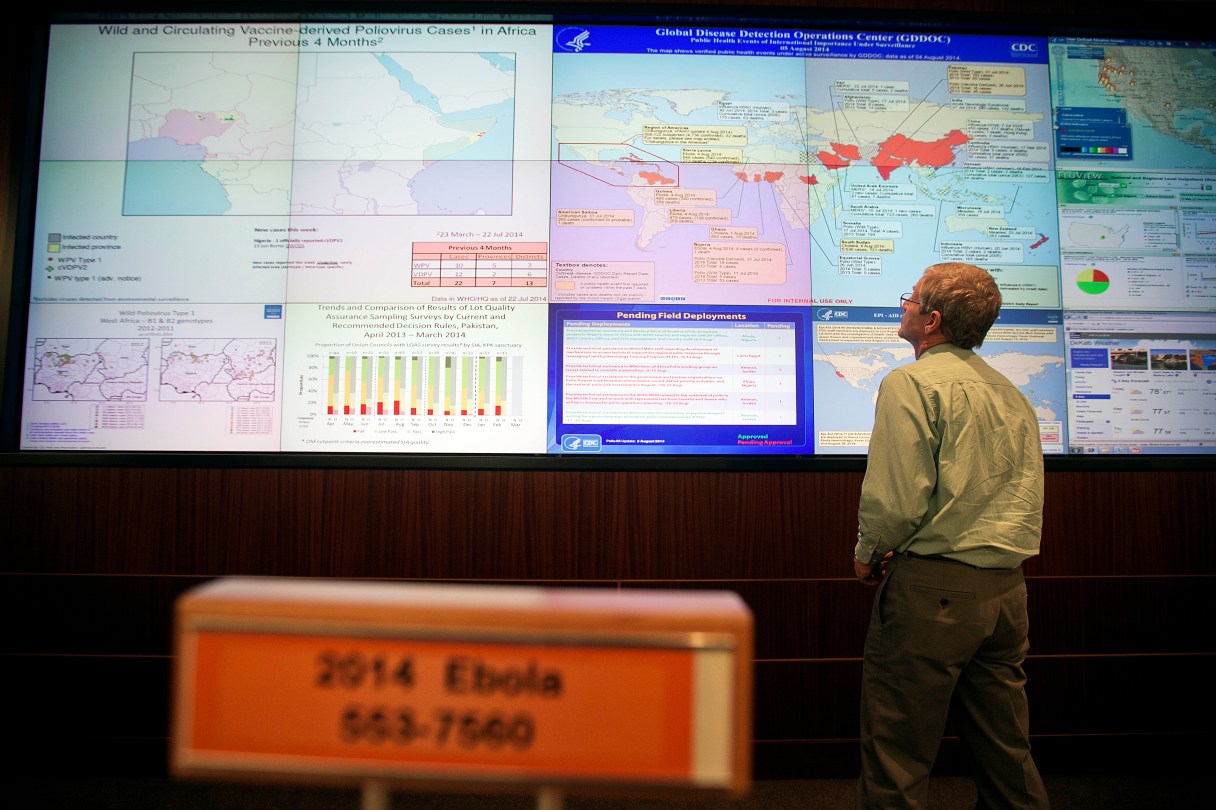
Even as Americans’ trust in government eroded in recent years, people kept faith in a handful of agencies and institutions admired for their steadiness in ensuring the country’s protection.
To safeguard the president, there was the solidity of the Secret Service. To stand vigil against distant enemies, the U.S. nuclear missile corps was assumed to be on the job. And to ward off threats to public health, the nation counted on the Centers for Disease Control and Prevention.
Now, in the space of just a few months, the reputations of all those agencies – as well as the Veterans Administration – have been tarred by scandal or tarnished by doubt. Maybe a public buffeted by partisan rhetoric and nonstop news should be used to this by now. But, with the CDC facing tough questions about its response to the Ebola outbreak, something feels different. Government is about doing collectively what citizens can’t do alone, but its effectiveness is premised on trust.
A year ago, with Washington shut down and trust in government near records lows, the CDC still won a 75 percent approval rating, the highest of any federal agency, a poll by the Pew Research Center found. But when CBS News surveyed Americans in mid-October, just 37 percent said the agency was doing a good or excellent job.
“I always called the CDC the shining star of the federal agencies,” said Lawrence O. Gostin, an expert on health law and policy at Georgetown University. “They were regarded with very high esteem and did an extraordinarily good job of protecting the American people. That has changed and I think (doubts about its handling of) Ebola is the epitome of that change.”