
Thursday, November 12, 2026Nov 12

Mexico: Gang likely burned, pulverized 43 missing

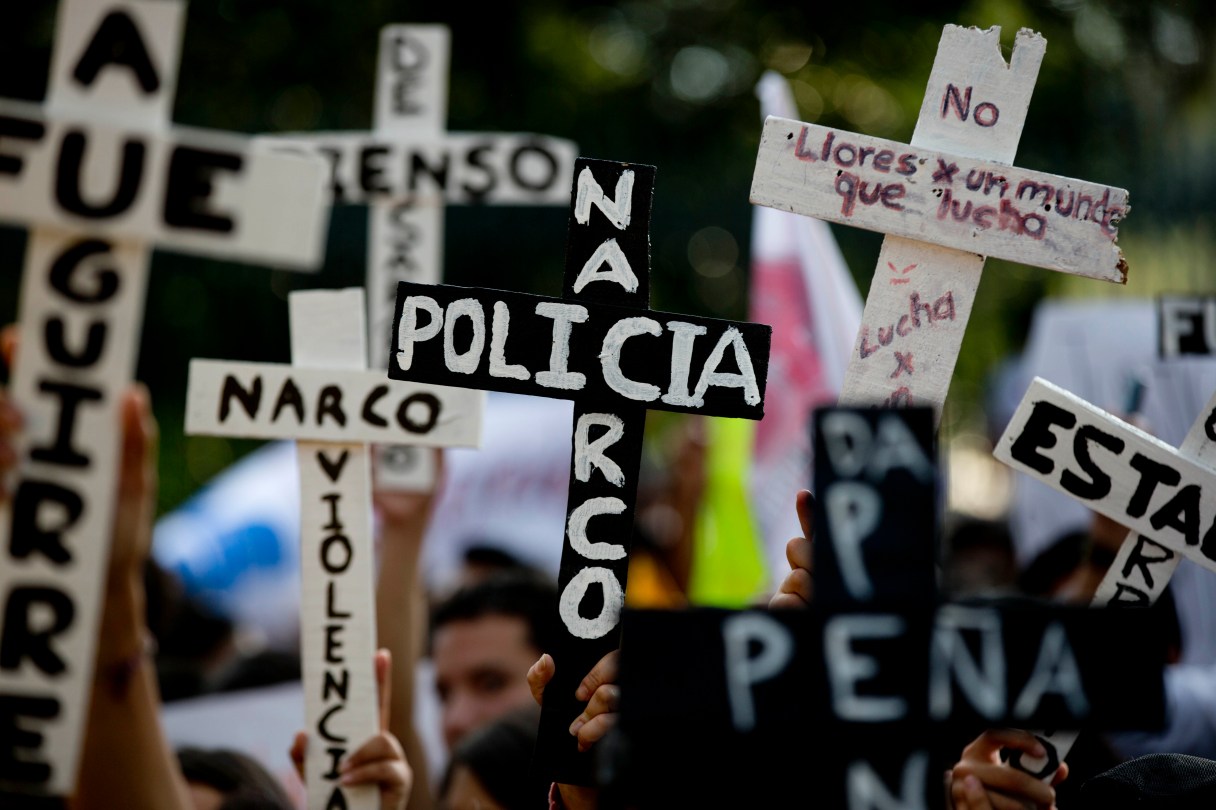
Demonstrators march with crosses with writing that reads in Spanish "Narco Cops" in protest for the disappearance of 43 students in the state of Guerrero, in Mexico City, Wednesday, Nov. 5, 2014. Federal police detained yesterday Iguala Mayor Jose Luis Abarca and his wife, Maria de los Angeles Pineda, who are accused of ordering the Sept. 26 attacks on teachers' college students that left six dead and 43 still missing.  (AP Photo/Eduardo Verdugo)
Demonstrators march with crosses with writing that reads in Spanish "Narco Cops" in protest for the disappearance of 43 students in the state of Guerrero, in Mexico City, Wednesday, Nov. 5, 2014. Federal police detained yesterday Iguala Mayor Jose Luis Abarca and his wife, Maria de los Angeles Pineda, who are accused of ordering the Sept. 26 attacks on teachers' college students that left six dead and 43 still missing. (AP Photo/Eduardo Verdugo) Demonstrators march with crosses with writing that reads in Spanish "Narco Cops" in protest for the disappearance of 43 students in the state of Guerrero, in Mexico City, Wednesday, Nov. 5, 2014. Federal police detained yesterday Iguala Mayor Jose Luis Abarca and his wife, Maria de los Angeles Pineda, who are accused of ordering the Sept. 26 attacks on teachers' college students that left six dead and 43 still missing. (AP Photo/Eduardo Verdugo)

MEXICO CITY (AP) – Drug gang members have described a horrific effort to make 43 teachers college students disappear, piling their bodies like cord wood on a pyre that burned for 15 hours and then wading into the ashes to pulverize, bag and dispose of remaining teeth and bones.

In a somber presentation, Attorney General Jesus Murillo Karam laid out on Friday what investigators think happened to the students who have not been seen since being attacked by police Sept. 26 in the southern city of Iguala.

He played video of purported gang members confessing to the killings and telling what they did. Another video showed hundreds of charred fragments of bone and teeth that had been dumped in and along the San Juan River in the neighboring town of Cocula.

The attorney general said the state of the remains will make it hard to say definitely whether they are the students.

“The high level of degradation caused by the fire in the remains make it very difficult to extract the DNA that will allow an identification,” Murillo Karam said at a news conference.