
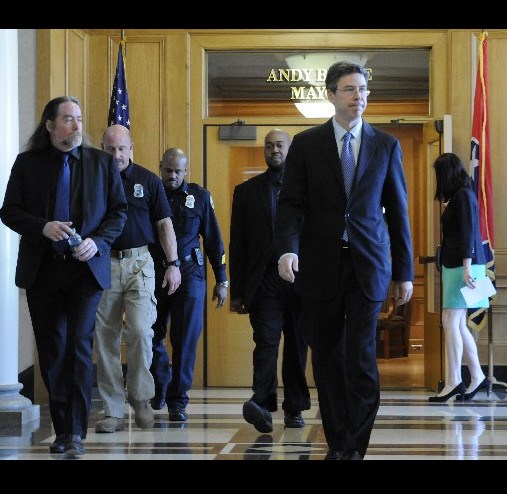
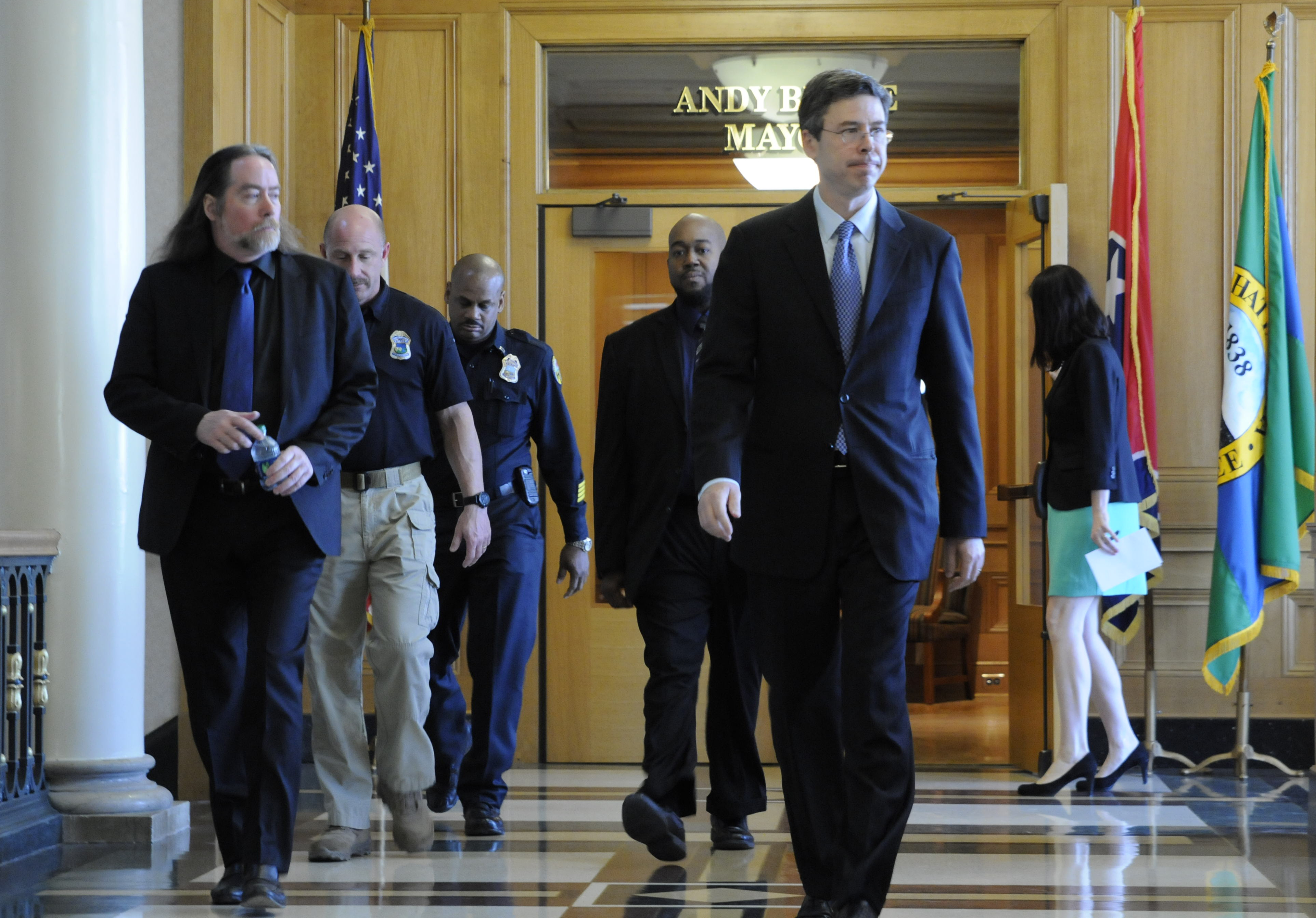
 David Kennedy, left, is followed by Chattanooga police Lt. Todd Royval, Capt. Edwin McPherson and Paul Smith as they walk with Mayor Andy Berke, foreground, to a news conference inside City Hall in this file photo.
After a week of gun violence in Chattanooga that has resulted in 10 people shot, and three of those dead, some in the community have begun to question the wisdom and effectiveness of the Chattanooga Violence Reduction Initiative (VRI). As understandable as this is, this is a moment for the city to renew its commitment to VRI, rather than retreat from it.
The simple fact is that the approach behind VRI works. It has a long track record, in many different settings around the nation, of effectively reducing violence. It has unparalleled results in formal evaluations — earning it the highest evidence-based rating from the Department of Justice’s CrimeSolutions.gov– and its impact is dramatic when it takes hold on the streets.
However, it is not perfect. Even in the cities where it has been the most effective, there are inevitably bad stretches. VRI is a treatment for a problem for which there is, so far, no cure.
Chicago — one of the most demanding environments in the nation where violence is concerned– has seen major declines in homicide and shooting since it began its version of VRI; violence is now down to mid-1960s levels.
But the partners there still see spikes in violence, and when they do, it has become standard operating procedure not to abandon the approach but to ramp it up: to increase the strategy’s core focus on the street groups that drive every city’s violence and to enhance the dosage of “call-ins” (face-to-face meetings between group members, community members and social service providers), “custom notifications” (the same basic idea, but taken personally to key “impact players” wherever they may be in the community), and, where necessary, very serious law enforcement attention.