
Saturday, November 7, 2026Nov 7

This story is free to read.

Space agency releases 1st picture from comet

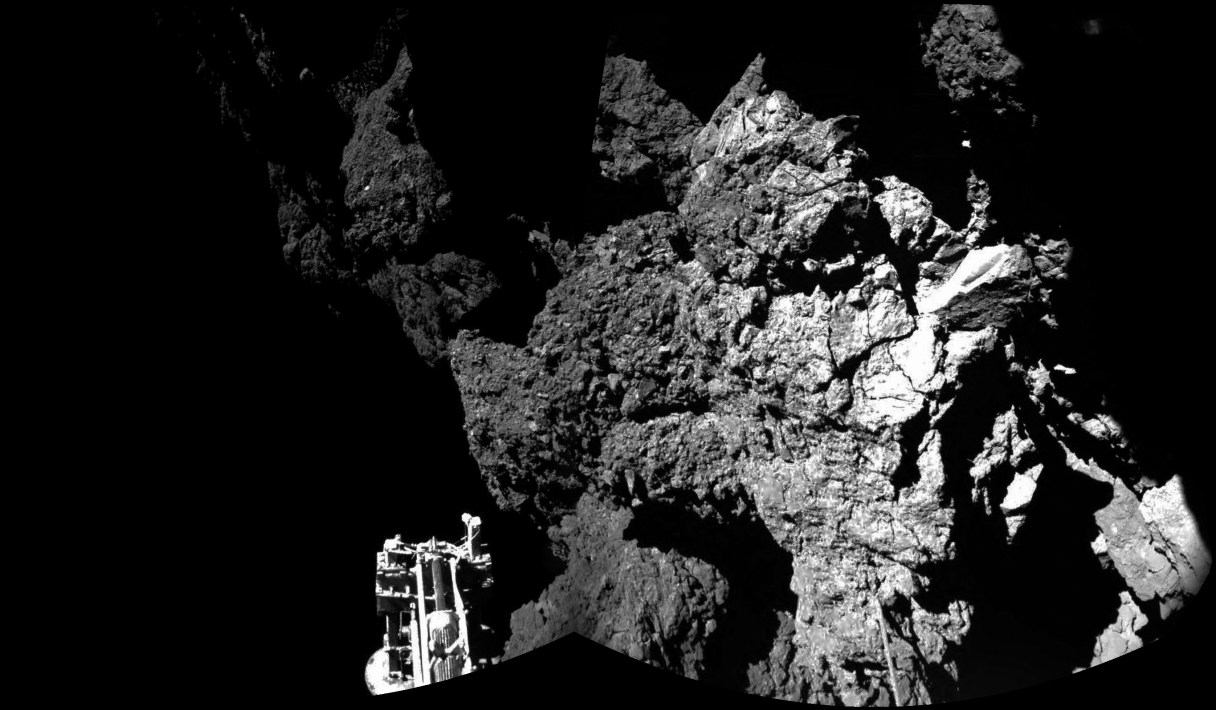
The combination photo of different images  taken with the CIVA camera system  released by the European Space Agency ESA on Thursday Nov. 13, 2014 shows  Rosetta’s lander Philae as it  is safely on the surface of Comet 67P/Churyumov-Gerasimenko,  as  these first  CIVA images confirm. One of the lander’s three feet can be seen in the foreground. Philae became the first spacecraft to land on a comet when it touched down Wednesday on the comet, 67P/Churyumov-Gerasimenko. (AP Photo/Esa/Rosetta/Philae)
The combination photo of different images taken with the CIVA camera system released by the European Space Agency ESA on Thursday Nov. 13, 2014 shows Rosetta’s lander Philae as it is safely on the surface of Comet 67P/Churyumov-Gerasimenko, as these first CIVA images confirm. One of the lander’s three feet can be seen in the foreground. Philae became the first spacecraft to land on a comet when it touched down Wednesday on the comet, 67P/Churyumov-Gerasimenko. (AP Photo/Esa/Rosetta/Philae) The combination photo of different images taken with the CIVA camera system released by the European Space Agency ESA on Thursday Nov. 13, 2014 shows Rosetta’s lander Philae as it is safely on the surface of Comet 67P/Churyumov-Gerasimenko, as these first CIVA images confirm. One of the lander’s three feet can be seen in the foreground. Philae became the first spacecraft to land on a comet when it touched down Wednesday on the comet, 67P/Churyumov-Gerasimenko. (AP Photo/Esa/Rosetta/Philae)

BERLIN (AP) – The European Space Agency has released the first picture taken by its Philae probe on the surface of a comet.

Philae became the first spacecraft to land on a comet when it touched down Wednesday on the comet, 67P/Churyumov-Gerasimenko. The photo released Thursday shows a rocky surface with one of the lander’s three feet.

Harpoons meant to anchor the lander to the surface failed to work properly, causing Philae to bounce twice.

But ESA says the lander is stable. Gerhard Schwehm, a scientist on the Rosetta mission, told The Associated Press on Thursday that it may still be possible to fire the harpoons but in any case the lander is “very healthy.”