
Sunday, November 15, 2026Nov 15

Talks resume: A week to deadline _ or extension

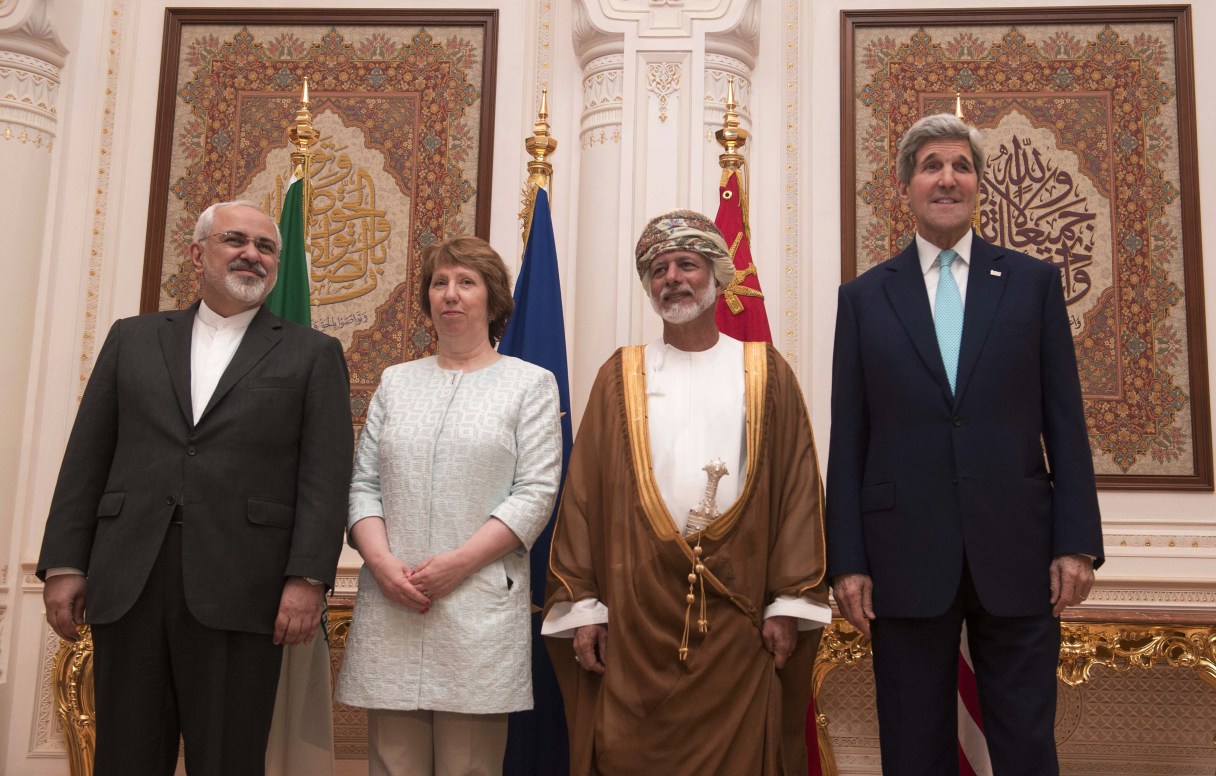
In this Sunday, Nov. 9, 2014, file photo, posing for a photo are, from left, Iranian Foreign Minister Javad Zarif,  European Union adviser Catherine Ashton, Omani Minister Responsible for Foreign Affairs Yussef bin Alawi and US Secretary of State John Kerry,  in Muscat. Iran and six world powers are closer than ever to a deal that would crimp Tehran’s ability to make nuclear arms - a status that would lead to a progressive end to sanctions on the Islamic Republic and ease tensions that could boil over into a new Middle East war. The bad news? Substantial differences remain. (AP PHOTO/NICHOLAS KAMM, POOL)
In this Sunday, Nov. 9, 2014, file photo, posing for a photo are, from left, Iranian Foreign Minister Javad Zarif, European Union adviser Catherine Ashton, Omani Minister Responsible for Foreign Affairs Yussef bin Alawi and US Secretary of State John Kerry, in Muscat. Iran and six world powers are closer than ever to a deal that would crimp Tehran’s ability to make nuclear arms - a status that would lead to a progressive end to sanctions on the Islamic Republic and ease tensions that could boil over into a new Middle East war. The bad news? Substantial differences remain. (AP PHOTO/NICHOLAS KAMM, POOL)

VIENNA (AP) – U.S. Secretary of State John Kerry urged Iran to prove its intentions are peaceful as nuclear talks between Tehran and six world powers reconvened Tuesday ahead of a Nov. 24 deadline. Iran struck a more combative tone, warning that the other side’s “greediness” could scuttle the negotiations.

With less than a week to go before the target date, both sides are eager to avoid extending the talks – a move that would be met by substantial opposition by congressional sceptics in Washington and hardliners in Tehran. But they may have no choice, because significant differences remain.

At a meeting with British Foreign Secretary Philip Hammond, Kerry said the U.S. hopes “we can get there, but we can’t make any prediction.” He challenged Tehran to “work with us in all possible efforts to prove to the world the (Iranian nuclear) program is peaceful.”

Hammond said Iran needed to show “more flexibility.”

But Iranian Foreign Minister Mohammad Javad Zarif said it was up to the West to muster “the political will to reach a solution,” warning the talks could fail due to the other side’s “greediness” – shorthand for demands his country is unwilling to accept.